Spider-man 2: First Impression

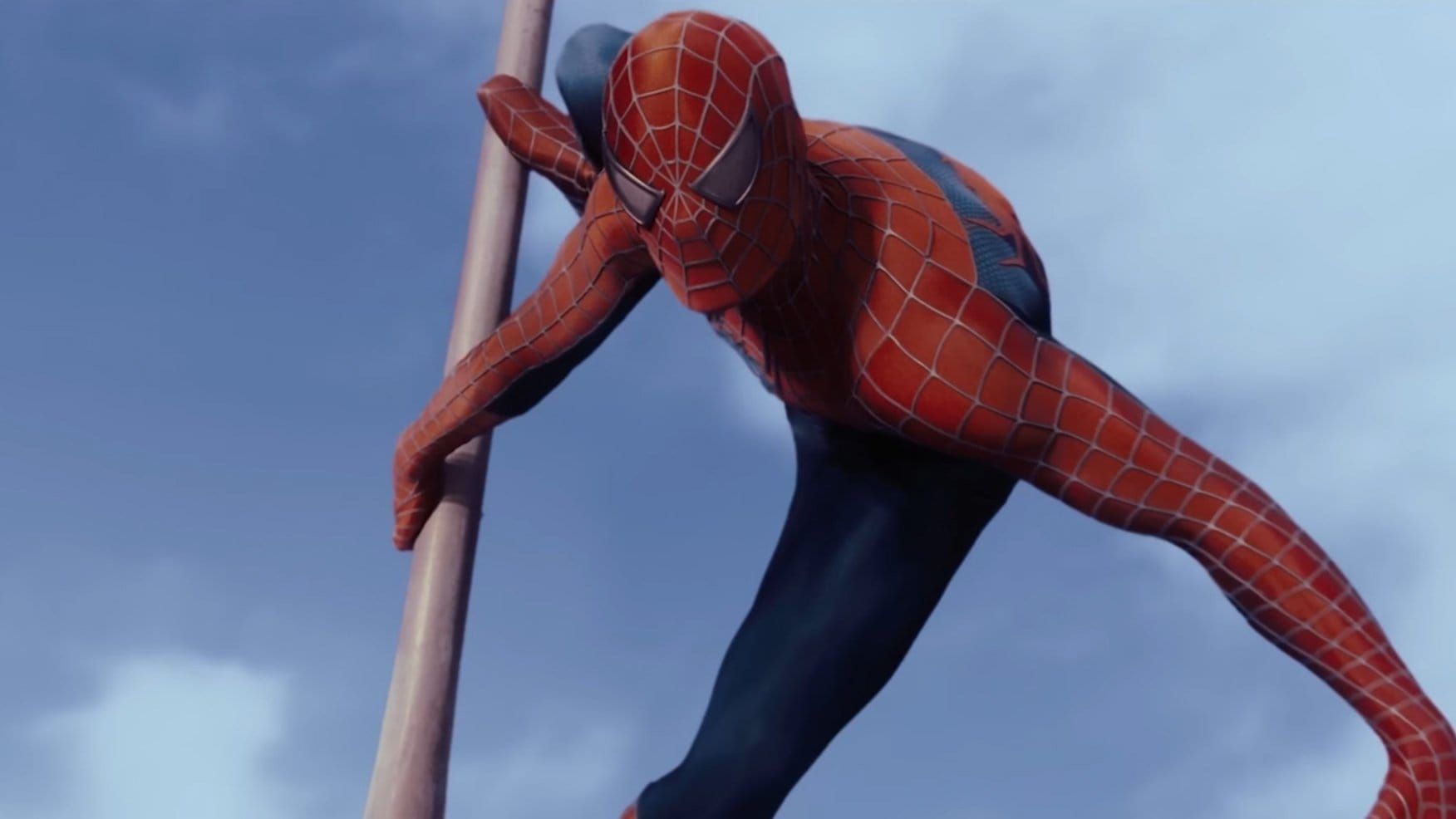
Has there ever been a sequel so substantially superior to its predecessor than Spider-man 2 is superior to the first film?
I gave the original Spider-man a B-minus. Spider-man 2 is grade-A summer action, and one of the most spectacular big screen adventure films ever made.
It gives Alfred Molina the role that will finally win him the attention and legendary status he deserves.
And Tobey Maguire invests his emotions in the character of Peter Parker as if he’s going for an Oscar.
It’s an out-of-the-park home run. I haven't had so much fun at a summer movie since... wow, I can't remember when.
Here's my early-draft review, which I'll be revising a bit tonight when I get back to my desk at home.
Here’s the full text of that first-draft review that was linked to above:
Who can pat his head, rub his belly, throw a taxi cab, smash a window, pour a drink, and pat you on the back, all at the same time?
That would be Otto Octavius—or “Doc Ock,” as he is known to Spider-man fans. He’s the multi-limbed scientist whose malevolent, metallic appendages override his better instincts in Spider-man 2—Sam Raimi’s exhilarating, super-sized superhero sequel.
Alfred Molina storms onto the screen and becomes the most formidable supervillain we’ve yet seen in a comic-book movie. Many Marvel fans will agree that this is the greatest comic book movie ever made, and one of the many things Raimi gets right is casting Molina in this role.
It’s an event that’s been a long time coming. Molina was the hard-hearted mayor in Chocolat. He was Diego Rivera in Salma Hayek’s Frida. He was the wolf hunter in Ladyhawke. He had parts in Magnolia, Enchanted April, Cabin Boy, Maverick, Dead Man, Species, The Imposters, Identity, and last year's Luther.
Earlier this year, Molina played himself in Jim Jarmusch’s Coffee and Cigarettes, making a joke out of the fact that he’s been so good in so many roles and yet his name has remained relatively unrecognized. But once he straps those massive metal tendrils to his back, those days are over. Even though he co-starred with Harrison Ford in that legendary opening scene of Raiders of the Lost Ark(playing Satipo, the arachnophobic sidekick who uttered the famous line “Throw me the idol, I’ll throw you the whip!”), it is this role that he’ll be remembered for. It may not be his greatest performance or the kind of film that ends up in critics’ top ten lists at the end of the year, but it’s one that will make the kind of impression on younger viewers the way that James Earl Jones’ voice became Darth Vader or the great Alec Guinness became Obi-Wan Kenobi.

Alfred Molina finally gets the fame he's long deserved.
Spider-man 2 has more than just a villain. It’s the best film of Sam Raimi’s career, full of the frenzied comedy-packed action that made his Evil Dead movies cult favorites. But more surprisingly, this is also his most emotional film. The characters of Peter Parker (Tobey Maguire), Mary Jane Waston (Kirsten Dunst), and Aunt May become more human, more dimensional, and more compelling in this episode.
It picks up two years after the original Spider-man. Mary Jane has become a model and a star of the theater; we see her onstage earning accolades for a part in The Importance of Being Earnest. Frustrated with her failed attempts to draw Parker out from his secretive sulk, she starts dating a handsome young astronaut. When the word marriage gets mentioned, Peter’s torment increases. He’s desperately in love with her, but he doesn’t want to put her at risk with his Spidey-duties. Making things worse, he can’t hold a steady job, his boss J. Jonah Jameson (J.K. Simmons,again the film’s wackiest character) treats him like dirt, his rat-faced landlord demands rent money relentlessly, and his webslinger isn’t working.
The story’s central plot emerges with such speed and confidence that we hardly have time to laugh at the lunacy of it. Parker’s hero Doctor Octavius claims to have created an alternate energy source that gives him “the power of the sun in the palm of his hand." This leads, of course, to a spectacular accident, which leaves his invention welded to his spine, the array of wall-busting, window-smashing, pedestrian-tossing arms that give the villain his name. When Doc Ock runs into Harry Osborne (James Franco), who still holds a grudge against Spider-man from the first film, a dangerous relationship develops that sets things up nicely for Spider-man 3.
We watch Parker struggle between the opposing attractions of a normal life and the burden of a superhero’s responsibility. There are some big surprises for devoted Spider-fans, as unexpected twists place Parker’s secret identity at risk. But even more surprising is the inventive wit that does wonders for humanizing Peter for the audience, a giddy humor that was missing in the first film.
Above all, though, Spider-man is an action movie, and the action moves with an energy and invention that seems surprisingly fresh. Animation and live-action elements blend seamlessly—most of the time. Three action set pieces—one in a bank, one that starts on a clock tower and ends on an elevated train, and the climactic confrontation—are classics that make The Matrix’s CGI-heavy clashes look boring and artificial by comparison. Maguire invests himself in this role as if he’s going for an Oscar. And his clashes with Doc Ock are some of the most spectacular onscreen battles ever filmed. New York becomes a jungle gym, and Raimi takes giddy pleasure in following their chaotic, acrobatic clashes that tumble from the tops of skyscrapers down into the dangers of rush-traffic and back again. There was a collective buzz amongst Spidey-fans of all ages in the theater—this was the Spider-man movie they’d always wanted to see.
Sure, it has all the clichés. The superhero in a crisis because his powers are malfunctioning. The terrible accident that creates a monster. The villain with a grudge. The damsel in distress. Sappy romantic pathos between the hero and the woman who wants to know his secret identity. And more women screaming at the sight of the bad guy than you’ve ever heard before. But the characters are driven by such compelling motives, shot through with passion and emotion, that we realize we’ve rarely seen the clichés delivered so perfectly. It serves to remind us that things become clichés when the life and purpose is drained out of them, but employed properly, they’re the building blocks of great storytelling.
Another of the film’s greatest strengths—perhaps the greatest strength—is the script, credited to Alvin Sargent (Unfaithful, Ordinary People, Gambit), but based on a “screen story” crafted by Steve Ditko, Alfred Gough, and Pulitzer-Prize winning author Michael Chabon (The Adventures of Kavalier and Clay.) There are literary flourishes to the drama that give it extra weight, and smaller, more subtle, incidental moments that give the characters a chance to develop more personality. I’m sure many critics will find themselves unable to resist the temptation to spoil some of the jokes, so be careful what you read. Suffice it to say that I’ll think of Spidey now whenever I step into an elevator or visit a laundromat.
If the film has a weakness, it’s in the sometimes jarring disparity between those lines of dialogue that sound like they come from living, breathing human beings and other lines that sound like the kind of sap you hear in movie-of-the-week teledramas. Some of the interactions between Parker and Mary Jane are quite romantic, but others will make you wince with their syrupy sentimentality. On the other hand, the interactions between Spidey and Ock are distinctive, as Octavius is not an entirely bad guy. He’s a well-meaning man who overstepped the line of wisdom, and now the inventions of his ambition have gained an influence over him.
It’s the same mix of humor, character development, and controlled mayhem that makes Bryan Singer’s X-Menfilms and Gore Verbinski’s Pirates of the Caribbean contemporary classics. Singer raised the bar for superhero flicks, setting a standard that the first Spider-man film didn’t match. This time, Raimi’s risen to the challenge and gone one better, delivering a brilliant mix of drama and comedy, and serving up action that’ll blow the hair off your head. Spider-man 2 aspires to join the upper echelons of action movies like Raiders of the Lost Ark, The Empire Strikes Back, and Die Hard. We can only hope this action-movie smackdown will continue to bring out the best in these talented directors. (If the previews for Catwoman are any indication, we’re about to see just how bad a comic book movie can be.) Apparently, Raimi’s going to deliver Spider-man 3 in a few years—the conclusion of this episode takes us several steps into the next one.
More impressive than even the action is the moral backbone of the Spider-man story (and I’m not referring to just how much trauma poor Peter Parker’s backbone suffers in this film.) The story of Doc Ock becomes a striking metaphor for the way that power corrupts. More specifically, it suggests the dilemma of weapons of mass destruction—we built them for good purposes, but now we have lost control of them, and they threaten our very existence. In that sense, it parallels the lessons of Jurassic Park--that our drive to achieve greatness can turn loose powers we are not capable of containing. “Intelligence,” Ocatavius tells Parker, “is not just a privilege. It’s a gift. And you use it for the betterment of mankind.” Eventually, his own words come back to haunt him. “These things,” Spidey reprimands him, “have turned you into something you’re not.”
Parker faces some truly challenging choices in this film. He ponders the burden of responsibility and how his true calling may require him to sacrifice his own personal dreams. In a society saturated with movies that tell us the most important ethic is to “follow your dreams,” the Spider-man franchise offers an admirable alternative: There is something more important, something bigger, than you and I… and in order to overcome evil with good, we will have to turn away from our personal preferences and lay down our lives for others.
It’s the same theme that was central to another extremely successful film that was released this year—The Passion of the Christ. There’s an echo of Christ-likeness in Parker’s willingness to put aside his romantic urges in order to help the helpless. His choice requires excruciating pain, a “dying to self,” a sort of rebirth as a powerful servant. Could it be that we are drawn again and again to this theme because it’s true? We know we need a hero who’s willing to give his entire being to save those of us who can’t save New York, or America, or the world, or even our own selves. God’s never given human beings a need that couldn’t be addressed. When we feel that rush of joy when Spidey saves the day, that’s because something inside us knows it’s true—there is someone to save the day. We’re affirming the very story that’s been written into history, whether we acknowledge it or not.
Hard to believe such heavy stuff is going on in the comics. But isn’t that part of the reason why Spidey and his thematic-sibling Superman have remained so popular for so long?
The Report Card
Not sure you understand these review questions? Click here.
Jeffrey's Rating: A
Click here for an explanation of ratings.
SUMMARY REVIEW:
Sam Raimi's super-sequel boasts strong character development, spectacular action, and inspired humor. It's one of the most satisfying action films ever made, and will be widely acclaimed as the best film ever adapted from a comic book.
PARENTAL NOTE: CAUTION. Brutal comic-book-style violence.
LOOKING CLOSER'S SIX KEY QUESTIONS
Is the film honorable?
Yes. It tells a story of self-sacrifice, responsibility, courage, and care for others. It also illustrates the corrupting influence of power, and the way that our ambitions can lead us to create things that are beyond our power to contain or control.
What difference might the film make in our lives?I have already found myself thinking of Spider-man when I think of the gifts God has given me, and my temptation to use them for my own pleasure rather than to serve others. As Gandalf says in The Fellowship of the Ring, it us up to us to decide what to do with the time that is given to us. Peter Parker represents every man and woman who has been given abilities, and he must choose whether to invest them for his own self-interest or to employ them to help those who cannot help themselves. While the film does not explore this idea, we can also see that Parker did not develop the powers through is own will, but they were "given" to him through a mysterious chain of events that seem to have been "meant" to happen. It's impossible for anything to be "meant" to be unless there is someone to do the meaning. We are given talents by one who asks us to serve. The longer we avoid obeying that call, the more joyless our lives will be.
Is the film artfully made?
It is vividly, explosively colorful. The performances are all strong. The writing is exceptionally good. Sam Raimi's direction is inspired, and the film editing exhibits sheer brilliance. Danny Elfman's soundtrack is his best in several years.
How effective is the film at what it sets out to do?
It's thoroughly entertaining, exhilarating, laugh-out-loud funny, and satisfying.
Is the film worth our time, money, and effort to see it?
For those who enjoy comic book action, and for those who enjoy character-driven fantasy adventure, it's a blast.
Did I enjoy it?
Immensely. It made me feel like a 10-year-old again, caught up in a wild world of imagination.