Wake Up Dead Man — a review in progress
Rian Johnson's third film in the Knives Out series is not only my favorite of the series — it's one of the most provocative films about Christian faith I've seen in many years.
So, here is a work in progress: Hastily typed out on Tuesday, December 2, almost a full week after I saw Wake Up Dead Man in a packed house at Landmark’s Crest Cinema Center. Revised periodically after that. And still a fair distance from being what I would usually call a “reader ready” review. If you check back, you’ll likely find that the review has expanded and improved.
[LATEST UPDATE: Thursday, December 19, after a second big-screen viewing.]
Introducing . . . Father Jud!
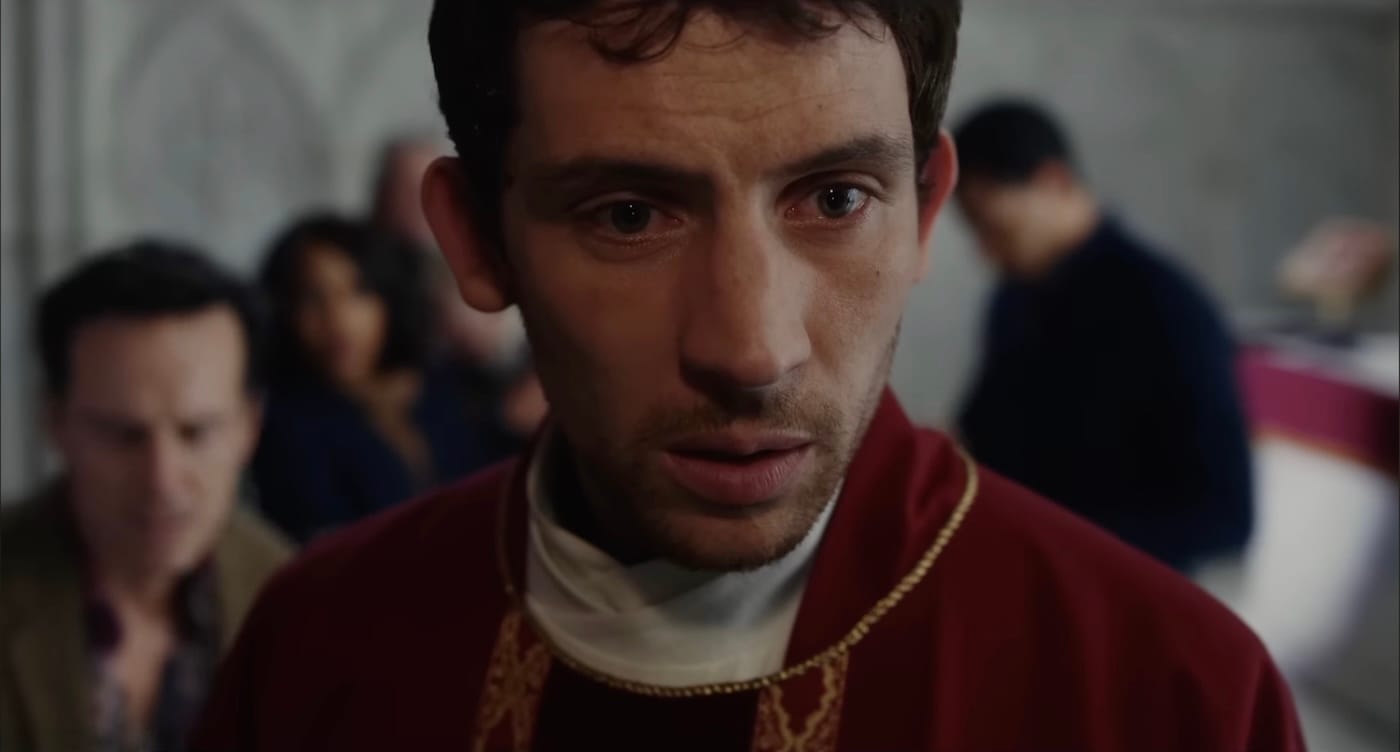
Within the first two minutes of Rian Johnson’s second sequel to Knives Out, I was drawn to the proverbial “edge of my seat,” eyes wide, brain buzzing, ears and heart wide open. Johnson gained my confidence by presenting us with a shockingly paradoxical spectacle: one Catholic priest, Father Jud Duplenticy, cold-cocking another one and breaking his jaw. Then we see that zealous believer, apologetic and regretful, submit to a jury of his superiors for disciplinary action.
And, to our surprise (or perhaps not, these days), one of the priests sounds inclined to excuse Father Jud’s violence: “We need fighters today,” he says, “but to fight the world, not ourselves. A priest is a shepherd. The world is a wolf.”
What the young, humbled priest says in response rings in my ears like the clearest bell, a clarifying truth: “No,” says young Father Jud Duplenticy. “I don’t believe that, Father, respectfully. You start fighting wolves and before you know it everyone you don’t understand is a wolf. ... Christ came to heal the world, not fight it.”
Wow.
“Christ came to heal the world, not fight it.”
This is wisdom.
I might go even further — yes, I will. This claim is the foundation of the Gospel, represented by the blood that Jesus surrendered to his enemies without giving violence back. This is what Christians mean when they say “Jesus saves us from our sins”: He peacefully steps into occasions of conflict and suffering, and he offers love and wisdom that sets us free. Moreover, he takes the insults and blows we deliver, and he does not retaliate. The wickedness disappears into and through his suffering. A cycle of rage and cruelty is broken.
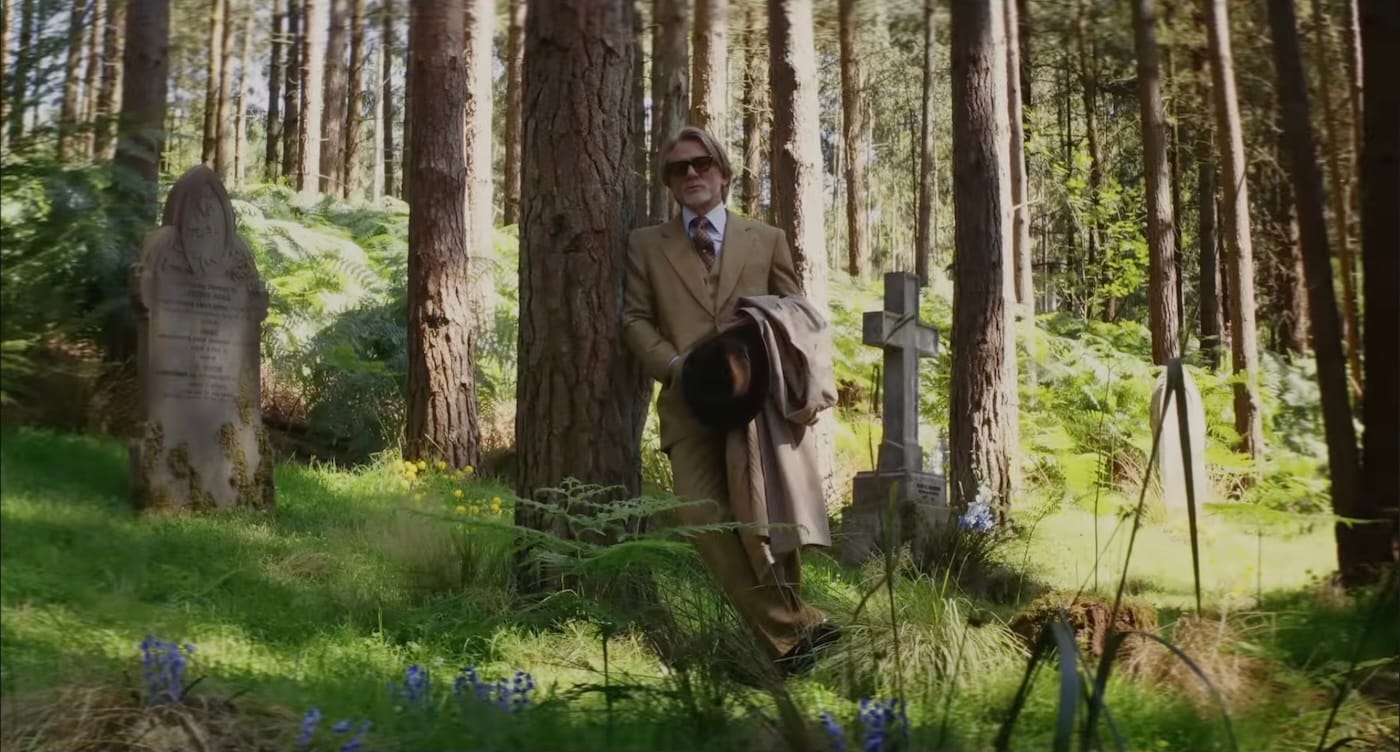
But, as young Father Jud is learning, Christ’s redeeming blood tends to become polluted, in many (perhaps most) American churches today, with carcinogens of fear, hatred, greed, discrimination, and a lust for political power. In short, if you ask your everyday unbeliever to describe their impressions of evangelical Christians, they will tend to list behaviors that Jesus taught us — by preaching, by parable, and by example — to reject. Thus, new generations of seekers are turning away from Christianity in what looks to me like reasonable — and more, righteous — frustration.
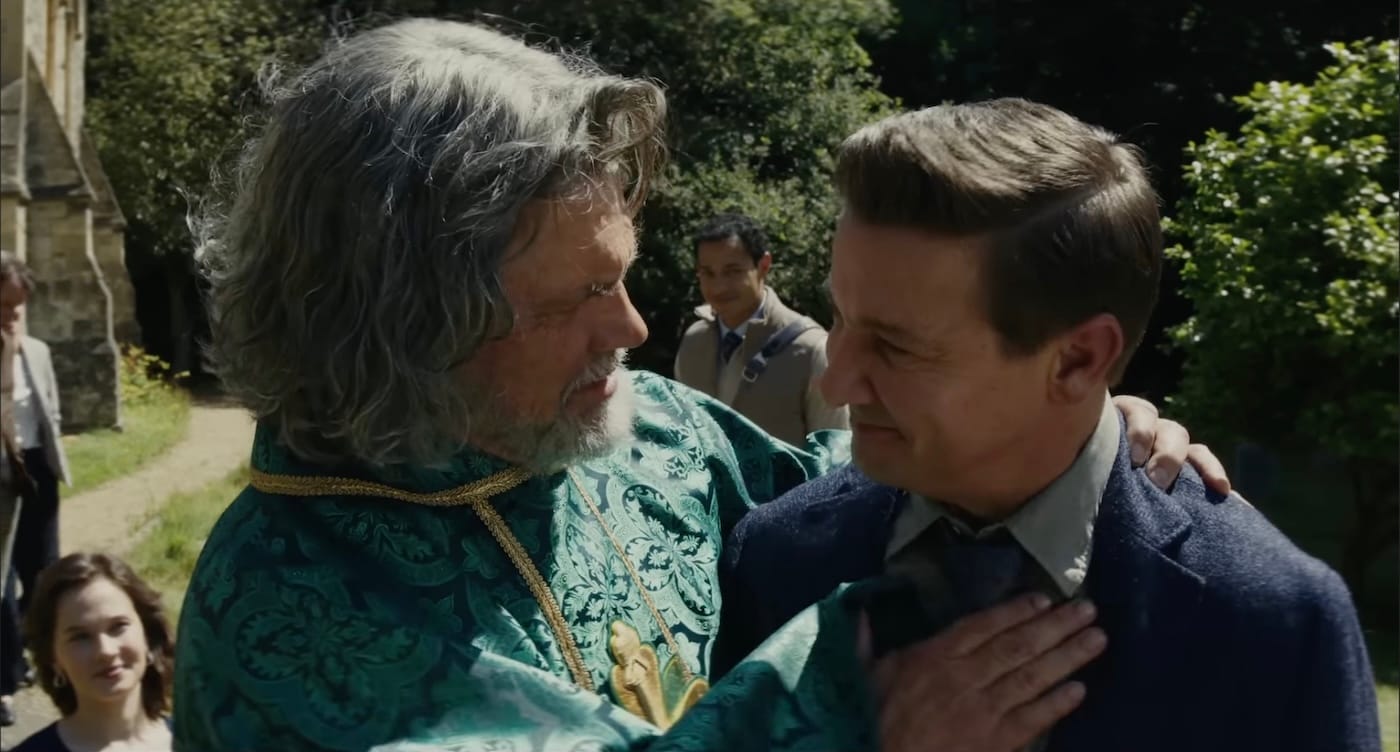
This tension between what the church has become and what it was meant to be poses a test for Father Jud Duplenticy (played here by Josh O’Connor, for me the most interesting young actor in the movies so far this decade). And that test will intensify as he is assigned to serve as an assistant to a fearsome, devious, and power-hungry Monsignor Jefferson Wicks (Josh Brolin, reveling in this chance to play a depraved megalomaniac). Working with Wicks, Duplenticy sees up close how easily a church can snuff out the light, the hope, and the joy of the Gospel by fostering a hellish self-righteousness. And that’s exactly what Monsignor Wicks is kindling in his congregation every Sunday as he stands in the pulpit and condemns a selective list of sins.
Presented with such a clear moral vision in the opening minutes of Wake Up Dead Man, I felt a surge of hope there, in my movie theater seat, that I have felt only a few times in recent years. I felt it in the redemption arc of Wes Anderson’s The Phoenician Scheme (earlier this year), and last year in the profound theological musings of Cardinal Lawrence (Ralph Fiennes) in Edward Berger’s magnificent Conclave. Once in a while, it seems, God touches artists with a clarity of vision that allows them to speak — and, better, show — some truth so effectively that they illuminate the corruptions of this age, motivate us to repent of our complicity in wickedness, and remind us who we are meant to be and what we are meant to do. They give us an opportunity to move forward in the direction of healing and hope.
Look at this: I’ve written almost 700 words here, and I’ve barely crossed the two-minute mark of Wake Up Dead Man. There is so much more to come in the next 140 minutes of this astonishing, ambitious, wildly entertaining, and consistently hilarious murder-mystery. Wake Up Dead Man is simultaneously the most fun I’ve had at the movies and the most moved I have been by a commercial feature film in at least the last four years.
“You start fighting wolves and before you know it everyone you don’t understand is a wolf.”
— Father Jud in Wake Up Dead Man
Three Knives Out Mysteries — Three Cultural Cancers Exposed
“It’s as if this movie was made for me.” “Wake Up Dead Man seems calibrated to appeal to my interests.” “This reflects my own frustration with religion.” “This movie holds up a mirror to the political manipulation that has led Americans to dismantle their democracy and hand their resources over to the wealthy and the heartless.” “This is a movie about why I left the church.” “This is a movie about why I stay in church, even though it breaks my heart.”
These are the kinds of things I’ve been hearing from close friends and colleagues who have seen this movie — Christian and non-Christian alike. And that’s encouraging. It’s encouraging to see non-religious moviegoers expressing enthusiasm for Father Jud, who shows them a different kind of Christianity than the fear-fractured and legalistic version that has become prevalent and toxic. They seem surprised by the idea that Jesus came to love the world, rather than to condemn it the way so many Christians do. They are drawn to Father Jud, an imitation of Christ who inspires them with his open-armed faith and leadership. He shines in stark contrast to the corrupting influences of those who exploit Jesus’ name for their own selfish agendas.
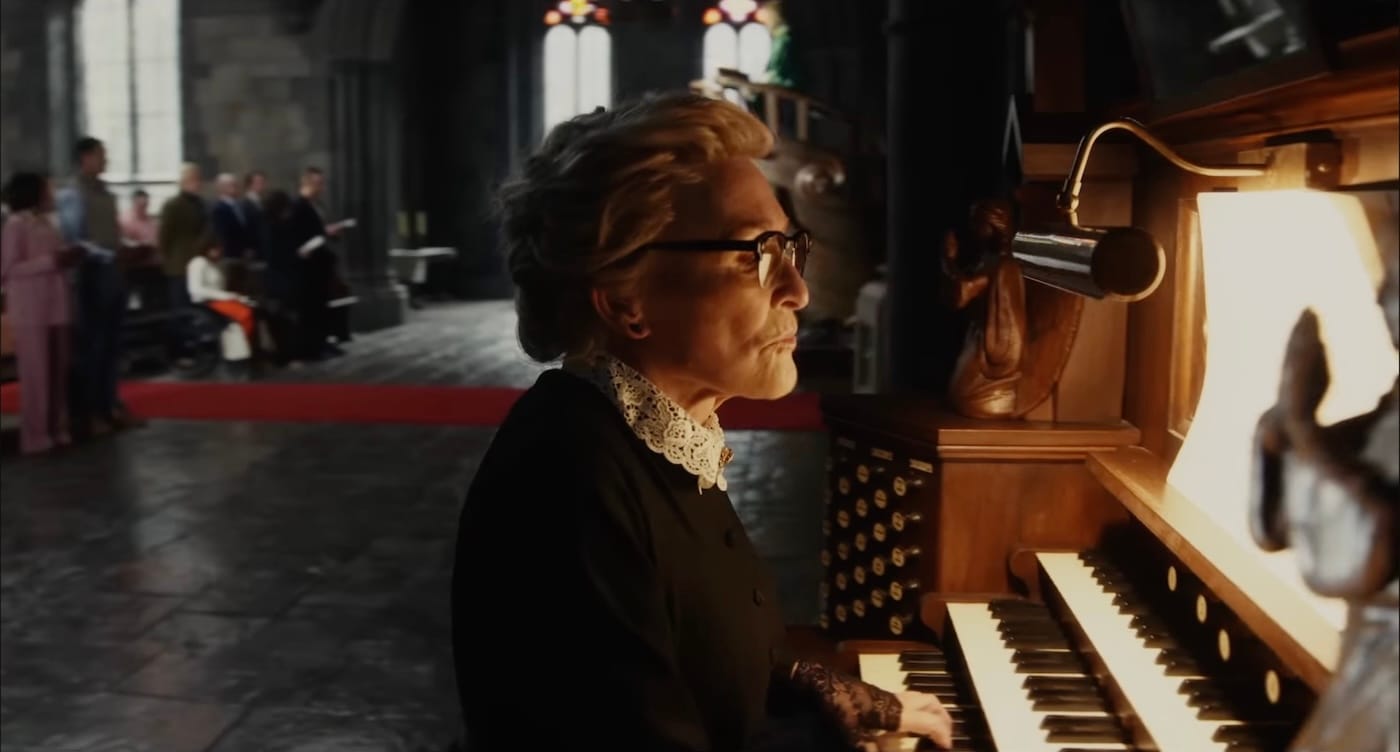
Similarly, many of the Christians I know are grateful for a movie about the destruction that takes place when the Gospel of grace is replaced by a new law, a system of moralism and legalism. They’ve seen the faith that saves them perverted into a platform for advancing Western culture and white supremacy, defending systemic prejudice, and condemning particular populations.
That this diverse audience is responding with such enthusiasm does not surprise me. This movie’s themes have moved us before: in the narrative arc of the original Star Wars trilogy, for example, with its lessons about rejecting fear and anger, and prioritizing an open-armed faith. (The Skywalker saga gets quoted here — prominently — as if Johnson is well aware of the correlation.) Moreover, Wake Up Dead Man is dealing with questions explored in Tolkien’s The Lord of the Rings trilogy. (And before this movie is over, we’ll see a strong visual reminder of what happens in those stories when characters are tempted to seize and exploit the Ring of Power.)
None of this, though, explains why the movie theater was sold out for the opening night screening of this film at The Crest Cinemas Center in North Seattle. What brought them there? Well, first, they were already fans of the writer and director Rian Johnson, whose films — including The Last Jedi, his own controversial contribution to the Star Wars saga — have been consistently anchored by a strong sense of conscience, and a wisdom that breaks down binaries. In fact, the Knives Out series is making a habit of wrestling with some of the most urgent and important controversies that are fracturing American culture today.
A quick review:
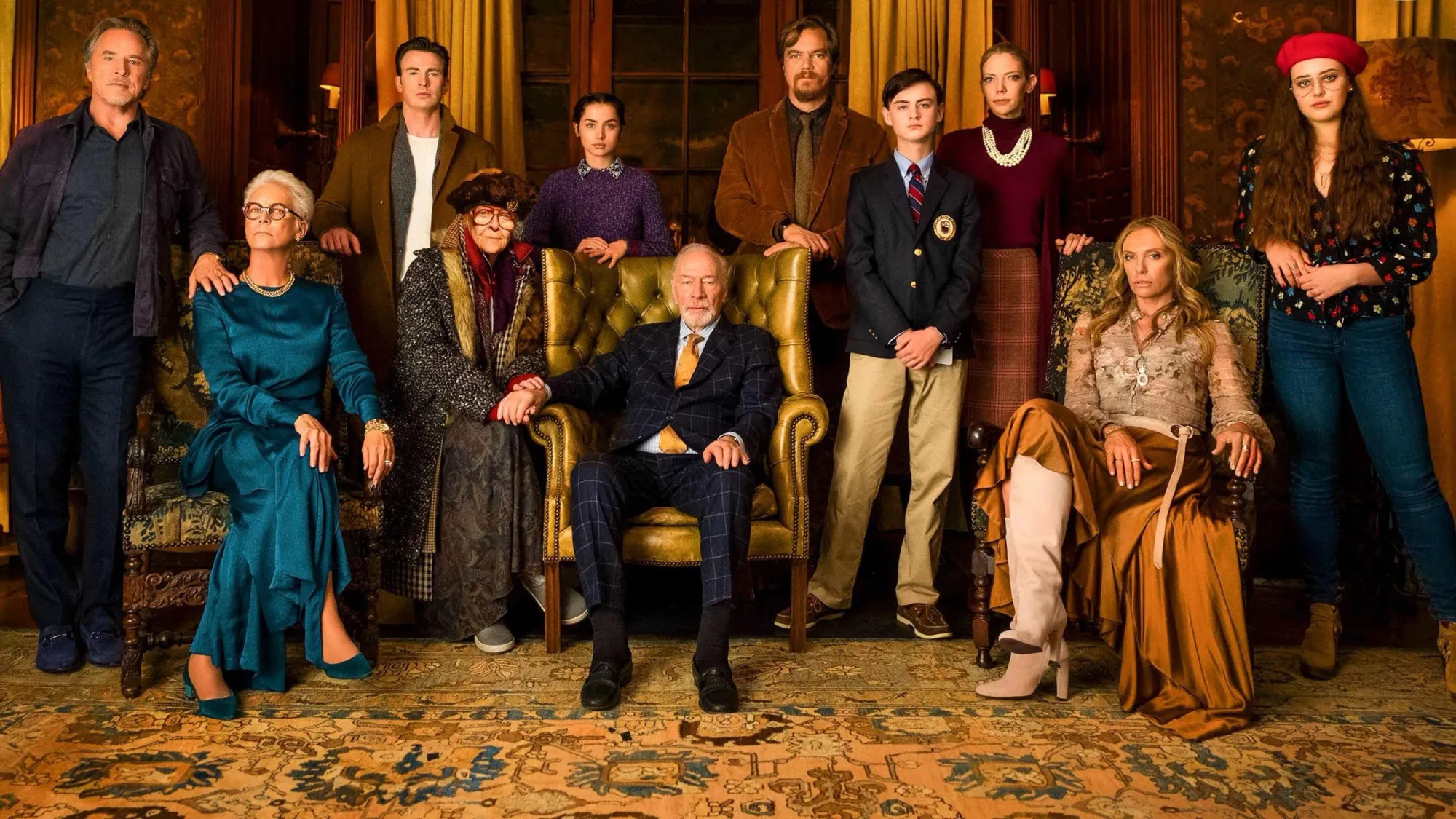
The first Benoit Blanc mystery, Knives Out, is (let’s pretend you don’t already know) a good-humored, Agatha Christie-loving detective story about a family of privilege-boosted squabblers who clash over the fortune of their patriarch, and who lose their minds when they find out the money might be inherited by an undocumented immigrant, the young caretaker of the patriarch. The story mirrors back to us the hatred and cruelties we now see amplified at by the conspiracy of racists and Nazis that America now calls a “government.” Knives Out gives conscientious moviegoers a cathartic experience. We love the bumbling, improvisational antics of the truth-seeking detective Benoit Blanc (Daniel Craig, trying on a Foghorn Leghorn drawl and stumbling only somewhat competently through the scene of a crime). We feel compassion for the kind-hearted nurse (Ana de Armas). And we wanted to see Blanc defend the nurse against accusations that she was responsible for the murder of the old man she cared for (Christopher Plummer in one of his last, best performances). Johnson’s tangled narrative brought about the kind of satisfying justice we would like to see more often in the real world.
The sequel, Glass Onion, took Detective Blanc and a host of materialistic celebrities (including Kate Hudson, Dave Bautista, and Kathryn Hahn) away to an exotic island owned by a tech billionaire, and when somebody ended up dead (shocker!), Blanc ended up exposing the self-serving lies, the preposterous conspiracies, and the morally bankrupt hearts of self-proclaimed “disruptors” — those who, enjoying unjust privilege, revel in wanton destruction. (Today, they would all have positions in the Trump administration, positions they’re not at all qualified for, and they’d be committing all manner of crimes with cover from their conman overlord.)
While both films are stocked with A- and A-minus-list actors, and designed for maximum entertainment, they both demonstrate that their maker has more than mere entertainment on his mind. Johnson has his finger on the pulse of current events and means to apply pressure to the “swellings” that threaten America’s culture and Constitution. He’s offering up x-rays of . . . let’s call it this present darkness. And as we study these microcosms of murder, we arrive at diagnoses of different diseases.
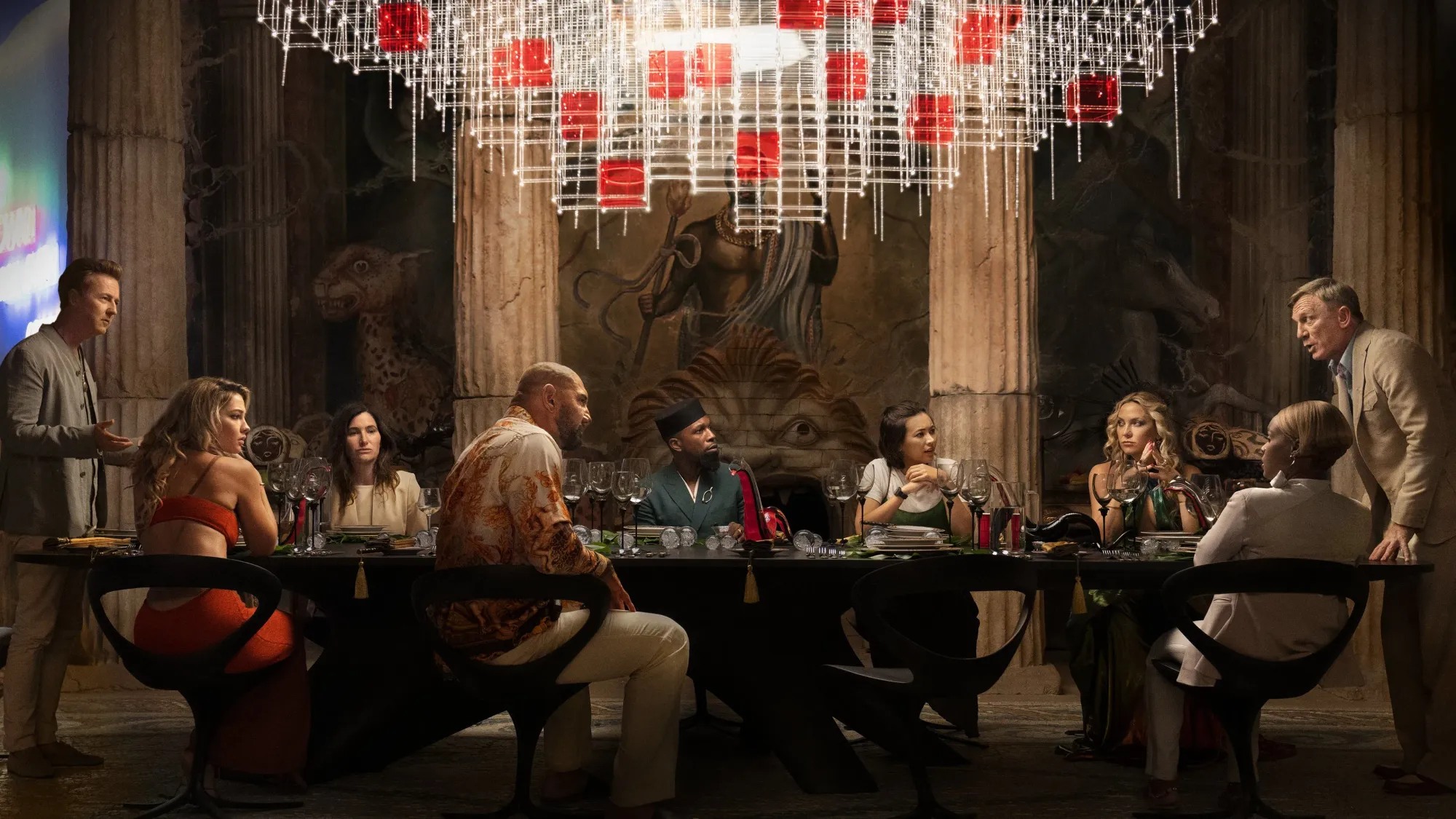
So perhaps it shouldn’t surprise us that Wake Up Dead Man is set in a distinctly American distortion of Christianity — the prevalent version, so fraught with self-serving political agendas, power games, and grotesquely toxic masculinity.
In the parish known as Our Lady of Perpetual Solitude, Monsignor Wicks loudly condemns certain sins, and treats some minorities as unworthy. In this way, he ensures that his privileged congregants can take pride in their self-righteousness. Other sins, meanwhile, are excused (or at least ignored) by men and women alike to protect their white male leader and the institution’s financial stability. As is so often the case with American pastors, when the ugly secrets of this tyrannical priest are exposed, women will be marked as the cause of any transgression. And as Wicks casts down the barrier between church and state, his aspirations go beyond the interests of his flock. He begins to see a possible path into politics, where he might dominate an even larger stage.
We know how this goes. It won’t end well. Somebody will end up dead.
Murder is not the only mystery for Blanc to uncover here
When the intolerable Jefferson Wicks welcomes Father Duplenticy to his new appointment, he insists on being addressed as Monsignor, and opens with the question, “Are you here to take my church away from me?” Jud denies any such motivation.
But the prospect of overthrowing Wicks quickly becomes appealing. Wicks is not guiding his parish in the paths of righteousness, but turning his congregants into dependents who get off on his condemnation of outsiders, and who serve him in the hopes of getting what they want from him. He controls his congregation by controlling the story of their history, perpetuating a dubious tale about his own mother, whose reputation for promiscuity earned her nothing but contempt from the church community, and who allegedly desecrated the sanctuary in a Satanic tantrum when she was denied the inheritance she’d been expecting.
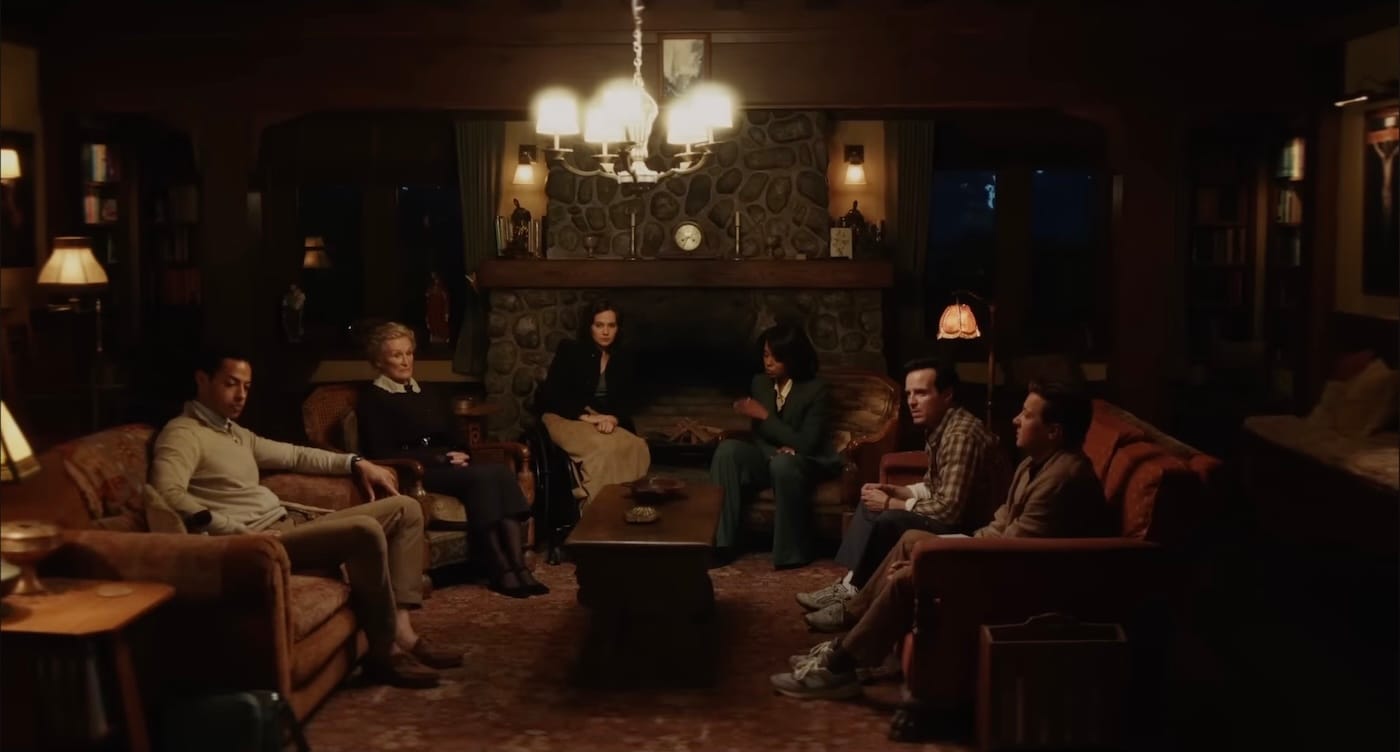
Father Duplenticy has his work cut out for him if he is to find a peaceful place among them, help them recognize their sins, introduce them to the idea of grace, and thus help them turn their fighting fists into open arms. This will involve the cultivation of empathy among these churchgoers for their neighbors. Jud prioritizes Christ’s foremost teaching — Love your neighbor as yourself — and rejects any spirit of condemnation. Under his influence, the faithful might learn to reconsider the story of Wicks’s troubled mother, to imagine what her sufferings must have been like, and to respond by saying “That poor girl” instead of slandering her as “the harlot whore.”
But can Father Jud humbly serve this congregation by practicing what he preaches without incurring the wrath of Monsignor Wicks?
That question is soon pushed aside by a matter much more urgent: a murder in the church. And all of Wicks’s parishioners merit some measure of investigation:
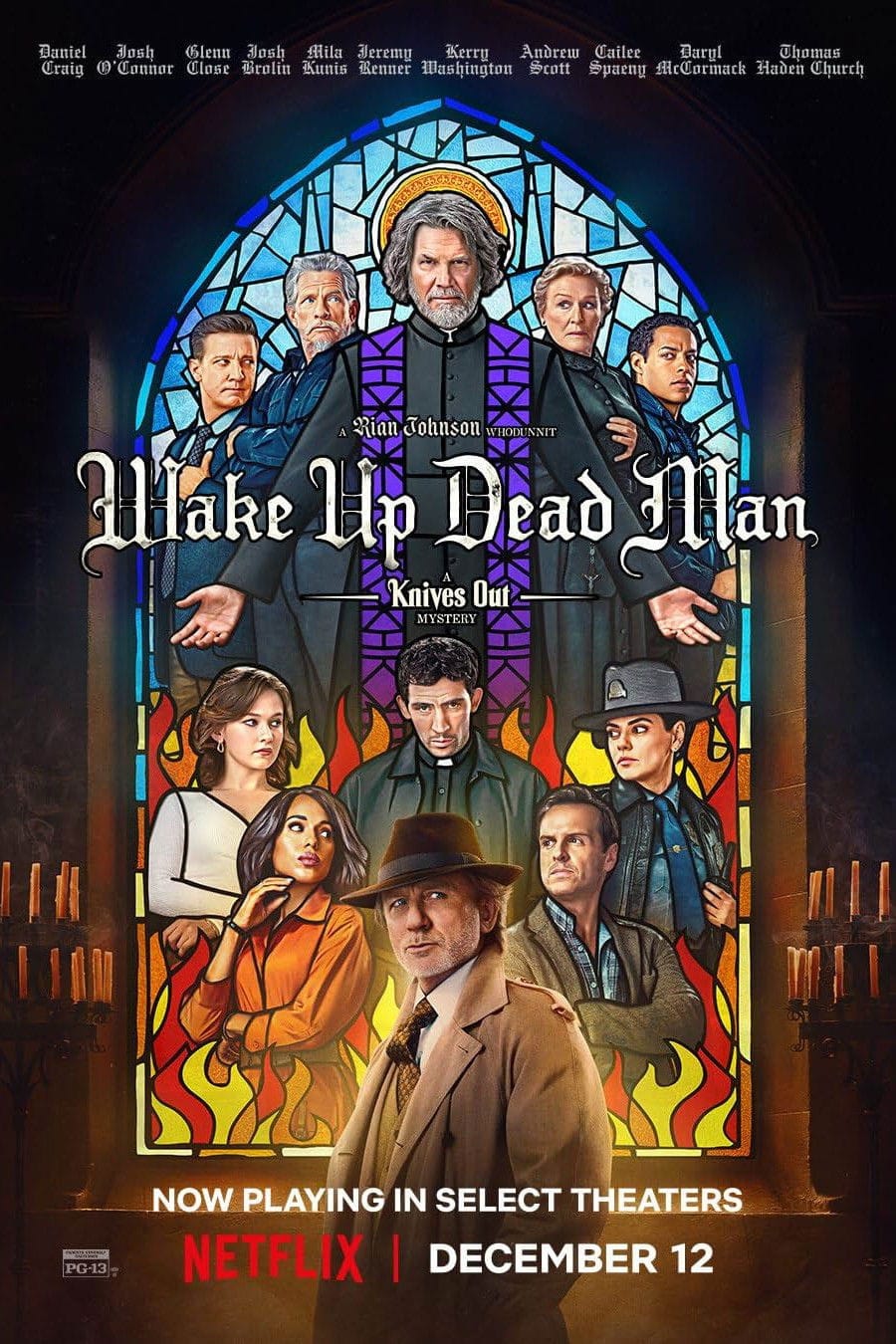
- Martha Delacroix (Glenn Close), Wicks’s faithful assistant and a lifelong parishioner;
- the groundskeeper Samson (Thomas Haden Church), who manages his alcoholism with help from Wicks and Martha;
- Vera (Kerry Washington), a troubled lawyer who, faithful to her dead father’s desires, helps Wicks keep the church afloat;
- Cy (Darryl McCormack), Vera’s illegitimate brother whom she agreed to raise after her father's death, and who grew up to become “a GOP golden boy” by amplifying all the paranoia promoted by the Religious Right (his political strategy: “Show [people] something they hate and then make them afraid it’s going to take away something they love”);
- Nat Sharp (Jeremy Renner), an embittered local doctor resentful toward the wife and daughter who left him;
- Lee (Andrew Scott), a sci-fi novelist who has been converted to Wicks’s apocalyptic rants against “the liberal hive mind”;
- Simone (Cailee Spaeny), a gifted musician suffering chronic pain.
Any one of these, or some conspiracy of multiple players, might have something to do with the murder. But that’s not all. The killer might have come from outside as well. Monsignor Wicks has made a practice of condemning visitors mid-homily, driving them from the sanctuary, and thus deepening the smug self-righteousness of the “faithful” and their contempt for “the world” outside. Surely there are some who, having been driven out, bear grudges.
None of this stops the congregation from jumping to the most obvious conclusion. Duplenticy is the newcomer, after all. He’s been caught in contentious clashes with Wicks. He’s their prime suspect.
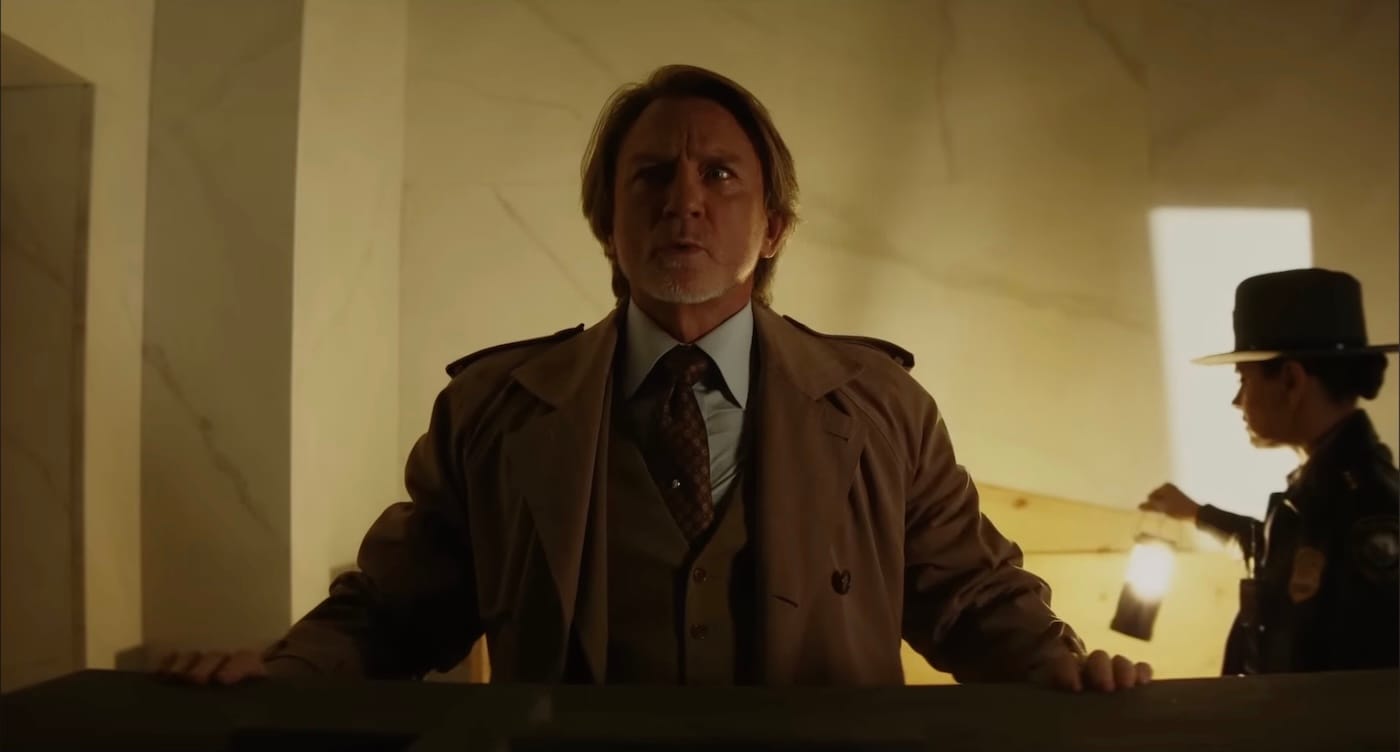
But the detective in charge of this case — the world-famous Benoit Blanc (Daniel Craig) — knows better than to make judgments based on first impressions. This community is too complicated, and fraught with grudges and motives. Relying on intuition every bit as much as his dubious rationality, Blanc keeps Father Duplenticy as close as Watson is to Holmes in this investigation, sensing in the young priest’s cooperation an integrity that will serve his inquiry.
Neither the detective nor the priest are prepared for the layers of deception and depravity that their interrogations and covert operations will uncover. Even the local sheriff (Mila Kunis, doing her best with a one-note character) will become skeptical of their approach to solving the case. The resolution will reveal more than just motives for a murder. The conclusion will give us a renewed understanding that the corruption of a faith community is not a condemnation of the faith itself. In fact, it will underline just how much more we need imitators of Christ than culture warriors to “defend” him.
Jesus warned his followers that “Many will come in my name and deceive many.” Like the murderous authoritarian currently spewing spite from the White House, and like the megachurch pastors who “preach a subtle hatred” with “the Bible as their alibi” (to quote an Over the Rhine song), Wicks is “testing tolerances, tapping deep poison wells, hardening, binding with complicity.” Sowing such wicked seeds, he has produced a harvest of betrayal, division, and bloodshed. Here is a prime example of what happens when Christ’s church begins to fear the world, or seeks to benefit from it, rather than to take on the burden of humility and strive to serve.
Here is a film that, written and directed by a former churchgoer, who now identifies as an ex-believer, reflects the power of the true Gospel more brilliantly than any film I’ve ever seen from a so-called “Christian” studio, exposing cancers that are eating away at the heart of the Church and rotting the bones of American democracy.
Is this that rarest series, where Episode Three is the best so far?
You may note that I haven’t said anything yet about any aspect other than the narrative. The story that Rian Johnson tells here is that unusual, that surprising.
But this ensemble deserves nothing but praise for taking a screenplay that has, let’s face it, too many supporting characters, too many murder suspects to study, and makes each one of them interesting. They find excellent chemistry in comedy, even as they slow-cook an earnest inquiry into what Christianity can be when Jesus’s most countercultural teachings are taken to heart.
In this overcrowded context, in which it’s clear that O’Connor is the true leading man (and worthy of Oscar attention, in my opinion), it’s only right that Johnson makes plenty of room for Daniel Craig to go on developing the franchise's only recurring character. Digging deeper into that ludicrous drawl, that cocky overconfidence, that flammable temper, Craig shows us that Benoit Blanc is a character who is still growing, still changing, raising questions about who he might become in the future. You’ve probably already heard fans quoting one multisyllabic murder-mystery term that he makes his own here, but he gives us so many quotable moments, so many eloquent rants against religion, so much revelry in his extravagant revelations about the evils afoot in this calamitous community.
It’s hard to single out anyone else from the supporting cast without just surrendering and going into detail on each contributor. I guess I’m currently reeling from Josh Brolin’s commanding turn as Wicks. With his wild gray mane like a storm cloud around his fiery eyes and his lion’s roar, he looms like a nightmare inspired by so many antichrists we’ve seen in America’s pulpits: monstrosities of ego, greed, unhinged wrath, and obscene condescension.
Kerry Washington is radiant as Vera, a woman wronged several times over, jaded and worn down by misogyny. As Cy, a social-media influencer whose ambitions are surpassed by his naïveté, Darryl McCormack makes a strong impression. (There’s a noticeable touch of Hayden Christensen’s Anakin Skywalker in his line deliveries, which might very well be deliberate, given the clear Star Wars call-out in one of his biggest scenes.) Glenn Close, whose most recent major turn was in Ron Howard’s ill-advised adaptation of a certain novel by J.D. Vance, invests so much passion and comic energy in her role as the hyper-sanctimonious Martha that I enjoyed her more than I have since her dominant performance opposite John Malkovich in 1988’s Dangerous Liaisons. But a few of the film’s strongest punches come as punchlines perfectly deployed by Jeffrey Wright, who becomes the sharpest scene-stealer in a cast full of scene-stealers. (I’m surprised that I’m not raving here about Andrew Scott, Jeremy Renner, and Cailee Spaeny, who are always worth watching. But it seems they’ve drawn the short straws in a film that only has so many big moments to hand out across its 2-hour and 24-minute run time.)
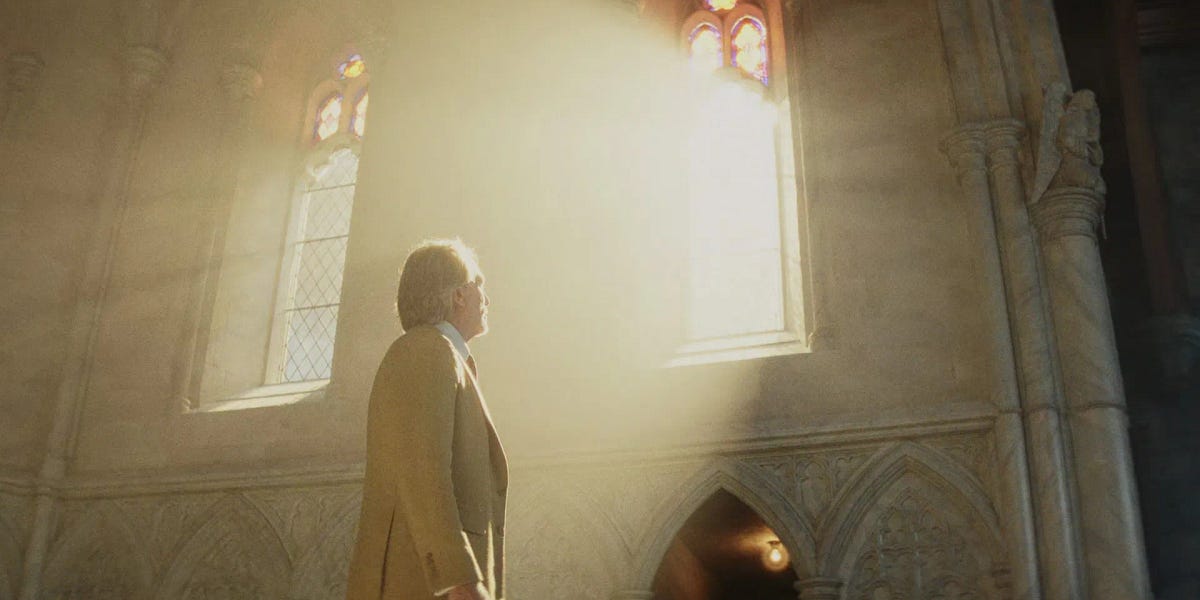
But for all of these performances, I’m tempted to spotlight an unexpected MVP to the Academy: For Your Consideration: Our Lady of Perpetual Fortitude. Yes, that gothic architecture is an active character in the drama. The sanctuary is surrounded by windows that serve as a second film-score orchestra, accenting scene after scene with well-timed flourishes of light, as if an accomplished rock-show lighting tech was given a chance to direct sunshine and shadows instead. In concert with the light, Nathan Johnson — Rian’s cousin and faithful composer — hooks us in the opening moments with agitated strings (“like nails on a chalkboard,” he says in a RogerEbert.com interview), then draws us into soaring orchestral score, appropriately heavy on the harp.
Elevated by such excellent collaborators, the Knives Out trilogy is now one of the strongest pop-culture franchises I’ve seen (right up there with the Toy Story movies), each episode advancing the development of its recurring protagonist, rich enough to reward multiple viewings. I see strong potential here for a long, long run of meaningful investigations, so long as Rian Johnson continues to find joy at play in in the Benoit Blanc universe. Of the three, Knives Out has, in my mind, the most satisfying mystery and the strongest ensemble. But Wake Up Dead Man, despite its revelations becoming a bit too convoluted, a bit too implausible, goes on astonishing me — and so many cinephiles I know who engage with questions of faith — with the most insightful exploration of faith, politics, and community that we’ve seen from a major American studio. I come away from each viewing more deeply moved, more inspired in my faith, and more hopeful that movies have the power to be a great light in the darkness.
And by the way, if all of this sounds too heavy, too ponderous, I must add that the movie is, I daresay, also the funniest movie I’ve seen this year. (And I’ve laughed my way through The Naked Gun twice!) As my evidence, I can only testify of the non-stop laughs from an audience that sold-out an opening night screening at The Crest in Seattle. It’s such a rare and wonderful event anymore to gather with your community — friends and strangers alike — and experience so much joy together. We gasped at the young priest’s wisdom, delighted in the quirky detective’s discoveries, and then laughed as light exposed evil and burned it away.
If you find a chance to round up your friends and watch Wake Up Dead Man — ideally on a big screen — I really hope that you, well . . . Scooby-dooby-do.
Check back. This review is a work in progress. You may find it has been revised and amended soon.
Here are more links worth your attention:
Steven D. Greydanus has composed a much more concise, much more eloquent review of Wake Up Dead Man at U.S. Catholic. Even as I watched the movie for the first time, I was wondering: What will SDG think of this?! He does not disappoint.
Even better, Leah Schnelbach's Reactor review, followed by an even more thorough and spoiler-filled analysis of the whole film, are full of revelations that have deepened my appreciation of the film. Thanks to Jason Morehead at Opus for bringing these to my attention.
My friend Sarah Welch-Larson at Seeing & Believing pulls off that magic trick of immediately establishing a strong connection with her subject in her opening questions to Rian Johnson, and the rest of the interview is a joy:
 Sarah Welch-Larson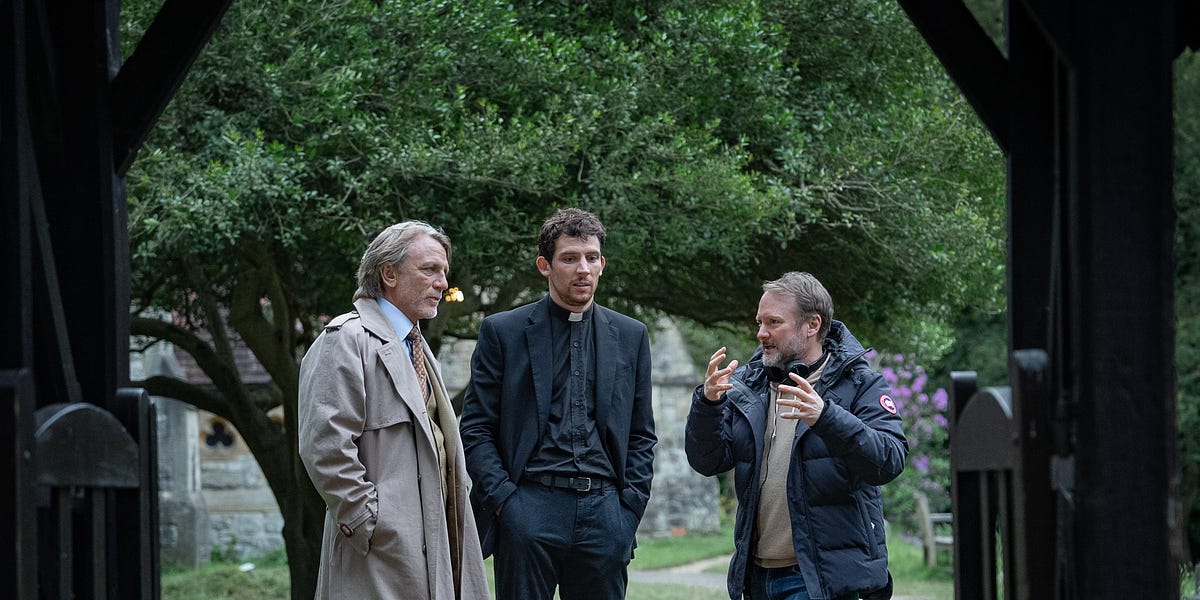
I haven’t visited Brehm Center activities in many years, but I have so much to thank them for. And here’s a new highlight: Kutter Callaway interviewing Rian Johnson on YouTube.
And if you want to see a film critic having a life-changing, epiphanic experience at the movies, read the Letterboxd notes from writer and filmmaker Houston Coley — here and here and here and here. And then check out his essay:
 H. Coley