
First impressions of Little Amélie or the Character of Rain
In a year that hasn't been particularly exciting for animation, Little Amélie is a memorable standout.

“You’re going to love this.” “Knowing how much you love Studio Ghibli films, I think this is your jam.” “I know you love it when movies take small children seriously and make them memorable characters.”
More than one of my friends highly recommended the awkwardly titled Little Amélie or the Character of Rain to me when the film, directed by Maïlys Vallade and Liane-Cho, played in the Pacific Northwest, first at the Orcas Island film festival, then at SIFF (Seattle International Film Festival). They know my love of films that really get little kids: My Neighbor Totoro, Petit Maman, Ponette, Into the West. And they know how much I appreciate artful animation.
So I’m glad that Anne and I chose this film as an easy, late-night cool-down movie during our December getaway to Santa Fe, New Mexico. Seeking inspiration, we had enjoyed a long day of walking around the plaza and getting drunk on the extravagant colors and pervasive artistry of that city, and now our imaginations were ready for a good story. Neither of us knew yet that the film is based on a novella by Amélie Nothomb called The Character of Rain. (Why not just call the movie that?) But now, the film — and even more, what I’ve been reading about its literary source, which is apparently an autobiographical account — has made me curious about Nothomb herself.
To those who recommended the film: I hate to admit it, but I’m not as enamored of the movie as you thought I would be. Sure, as an all-ages adventure in magical realism, exploring the challenges and rewards of cross-cultural relationships, it’s often enchanting, always amusing, and occasionally profound. But it also has sequences that I find confusing.
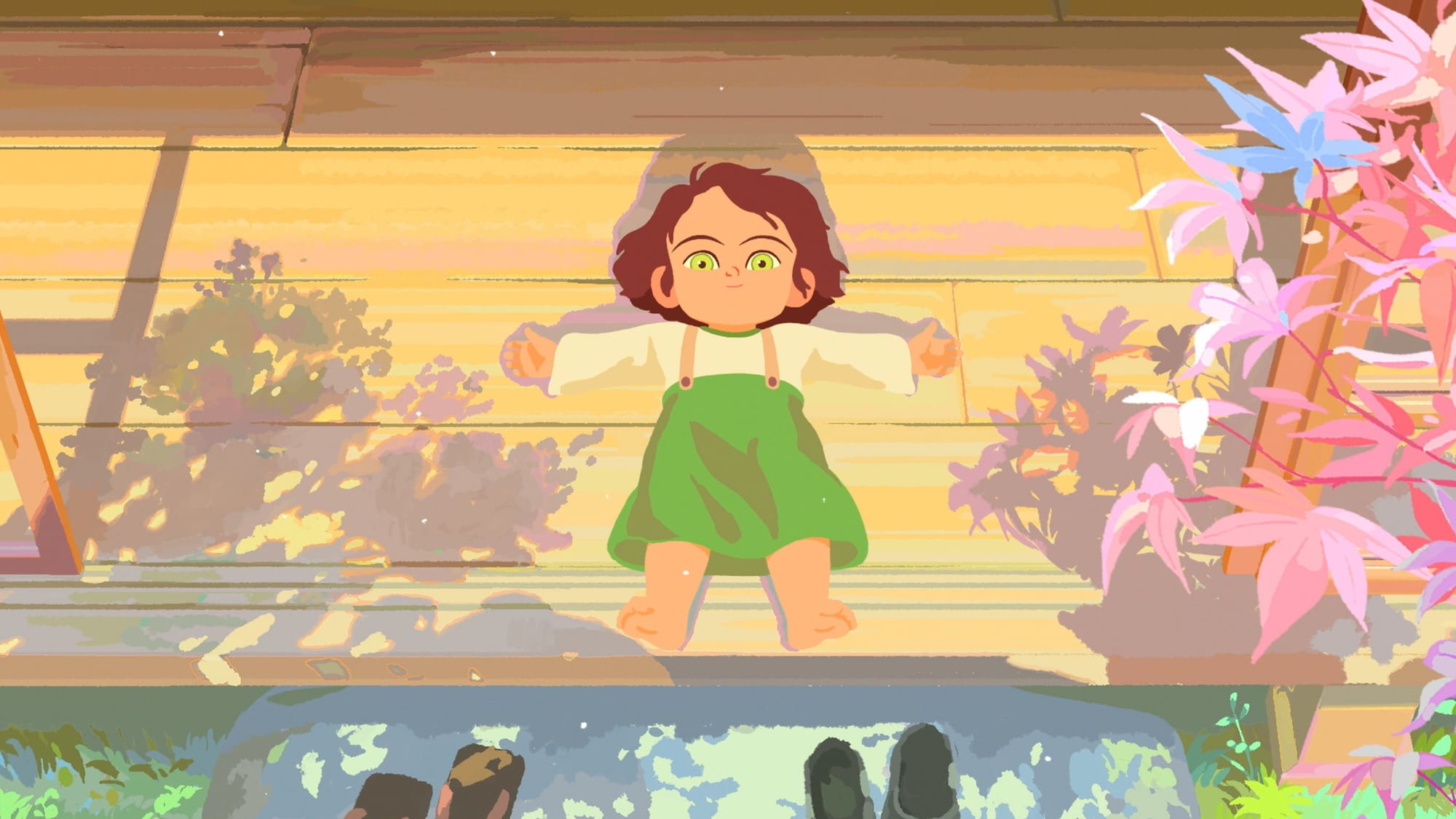
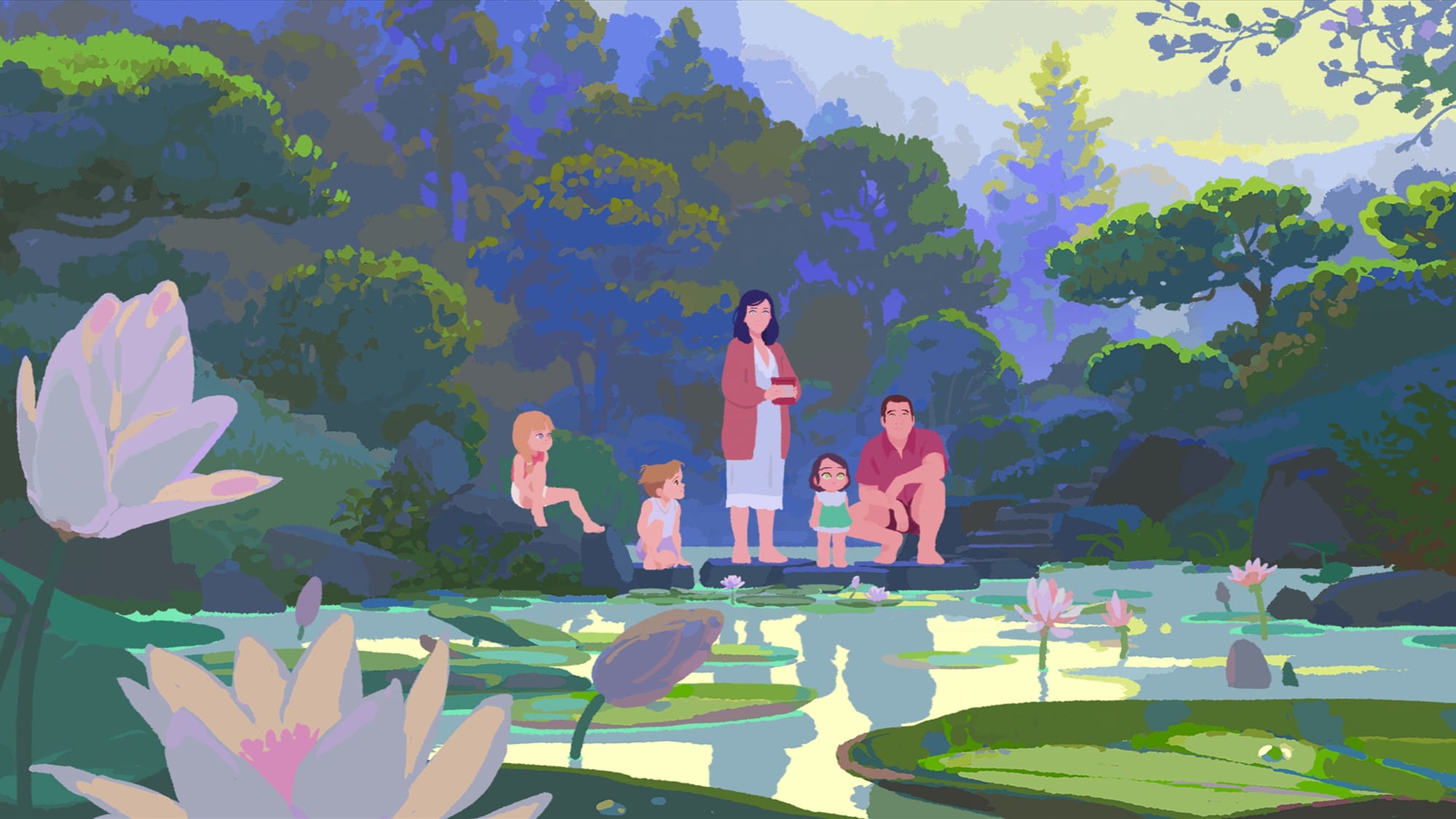
Little Amélie or the Character of Rain, which I suspect is drastically simplifying the testimony of the novella’s narrator, is given to us through the point of view of a baby born to a Belgian family that lives in Japan in 1969. Things are not quite right with Amélie: she’s aware, but unresponsive, staring at her family but unable or unwilling to speak, move, or even smile. Her father (a diplomat), her mother (a housewife?), and her sister Juliette dote on her. And, true to the form of so many boys his age, her brother Andre persecutes her. I find it strange how this family that hovers around her seems unmotivated to investigate the fact that Amélie is awake but largely unresponsive. They seem content to just wait — for years — to see if she will eventually snap out of it.
They cannot know what we, the audience, know from the child’s interior monologue: that she considers herself a god — this is a traditional Japanese belief about children until the age of three (a fact that goes unexplained in the film) — and that she observes her family and her world with a kind of detached bemusement and a philosophical curiosity.
When an earthquake jars Amélie out of her state of disengagement, her family has to adjust to her explosive tantrums, a rage against a frustrating world. The stern and disagreeable Japanese landlady, Kashima-san, whose patience for disruption is in short supply, and who bears a grudge against her European tenants, appoints a Japanese housekeeper, Nishio-san, as a helper for Amélie’s beleaguered family.
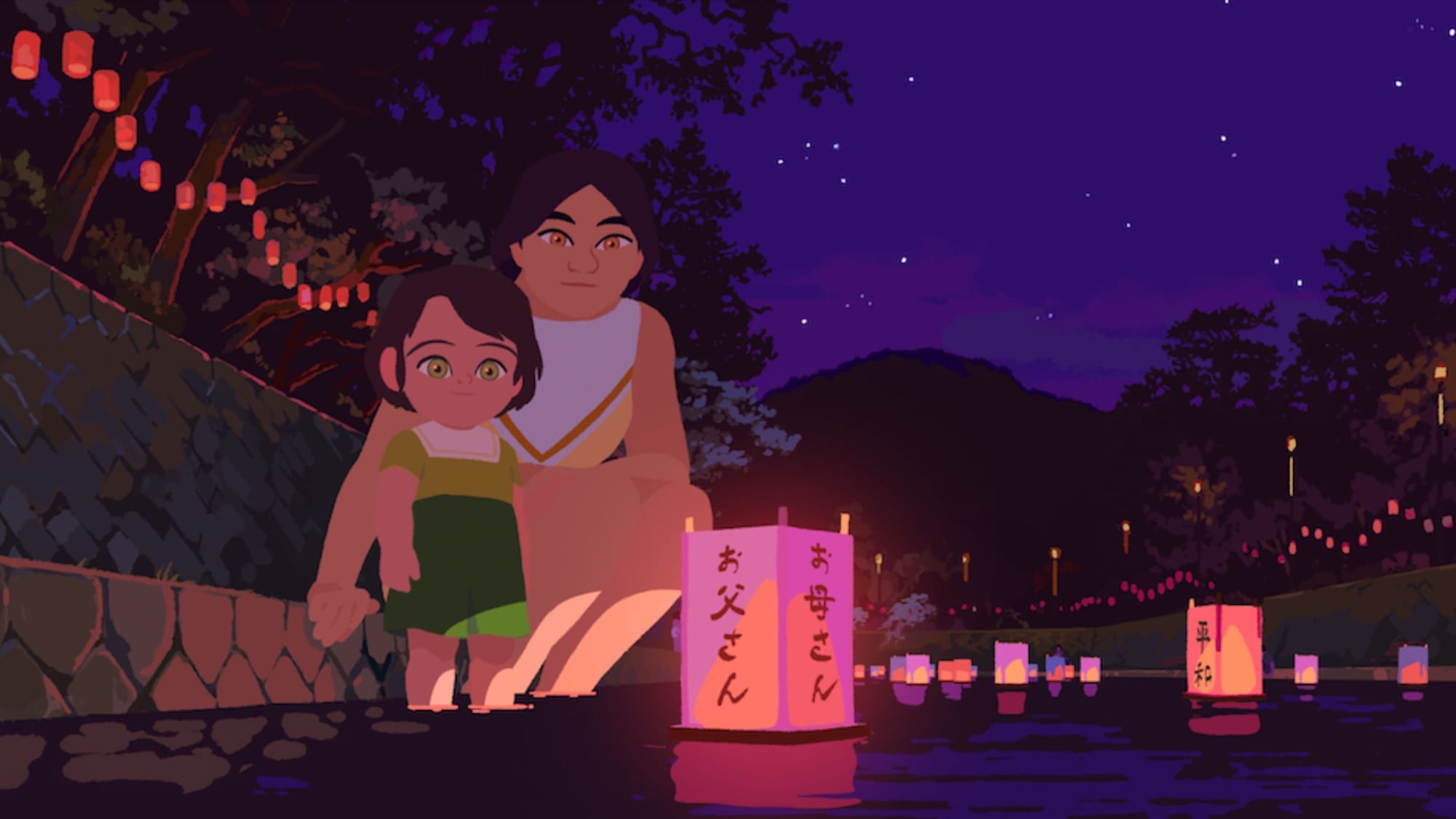
Amélie’s wrath is eventually short-circuited by a gift from a visitor, and that enables her to settle down and engage with her world in a more conventionally childlike manner. She quickly bonds with Nishio-san, whose gentleness, playfulness, and tender attention open up worlds of wonder for her. But the kind-hearted housekeeper, whose past is scarred by wartime violence, also inspires Amélie to ask big, difficult questions about things like war, cultural rifts, and death.
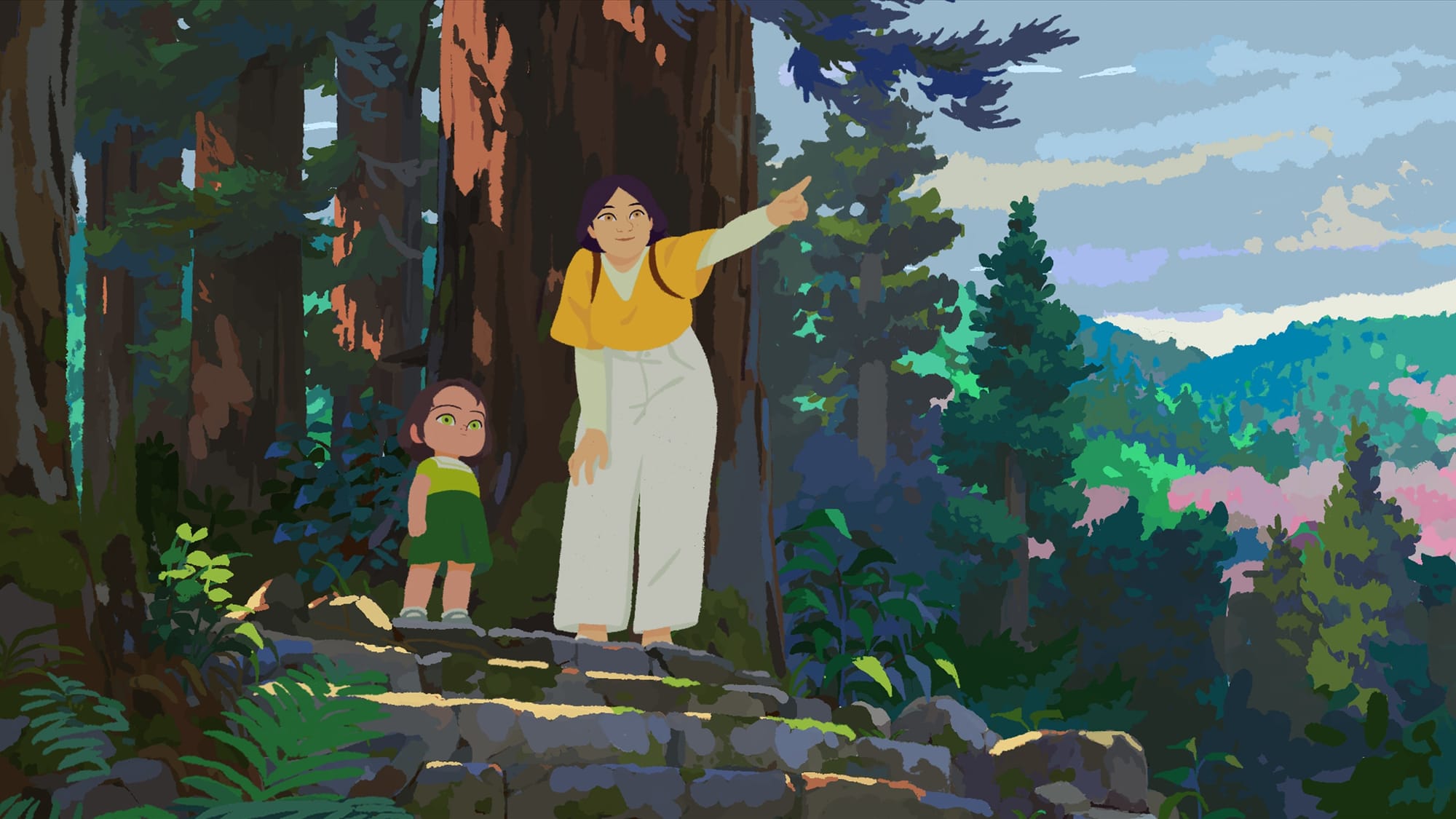
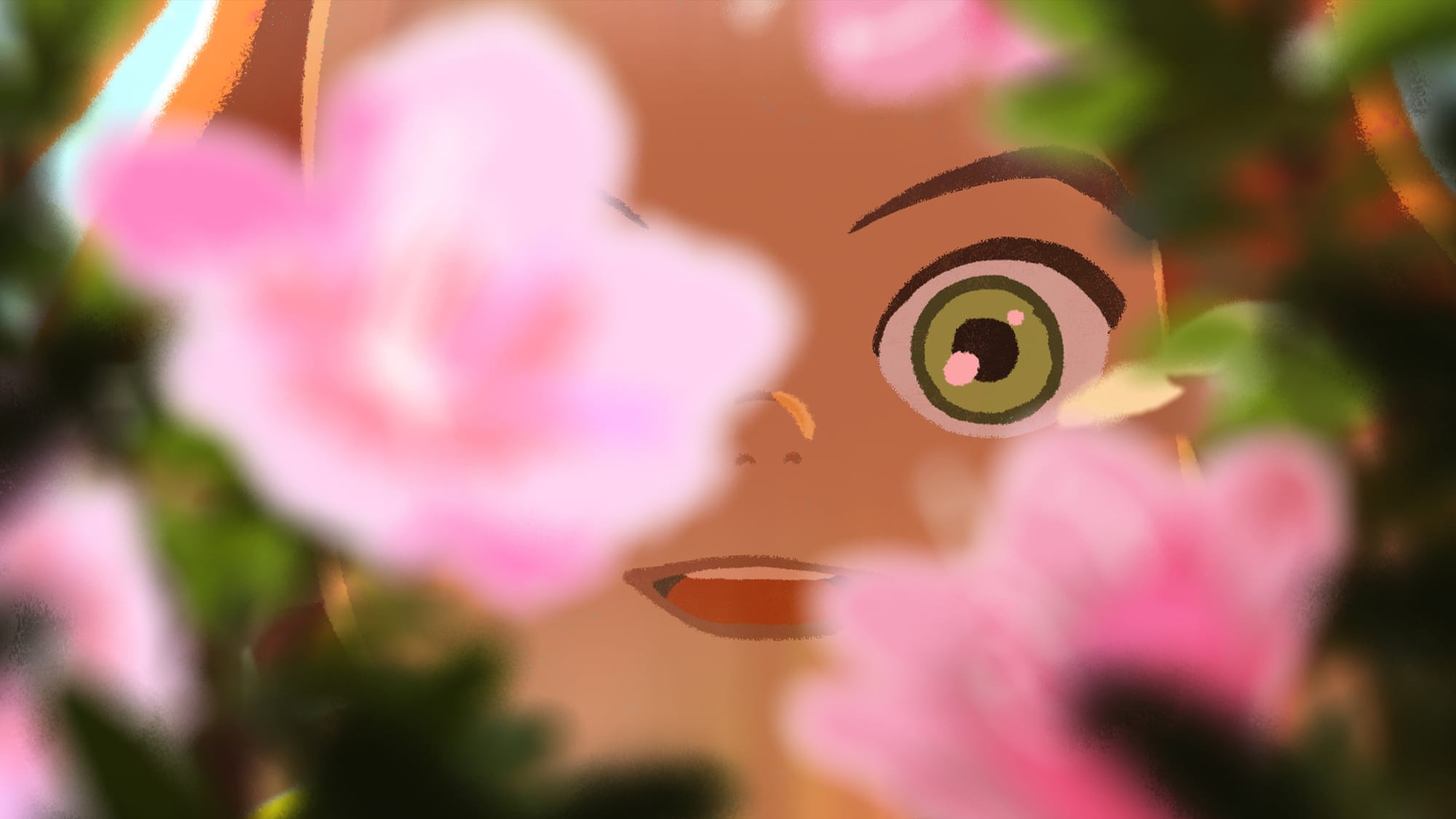
The film is a joy to watch, its style reminiscent of, and clearly influenced by, Miyazaki’s work, but also simpler in ways that distinguish it from so much of today’s extravagant anime. When the material world sparks a state of awe in Amélie, the movie shifts to dream-like sequences of trippy abstract imagery that represents the child’s epiphanic experiences. And when I say the style is simpler than its Studio Ghibli influences, I don’t mean it’s simplistic. The lack of detail in these watercolor-ish images is purposeful, setting us up for surprises later — such as, when an almost three-dimensional monster peers into the house, or when Amélie experiences the sensory rush of her first springtime.
In many moments, I’m convinced that the animators paid close attention to the whimsical toddler in Miyazaki’s My Neighbor Totoro. Amélie has a way of toddling about and abruptly stumbling or falling flat on her face like Mei does. But that’s a feature, not a bug. And the film has its own distinct personality and inclincation toward existential inquiry. I haven't seen a child this young confronted with such daunting questions about life and death since Ponette back in 1996.
Still, I'm often bothered by what seem to me to be strange family dynamics in Amélie’s family. Are these just cultural differences that someone needs to explain to me?
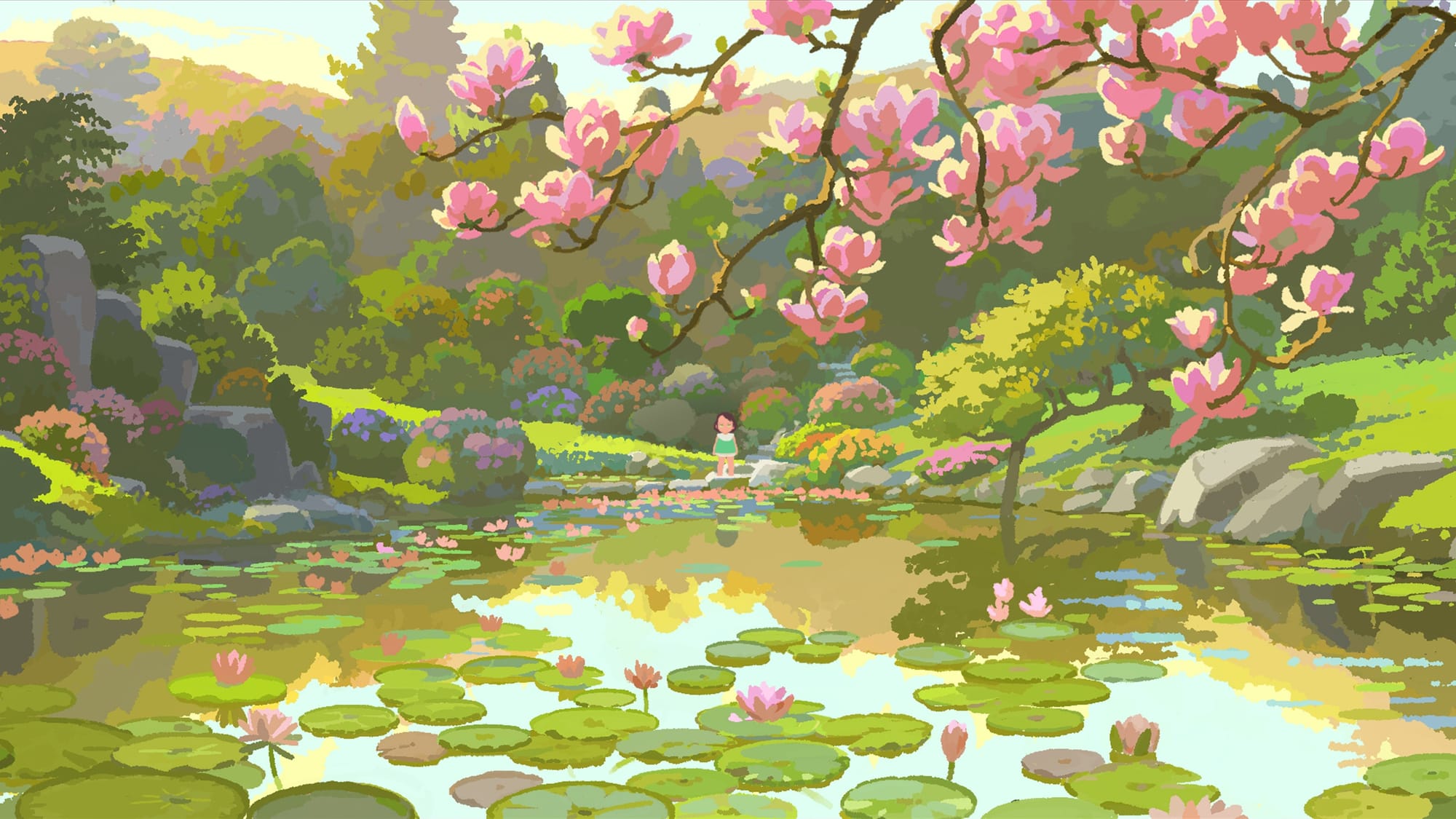
For example, when the family spends a day at the beach, should I consider it plausible that the parents and siblings just let this two-year-old wander away to toddle out of sight, among some rocks and tide pools, at the edge of the surging ocean waves? Amélie may be the most dangerously unsupervised child I’ve seen in animation.
I became increasingly aggravated with Amélie’s family as the film ran on. Okay, so she's special. She thinks she’s God, and she’s prone to philosophical investigations. But there are many points along the way where I would hope a family would consider taking this child to a therapist. Instead, they seem content to let her live her first couple of years almost catatonic, without investing any special attention to her condition. And when she does begin to engage with the world, they're content to let her bond with Nishio-san to the point that the kind-hearted housekeeper becomes a surrogate mother to her when her real mother is, well . . . right there.
I need some answers. Maybe I should read the novella. Maybe that would give me the details and nuances I need to fill in the gaps and appreciate this movie more fully.
Whatever the case, it doesn’t seem right to respond to a work of whimsy and surprise like this one with a bunch of complaints. There’s so much to enjoy here. And in a year that hasn't been particularly exciting for animation, Little Amélie is a memorable standout. I’ll refer you to my insightful friend and colleague Sarah Welch-Larson (The Dodgy Boffin), who offers the best summation I’ve yet found of the film’s wisdom:
“Growing up means learning that you're not the center of the universe; sometimes it also means learning to love someone as though they actually are.”
Note: Anne and I, renting this from Fandango at Home, realized too late that we were getting an English dubbed version. (Thus, as I haven’t heard them, I cannot comment on the voice acting of the original film.) We still enjoyed the movie, but I suspect that our experience would have been greatly improved — as it almost always is with films that aren’t originally in English — with the original audio supported by subtitles. Looks like that might be an option on Apple TV or Amazon. I encourage you to check around for the best-possible streaming option.