
Overstreet’s Favorite Recordings of 2025, Part Two: #30–#16
Time to open up your music apps and make yourself a list of outstanding albums you might have missed!


Time to open up your music apps and make yourself a list of outstanding albums you might have missed!
I’m emerging from the storm of above-and-beyond obligations at work, and I’m seizing pockets of time here and there where I have pour a cup of coffee and catch up on overdue posts for this website. I’m doing what I can, subscribers, to deliver what I promised here! Fact is, I’ve missed having time to reflect on the year that has passed — a very necessary ritual that helps me make meaning of what I’ve experienced.
So, here, for anyone who finds it worthwhile, is a marathon of highlights from the music that fascinated, inspired, and sustained me through the dystopian nightmares of 2025. I hope you’ll discover some good music here that you may have missed in the busyness of your own 2025.
You can revisit Part One — the Honorable Mentions post — here.
And stay tuned for the big finale — my Top 15 Favorite Recordings of 2025 — coming soon (for those who support my work here with some contributions, large or small, to my open guitar case).
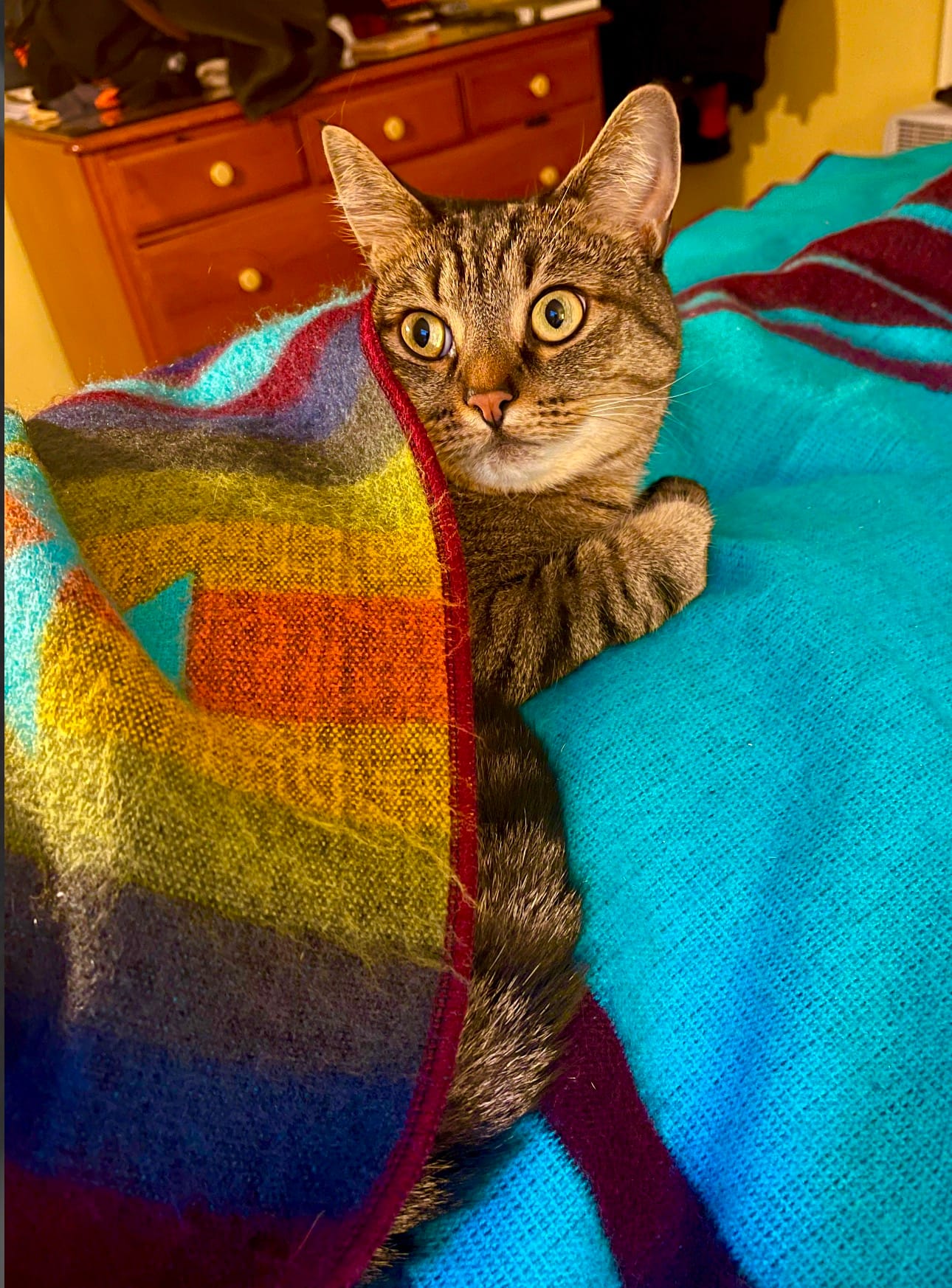
Oh — I almost forgot: All of these selections are seconded by my loyal feline friend and fellow listener FBI Special Agent Alonzo Mosely. (Mosely is no longer with the actual FBI. He retired in protest when that vital institution was weaponized to advance the agendas of the Orange Antichrist.)
30.
Bon Iver, SABLE/FABLE

I may be the only person whose favorite Bon Iver recordings — that is, recordings made by Justin Vernon — are his performances on the original Hadestown record by Anaïs Mitchell, where he played Orpheus. I’ve enjoyed his past records, particularly the breakthrough For Emma, Forever Ago. But his consistently cryptic lyrics have kept me at arm’s length.
Here, on the eclectic and adventurous SABLE, fABLE, I feel I’m tapping into what he’s on about better than before. And I like this balance between his more experimental electronic endeavors and his foundational folk sound. The opening track, “THINGS BEHIND THINGS BEHIND THINGS,” especially, moves me by drawing my attention outward to beauty and mystery.
Tim Sendra at All Music has a fuller appreciation of Vernon’s work and history, and he calls SABLE, fABLE
the most mainstream Bon Iver record, which perhaps says more about how the mainstream has shifted more than it does about Vernon's slightly altered approach. Like so much of the music of the time, many of the songs here straddle the line where if there were a little more pedal steel, it would be country; if there were a heavier beat, it would be R&B; if the production were a touch slicker, it would be pop.
He ends up with very mixed feelings on the record, while Alex Robert Ross at Pitchfork raves that the record is
a genuinely surprising pop and soul record from an artist who has spent half a lifetime searching for new modes of expression. Across fABLE, he sounds unrestrained and irrepressible, as though he’s purging some ecstasy he’s kept at bay for years. This is not an album cluttered by shadows.
...
For all the sonic risks and boundary-pushing distortions of previous records, SABLE, fABLE is the more daring album in Bon Iver’s catalog. Doubling down on the pop experiments of his own middle period, pulling from R&B and lap-steel country at once, and making a home in the desperately uncool surroundings of what used to be called “adult contemporary” music—that’s all unexpected. But riskier still is Vernon’s decision to turn away from the shadows and emerge from his own familiar misery, determined to experience joy, a leap into the unknown.
29.
Brandi Carlile, Returning to Myself
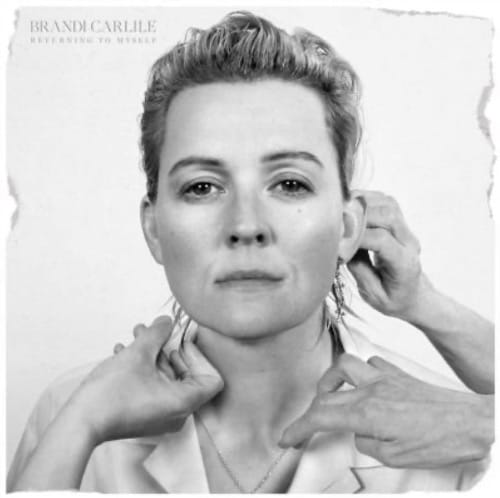
I’ve been inexplicably slow to develop a proper appreciation for Brandi Carlile. She “grew up” busking at Pike Place Market and playing at a bar a few minutes from my college campus workplace in the early 2000s. Why haven’t I trusted the local friends who have respected her, raved about her live shows, and followed her faithfully?
Her record By the Way, I Forgive You was the one that finally really got my attention and won my respect. But I didn’t know much of her story until recently, and I started noticing just how much she was investing in lifting others up alongside her in her impressive ascent to a global spotlight. And then I heard her interviewed on NPR’s Wild Card, and her eloquence on the subject of faith moved me so much I pulled the car over during a storm and found myself in prayer.
I picked up a copy of her memoir, and it will wait patiently on my nightstand for a year when I might have a life that allows me time for reading before bedtime. (For the past several years, I haven't even had enough time to read my student papers, much less read books for pleasure.)
Clearly, I don’t have a thorough review of this record ready yet. I’m just starting to get to know it. At this point, I’m moved by the lyrics throughout; I’m grateful for the furious patriotism and hope in “Church and State”; and I’m beginning here on a journey backwards through her catalogue to give appropriate attention to all I’ve been missing.
28.
Bad Bunny, DeBÍ TiRAR MáS FOToS
One of the most exhilarating scenes in any movie this year unfolds in Spike Lee's Highest 2 Lowest, as a wild chase scene involving an elevated train and motorbikes carries us across New York City, set to the diegetic exuberance of a Puerto Rican Day street festival — music so irresistible that the cameras themselves get distracted from the chase and end up partying at the show.
The spirit of that festival is alive and well on Debí Tirar Más Fotos, a record I might not have given proper attention without the hype and controversy surrounding Bad Bunny’s Super Bowl halftime show. (Go Hawks!)
Since singing along and meditating on lyrics is a central focus of my time with music, I tend to neglect albums that aren’t in English, much to the detriment of my cross-cultural education and appreciation. I’m doing my best to change that, and I spent more time with Spanish-language albums this year than I ever have before. And while I was dazzled by Rosalía’s vocal acrobatics on LUX, and by her newfound preoccupation with Christian mysticism as a vocabulary for erotic love, I was drawn back much more frequently to Bad Bunny’s 17-track, hour-long party album to pump up the positivity during my long commute.
When that halftime show finally happened, Focusing on tracks from the new album, it was one of the most thrilling — and meaningful — events of its kind that I’ve ever seen.
But it’s not just a party record. The passion he’s expressing for this music, this culture, this community is motivated, in part, by a sense that its days might be numbered, due to the intensifying colonialist aggression and the anti-immigrant agendas of MAGA white supremacists. In “Lo Que Le Pasó a Hawaí,” he makes his fears clear with a warning to his beloved community:
Thеy want to take my river and my beach too
They want my neighborhood, and for your children to leave
No, don’t let go of the flag nor forget the Le Lo Lai
I don’t want them to do to you, what happened to Hawaii . . .
27.
Tamino, Every Dawn’s a Mountain
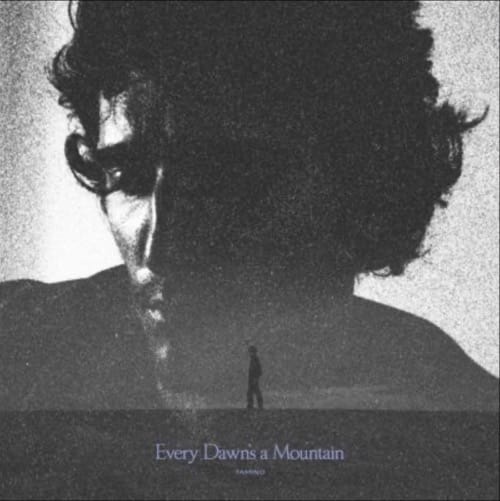
The voice. The poetry. The production. This album by Tamino-Amir Tarek Moharam Fouad is a fascinating fusion of Western and Eastern sounds with obvious Radiohead influences and guitars that make me feel like I’m inside them.
And while Mitski didn’t put out an album of her own this year, she certainly made her mark with her feature here.
I’m eager to hear where Tamino goes next.
And I wrote much more about my admiration for this record back in March.
26.
Alan Sparhawk, Alan Sparhawk with Trampled By Turtles
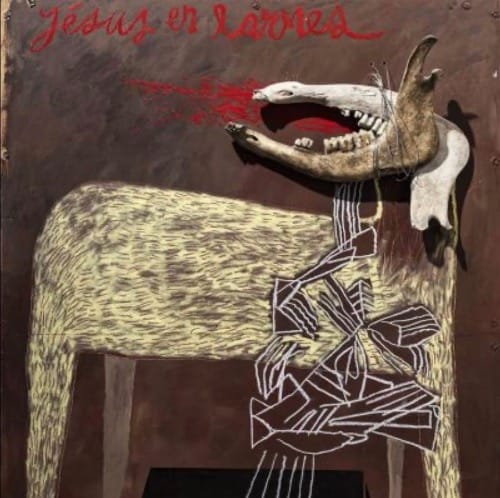
I wish I could turn back the clock and make myself a fan of Low from the early records. Friends with impeccable taste revere Low in ways that tell me the problem has been me, not the band, for many years. And now that Mimi Parker has passed on, and Alan Sparhawk is working out his grief in a fury of creativity, I know I’ve missed out. But that’s exactly what makes this record so compelling — Sparhawk is raging, Sparhawk is praying, Sparhawk is blazing new trails. And instead of bringing in a wall-of-sound punk band, he veers into folk fundamentals with Trampled By Turtles in a way that makes these performances persuade that this is raw, this is bare bones, this is live coverage of open-heart surgery without anesthesia performed by the artist upon his own body.
For more eloquent insight on what makes this record stand out, I turned to Zach Malm, host of Veterans of Culture Wars. Zach’s a close friend and the biggest fan of the band Low I’ve ever met. I asked him how it feels to listen to Alan Sparhawk with Trampled By Turtles, the second album Sparhawk has released since Parker’s death. Zach says,
I'd say that in Low, Alan and Mimi sang together with harmonies so close it was as though there was only one person singing, like throat singers who can control two distinct harmonic pitches, a sort of magic trick. Where White Roses, My God, with its distorted, pitch-shifted vocal processing, was about the pain and confusion of losing his voice through losing Mimi, With Trampled By Turtles was about finding his voice again through his family and community. A different pitch, but a familiar song. His kids play and sing on the album, and his backing band is the musicians who first welcomed him back on stage after her death and gave him space to grieve in the way he needed to. He sings, “When you flew out the window and into the sunset, I thought I would never stop screaming,” in a way that so plainly acknowledges the immense pain, while somehow feeling hopeful. White Roses, My God is the sound of a wound being suffered, and With Trampled By Turtles is the sound of healing from that wound. The latter is informed by the former, and made better for it.
In 2026, I’m going to go on singing “Don’t Take Your Light Out of Me” — an earnest prayer of my own, as so many who still attend the churches that raised me make a lie of their Christian faith by supporting an Antichrist cult: a conspiracy of liars, pedophiles, white-supremacists, and greedy billionaires. I’m going to go on singing it, praying for the grace to be angry at the evil without stumbling into the sins of hatred and vengefulness. I want to be faithful to the God of Love as the world burns down around me at the arsonist hands of an Antichrist cult. As I fight with temptations of resentment and rage, I’ll go on singing: Don’t take your light out of me. / Don’t take your light out of me.
25.
Wolf Alice, The Clearing
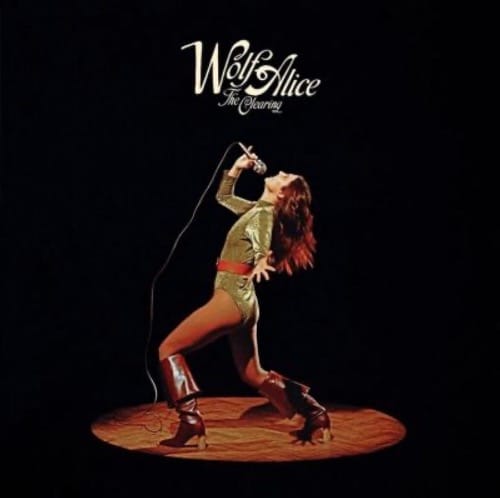
Wolf Alice’s glossy, gothic, punk-tinted Blue Weekend made me an immediate fan; their agility in genre-hopping was acrobatic. And their tour supporting the record made me sign on to follow them wherever they go. And, I gotta admit, they almost lost me with The Clearing. It felt like they decided to give up the strengths of the previous record and try to remake themselves as a band supporting a pop diva. And I’m a little burnt out on pop divas these days — they’re everywhere, and fighting for ways to distinguish themselves from each other like it’s some kind of sport.
But the more I spent time with The Clearing, the more I came to appreciate the songs beyond that epic first single, “Bloom Baby Bloom,” and how they showcase Ellie Rowsell’s vocal and stylistic agility.
And then I saw the tour supporting this record, and it felt like a defining moment for the band — they could step out into more revealing spotlights, become more personable human beings, have some fun with their pose-striking rock star ambitions, and really celebrate with their fans. I went to the first two concerts with friends. I’d be perfectly happy to go solo next time, just to stay on this ride. (But I don’t think I’ll have to.)
I have my friend and concertgoing guru Kirk Jones to thank for waking me up to Wolf Alice. He’s a superfan. I asked him what he appreciates about what Wolf Alice is doing on The Clearing, and he says,
The courage to try a different sound. Less rock. More ‘pop-ish,’ but still unmistakably Wolf Alice. Lyrically, Ellie is fearlessly vulnerable. Live, they seem joyfully vulnerable. The band feels refreshed and invigorated by the new material, and I think that shines through on the album.
Reviewing the record for AllMusic.com, Heather Phares says, “A triumph of ambition and heart, each of its songs feels like an epiphany. Together, they form a portrait of a band growing into their status as one of the U.K.’s most vital acts. It’s a thing of beauty to hear Wolf Alice bloom, baby, bloom.’
24.
Kae Tempest, Self Titled
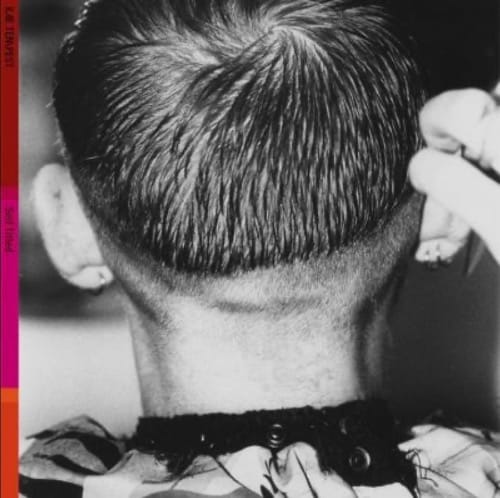
As the inspiring line erroneously attributed to St. Irenaeus of Lyons goes, “The glory of God is a man fully alive.” I was a huge fan of Kate Tempest. Post-transition, Kae Tempest feels even more inspired, more motivated, more purposeful. Fully alive, indeed. He’s set aside, for now, the inclinations toward literary lyrics — the detailed, multi-character storytelling that makes us want to read these songs the way we read great short stories. Here, he’s being frank, immediate, urgent, “timely and relevant,” speaking up for communities he represents and cares about, and he’s still at the peak of his powers. I suspected, from the title, that this record was going to be more personal and revealing than Tempest’s previous work. I wasn’t expecting it to stand strong next to his best work.
Every time I see evidence of the anti-trans bigotry among professing Christians, I put on Self Titled by Kae Tempest. And I’m moved. I’m humbled. I’m transported into prayer. I’m not sure what the artist would think of this, but I think God is alive and well in Kae Tempest. So, of course, he’s sure to be persecuted by those who fear and hate those who are unfamiliar, or who require them to grow in understanding.
God is always on the side of the afflicted, the oppressed, those who suffer the bruises of stones thrown by the self-righteous and the pious. For Kae Tempest’s courage and compassion, even in the face of suffering, I believe God looks on him with great affection. Me, I admire him immensely.
23.
Haley Heynderickx and Max García Conover, What Of Our Nature
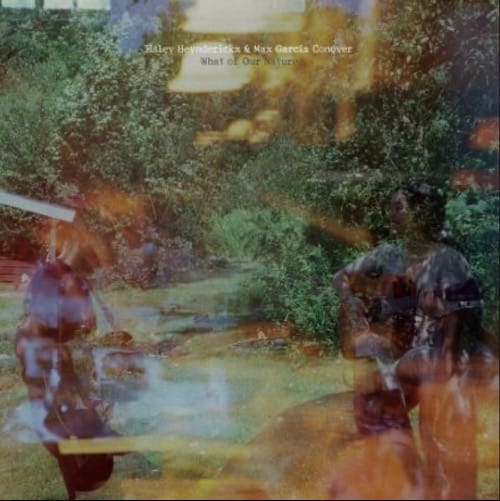
The spirit of Woody Guthrie, the grief and rage and exasperation of the Old Testament prophets — these blaze to life in the surprising collaboration of Haley Heynderickx and Max García Conover. I marvel at the concentration of razor-sharp lines designed to bleed, by a thousand paper cuts, the bad actors who are burning down American democracy, persecuting Puerto Rico, and worse. I could start quoting great lines, but how would I make selections? Whether they’re in Heynderickx’s more whimsical and imagistic mode or in García Conover’s Dylan-esque diatribe mode, it’s relentless songwriting
At AllMusic.com, Marcy Donelson notes, “Heynderickx’s warm, eloquent observations both complement and contrast García Conover’s more angular, outspoken style. Both can be said to have a way with words. ... The resulting album touches on themes like commercialism, social inequity, and generational identity in song.”
I encourage you to try all three of these tracks to get a sense of their range, and so you can hear their specific strengths shine.
22.
Ashley Monroe, Tennessee Lightning
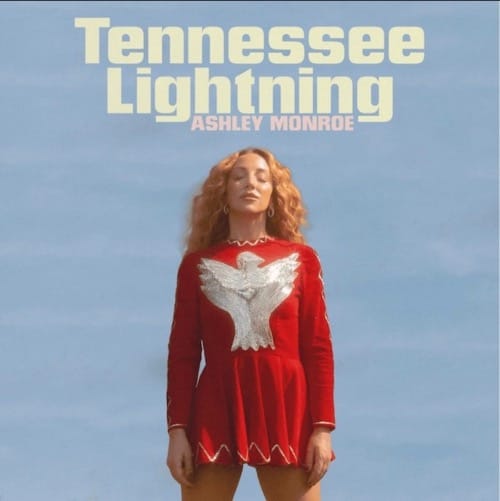
I admit that it was the involvement of T Bone Burnett that made me prioritize listening to the latest Ashley Monroe record. But he only worked on the opening track, “I’m Gonna Run,” and there are sixteen more tracks after that, a generous feast of strong songwriting and outstanding performances. At Americana Highways, John Apice writes, “Ashley is Emmylou Harris with Kate Bush genes. There’s plenty of country intonation to her voice, but the music traverses an intense, well-arranged formula & conjures more than just harmony & grits (play on words).” He adds,
The LP is Ashley’s rejuvenation since being seriously ill. I’ve commented in the past that many great blues singers of the past were great because they “lived” their songs. This is where pop music suffers. Ashley’s music has teeth because she’s lived it & when it returned to her pores, it was evident that she was feeling the music & not what ailed her. A refreshing return to form, creatively if not psychologically.
And at PopMatters, Steve Horowitz says,
Monroe appropriately describes the record as “a patchwork quilt of my life.” ... After several years of musical silence brought on by a battle with cancer, Monroe now has plenty to say—well, sing—about. ... If this is a quilt, as Monroes professes, it’s a crazy quilt—the kind made from irregularly shaped pieces of various colors, textures, and patterns stitched together in a random pattern.
In the mix, you’ll find affecting renditions of Leonard Cohen’s “Hey, That’s No Way to Say Goodbye” and Albert Brumley’s “Jesus, Take My Hand.”
21.
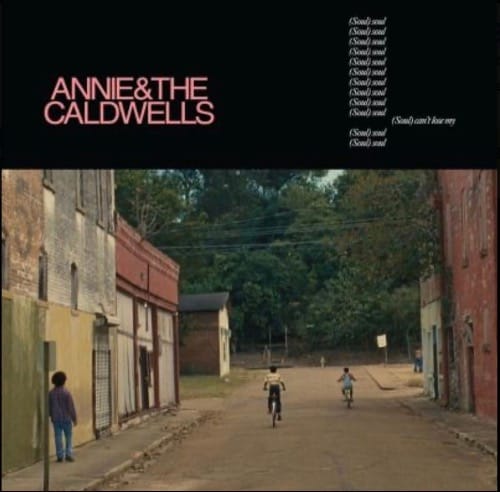
Annie and the Caldwells, Can’t Lose My (Soul)
I’ve been feeling the need to revisit Amazing Grace, my all-time favorite concert film, because I need the ministry of Aretha Franklin’s soulful laments, consolations, and epiphanies right now. She sings with that inarguable authenticity, drawing from roots of soul and gospel deeper than most of us have ever suffered enough to understand. When I hear her sing like that, and sing those hymns and prayers like that, I know that God’s grace is great enough to triumph over darknesses far deeper than I have known.
That’s why the 2025 record from Mavis Staples is going to rate highly on this list.
And that’s why Annie and the Caldwells are here — a new discovery for me, immediately persuading me that they sing to the Lord more than they sing to the audience, and they do so with authority and honesty. There have been days over the last year in which this was what I reached for without even thinking about it. I needed them to sing for me, since God knows that I don’t have the pipes, much less the experience, to sing very well along with Annie Caldwell (who, back in the ’70s, sang as Annie Brown of the Staples Jr. Singers).
If you aren’t familiar with Annie and the Caldwells, and I wasn't until recently, check their remarkable history here at AllMusic. Andy Kellman, reviewing Can’t Lose My (Soul), introduces the players and describes the context in which these exhilarating performances were captured:
Like the return Staples Jr. LP, it was organically recorded by Ahmed Gallab, aka Sinkane, at the Message Center, the Caldwells' one-room church home base in West Point, Mississippi. Annie's husband of over 50 years, Willie Joe Caldwell, Sr., is the guitarist, playing sweetly chiming rhythm lines and letting loose a couple solos that blaze like those of Ernie Isley and Carlos Santana. Sons Abel and Willie Jr. form a rhythm section versed in classic Southern blues and soul with evident love for sophisticated late-'70s funk grooves. Daughters Deborah and Anjessica, joined by Toni Rivers (Annie and Joe's goddaughter), are the affirmative background voices. Gerald Jenkins and Parker James respectively add Hammond B-3 and congas.
20.
Kelly Moran, Don’t Trust Mirrors
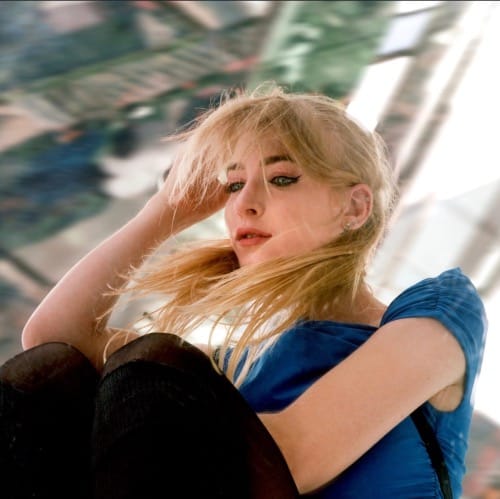
Kelly Moran follows up 2024’s snowy dreamscape of experimental piano performances, Moves in the Field, with something more synthesizer focused — danceable, colorful, and motivating piano-and-synth numbers that have inspired me to imagine what she might accomplish if she started scoring movies. When I listen to Kelly Moran, I experience I kind of synesthesia. Colors, colors I haven’t seen before. Everywhere. And so, some of this music feels like the kind of aural environments I might imagine for certain scenes if my four-volume fantasy series, The Auralia Thread, were ever adapted into an animated series.
At Pitchfork, you can read about Moran’s long journey to this record in a review by Matthew Blackwell.
19.
Daughter of Swords, Alex
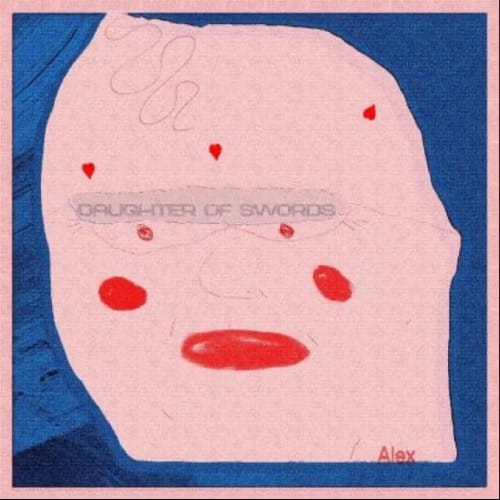
In 2025, I needed pop music that sounded fresh, playful, energizing, and unconcerned with the ego-driven popularity contests of the divas elite. Alex Sauser-Monnig’s album felt a little frivolous at first, focusing on infatuation more than love, on flings and fantasies, but with a light-heartedness and a love of simple pleasures that avoids the angst that saturates the pop landscape. The lyrics are often simplistic and sentimental enough to send me back to the nerves and euphorias of high-school crushes. I never get the impression that these songs are about substantial love stories; it feels more concerned with a state of mind, an openness and an optimism that just might make true love possible someday.
Sonically, there’s some of the catchy minimalism of Sylvan Esso here, at least until I get under headphones and crank it up to discover subtler levels of detail and texture. For every blast of electronics, there’s also a layer of acoustic-guitar scratches, a tickle of woodwinds, some of the stomp-and-clap we might associate with hopscotch singalongs, hyperventilation as percussion, and — best of all — some gentle saxophone flourishes. I even found myself wondering if Sauser-Monnig grew up on Sesame Street — or, at least, watching it religiously. (From me, that’s high praise.) Maybe it’s the 2026 revival of The Muppet Show that’s got me thinking in this direction, but I can totally see them dancing with the “Manah Manah” gang for a rendition of “Talk to You.”
The musical meals I needed for sustenance in 2025 were more about lamentation, rage, and gospel hope, but Daughter of Swords has been providing an important piece of the puzzle: relief. A pleasant change of pace after too much prayer, too much wrestling. This record feels like unexpected sun breaks along tedious Monday morning rush-hour commutes during the dark days of winter — the kind of sudden brightness that makes you want to change your mind about going to work, circle back, pick up your dream date, and then drive until you arrive at a beachfront getaway without telling anyone.
Whew! Where did that come from? I really need a vacation.
18.
Florist, Jellywish
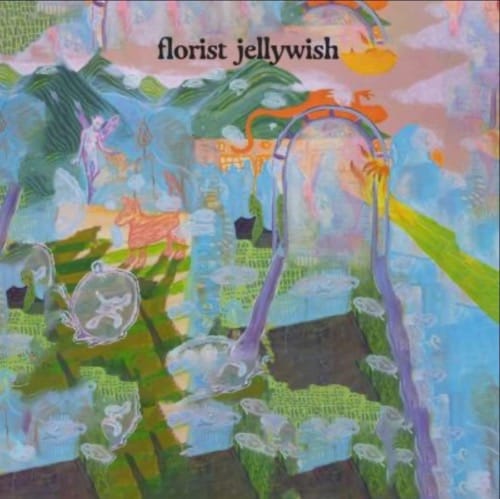
Way back in April 2025, I posted for the first time about this record.
“There has got be light hitting us from the other side…”
That’s the line that, in the context of a day full of news about America’s devolution into crimes against humanity, made my eyes well up with tears. There are times, and these are some of them, when it’s hard to imagine any kind of salvation for the here and now—only salvation in the Beyond. I find myself dreaming more and more of a new heaven and a new earth, a complete reboot… which is what we’re promised.
Anyway, I’m grateful for songs about God’s irrepressible ministry of beauty, change, and grace — even if I’m not sure the artists know that’s what they’re giving me.
17.
Little Simz, Lotus
Simbiatu Ajikawo, the British-Nigerian rapper known as Little Simz, is on a roll. Sometimes I Might Be Introvert stands as one of the Lockdown-season masterpieces, and the follow-up NO THANK YOU did not disappoint.
Lotus is yet another monster of a record, but that has been fashioned with a serrated edge meant for self-defense and for raging against the mistreatment she claims to have suffered from her longtime collaborator Inflo (mastermind of the ongoing musical operation called SAULT). Much of this tracklist is made up of elaborated laments about betrayal and disillusionment, about claiming territory that belongs to her without the exploitative influence of others. Somehow, though, unlike the trending diss tracks of recent years, Lotus doesn’t sound petty or self-indulgent. It sounds like an artist who understands the platform and the responsibility with which she’s been entrusted, and she’s going to make the most of it as an example for so many up and coming artists who admire her.
16.
Joe Henry and Mike Reid, Life and Time
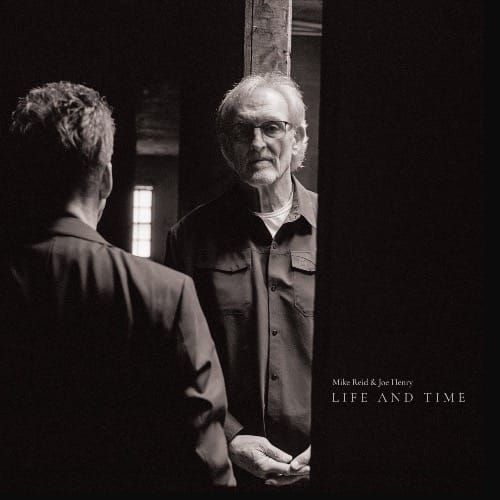
What Joe Henry slow-cooked with Mike Reid this year deserves better than anything I have the time right now to compose. I’m sure I’ll rate this higher after I’ve spent more time with it, and the proper kind of time, the kind of deep-listening, full-attention time that is so hard to come by right now. This is a book of poetry. And the poetry needs reading, re-reading, meditation, interpretation, and then another reading.
The more I pay attention to the lyrics, the more that attention pays.
I’ve sung along in lamentation to lines from “Sleeper Car” that correlate with headlines about the hard-won democracy and the civil rights that are being blown apart by MAGA’s white nationalism violence against our brown and black neighbors, against immigrants and refugees:
Our cup runneth over
And there’s hell to pay
For all we’ve been given
And did not give away
Flag down the man going by
There may be time yet we can try...
I’ve been singing along to lines about hope and grace in the song “Room”:
I hold out that love
Is holding us high
Its roof, door, and window
Keeping us dry
The shape and the size
Of however we stand
Your name on my tongue
My heart in your hand
But as I’m writing hastily in the spaces between demanding obligations, I don’t have time to compose the essay that this album deserves. So I’ll point you (for now) to others who have heard what I’m hearing, heard it more fully, and found good lines of testimony.
Tim Cumming at Songlines describes it as
12 piano-led ballads steeped in lifetime, age, reflection and the spirit of Nashville at its early-hours best. They are quietly subdued, inward-looking songs, spare in instrumentation, finely crafted nuggets of words and music wrapped into perfectly formed wholes. . . . They’re songs built on the classic structures of storytelling, with plenty of resolution, revelation and closure to fuel their way. They’re songs that have similar feelings to share out between them, and similar sonic textures of piano, upright bass and pedal steel.
Mark Pelavin at A Feather in the Wind writes,
The album is hushed, atmospheric and often moving. Any teacher or preacher will tell you: Whispering can be more powerful than shouting. But carrying that kind of quiet for nearly an hour is a tricky business. Life & Time mostly succeeds, though there are stretches where the mood threatens to blur into background. That tension—between intimacy and inertia—defines the record’s charm.
These 12 songs flow together like one long meditation. They’re anchored by Reid’s warm, weathered baritone and built on piano ballads, upright bass and judicious touches of pedal steel or light orchestration. Henry’s production keeps everything spare and uncluttered; nothing obscures a single syllable. You sometimes hear traffic in the distance or a neighbor calling a dog, but those accidental sounds only deepen the sense that we’re eavesdropping on private sessions rather than a polished studio product.
Graeme Tait at Americana UK knows the value of what he’s hearing:
Life And Time is not an album that is going to announce itself with whistles and bells or a full-throated clarion call. No, its message comes with far more delicacy and restraint, completely bypassing any need to analyse the distinctive contributions from either protagonist. And yet, with its abundance of thoughtful prose and subtle ambience, the album’s impact and lasting effect are all the greater, and when listened to without distraction, will continue to reward over repeated listens. “Life And Time” may not vociferously demand your attention, but it’s an album that very much deserves it.
\