
First impressions of Backrooms
Add this to the list of A24 films that are high on concept but low on substance.

Over the last decade of teaching creative writing, I’ve noticed a steady parade of aspiring young writers eager to usher their readers into their own variations on familiar dystopian nightmares: some sequence of traumatic events involving zombies or monsters or curses or demons, or some process of waking up to the fact that the story’s protagonists are trapped in a fabricated world.
Some of these are promising writers. But too many seem uninterested in practicing fundamentals necessary for strong storytelling. They view the art of narrative as pushing an audience through sequences of shocks and traumas and horrors in the company of unremarkable characters. They are interested only in conveying What Happens, and not the Why or the How. They lack the patience to grow in the art of story architecture, or the craft of composing effective sentences and paragraphs, or the development of a voice and a style. They seem incurious about their own characters or about arriving at any insight about the human experience. Instead, they’re intent on putting us through something. Most of their energy goes into cultivating creepy environments, and then setting the stage for bursts of gunfire and bloodshed or other grotesque revelations. They seem to be unaware that any broader context for these horrors they’re describing — if such context exists in their imaginations. I often find myself making notes at the end of a draft: How old is our protagonist? Who is he? What does a normal day look like for him? Does he have any family or friends? What are his desires and fears, and where do these things come from? I’ve just spent several pages in his company, and I cannot answer any of these questions.
Such drafts almost always give me the feeling that the writers have been inspired not by any real life experience, and certainly not by literature, but by mediocre movies and television series — or, even more likely, by video games. They draft stories as if they are narrating role-playing games (probably first-person shooter games) that are playing out in their imaginations. And that is very likely what they are doing, because they associate story more with gaming than with reading. They are writing what they know: moment to moment bursts of action.
And in that sense, perhaps these writers are working their way toward actual jobs: imagining content, not art, that can be poured into the molds of game frameworks. Perhaps that’s what they’re interested in. Me, I find myself starving for something that has the potential to move me, something that connects to life in the world outside of engagement with a device.
Having said that, I have set the stage for my review of this weekend’s biggest movie. And maybe you can already anticipate what I mean to say about it.
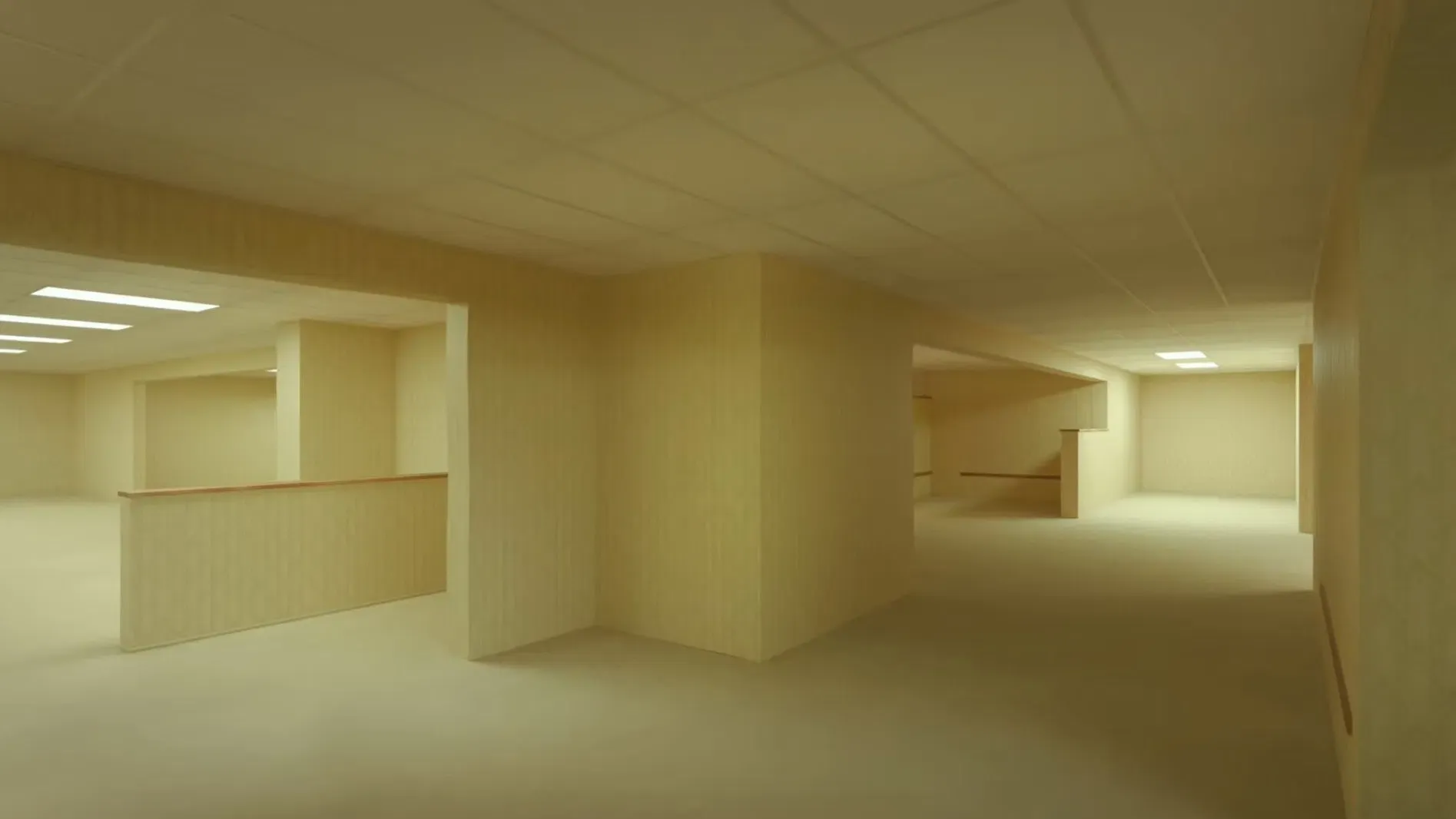
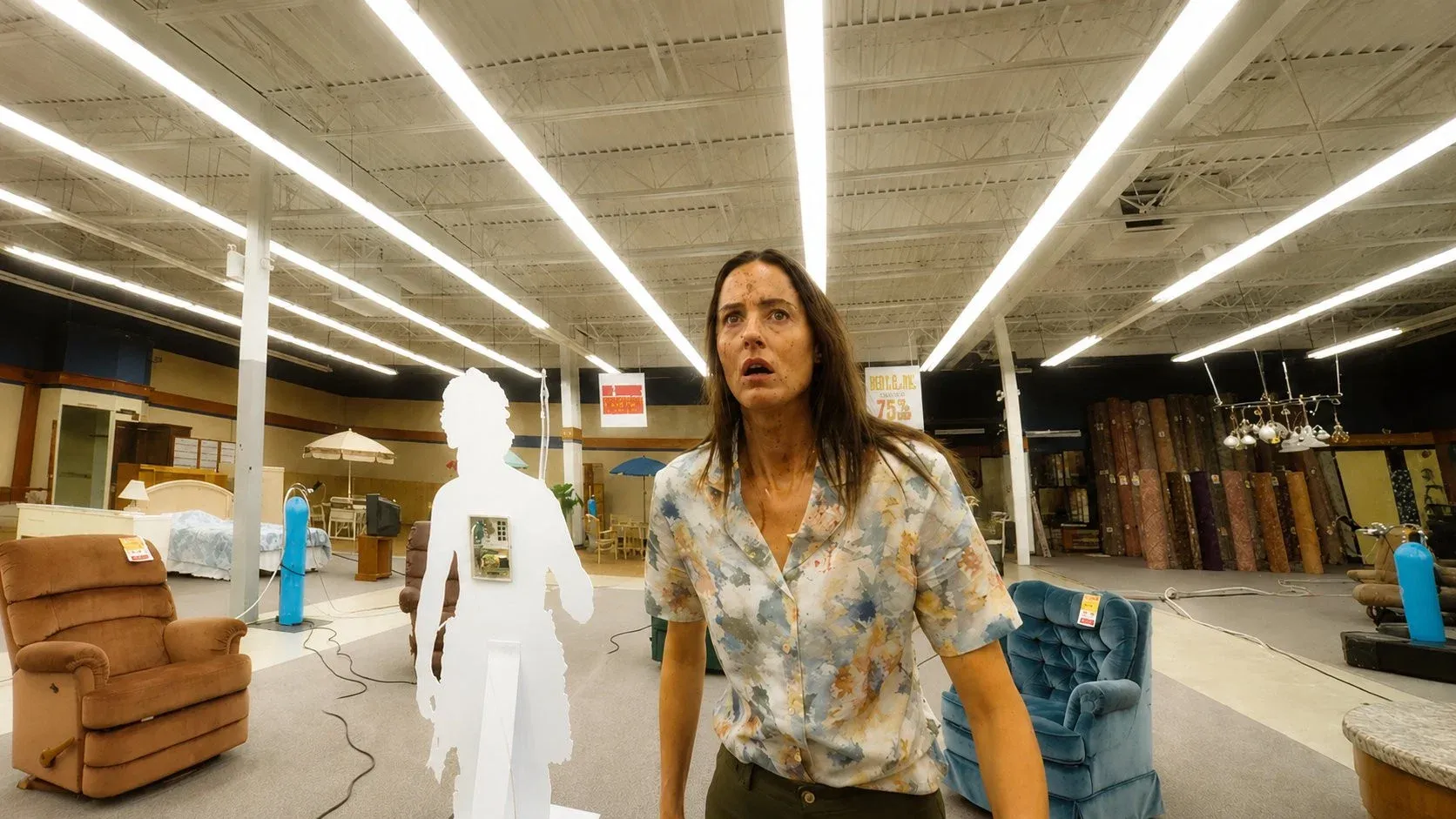
You’ve probably heard of Backrooms by now. It began as a video series created by teen YouTuber Kane Parsons, one meant to unsettle viewers with tours of another dimension — an endless labyrinth in which every new room seems designed to unsettle. Imagine a nightmare in which you’re trapped in an IKEA “As-Is” section that’s the size of several IKEAs, and you can’t get out. Imagine you’re imprisoned in an unfinished, minimalist Meow Wolf, one in which the theme is Trauma. And now, add shadowy predators that lurk, loom, and stalk you.
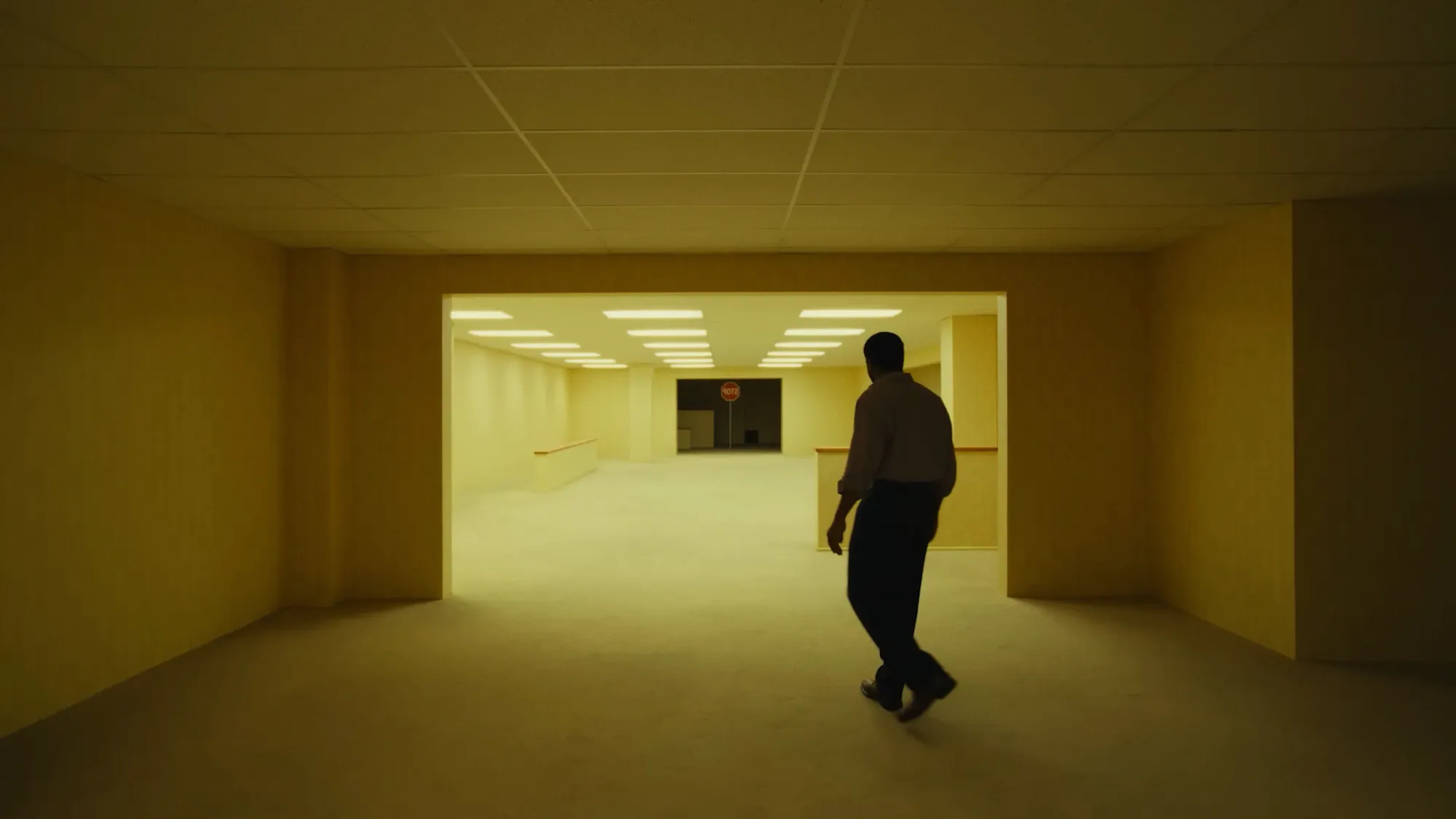
I’m told that the viral video series was meant to trouble us by drawing attention to the weaknesses, limitations, contradictions, and breakdowns prevalent in video game environments. Spend time in there, and you return to the real world feeling suspicious — like your reality might just be a matrix, and like the architects of that reality are either sadistic or else they’ve given up. Crooked walls, slanted floors. Doors that seem to have arbitrary arrangements of knobs that work or don’t. Traffic signs that make no sense out of context. Banners that might once have hung inside or around outlet malls and clearance centers. Piles of discarded clothing and faulty furniture. It’s like the code of reality has been corrupted. Nothing looks quite right — particularly when we start meeting others trapped inside whose features have become jumbled like they’ve been generated by primitive and confused AI programs.
But instead of deepening, my dread is not so much about what’s happening on the screen as what’s not happening in Will Soodik’s screenplay. It’s a problem I’ve come to associate with A24 horror films — we are drawn in by the promise of daring concept, and we’re temporarily enchanted by some stylistic flourishes, but the whole is rarely more than the sum of its parts. And, having tracked all of the twists, I come away without any lingering curiosity that might draw me back for more. Think of Alex Garland’s Men or Kristoffer Borgli’s Dream Scenario. Those were amusing enough in fits and starts, but I remember almost nothing about the characters, and I feel no desire to revisit them.
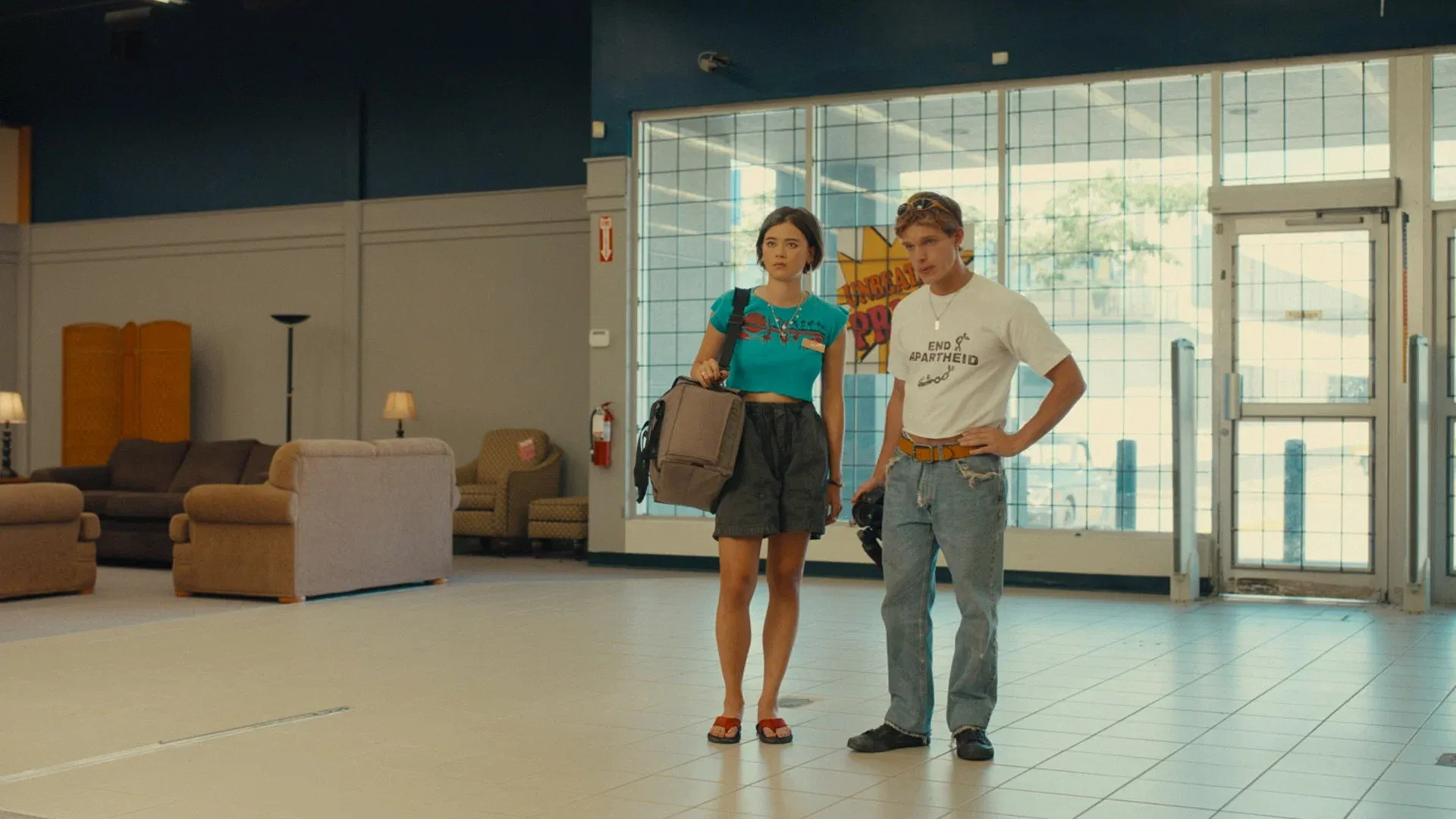
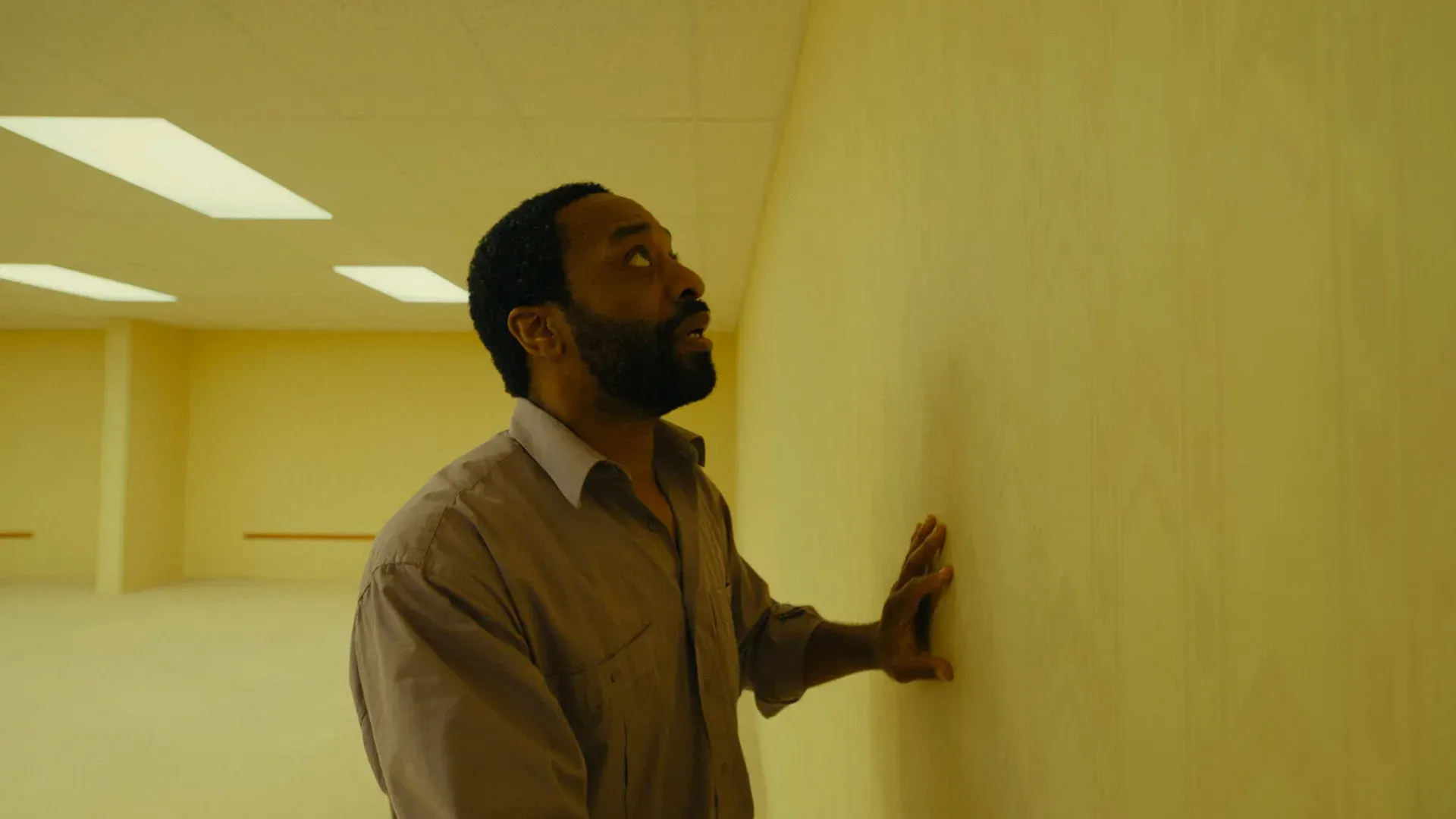
The film introduces something resembling a narrative: We meet Clark (Chiwetel Ejiofor), the manager of a furniture clearance store in the middle of one of those devolving shopping malls that feel more like dystopian wastelands than cultural centers. He’s miserable, trying to crunch the numbers of his store’s spiraling sales; his staff are bored and apathetic; and persistent power fluctuations make the store’s ridiculous energy bills seem even more upsetting. Frustrated as he is, Clark finds himself clowning in front of a camera, advertising bargains like the manic furniture salesman at Unpainted Arizona in in the Coen brothers’ classic comedy Raising Arizona. His crazed smiles aren’t fooling anybody, and his costume is just confusing: Is he a pirate or a prospector? Even his underlings aren’t sure.
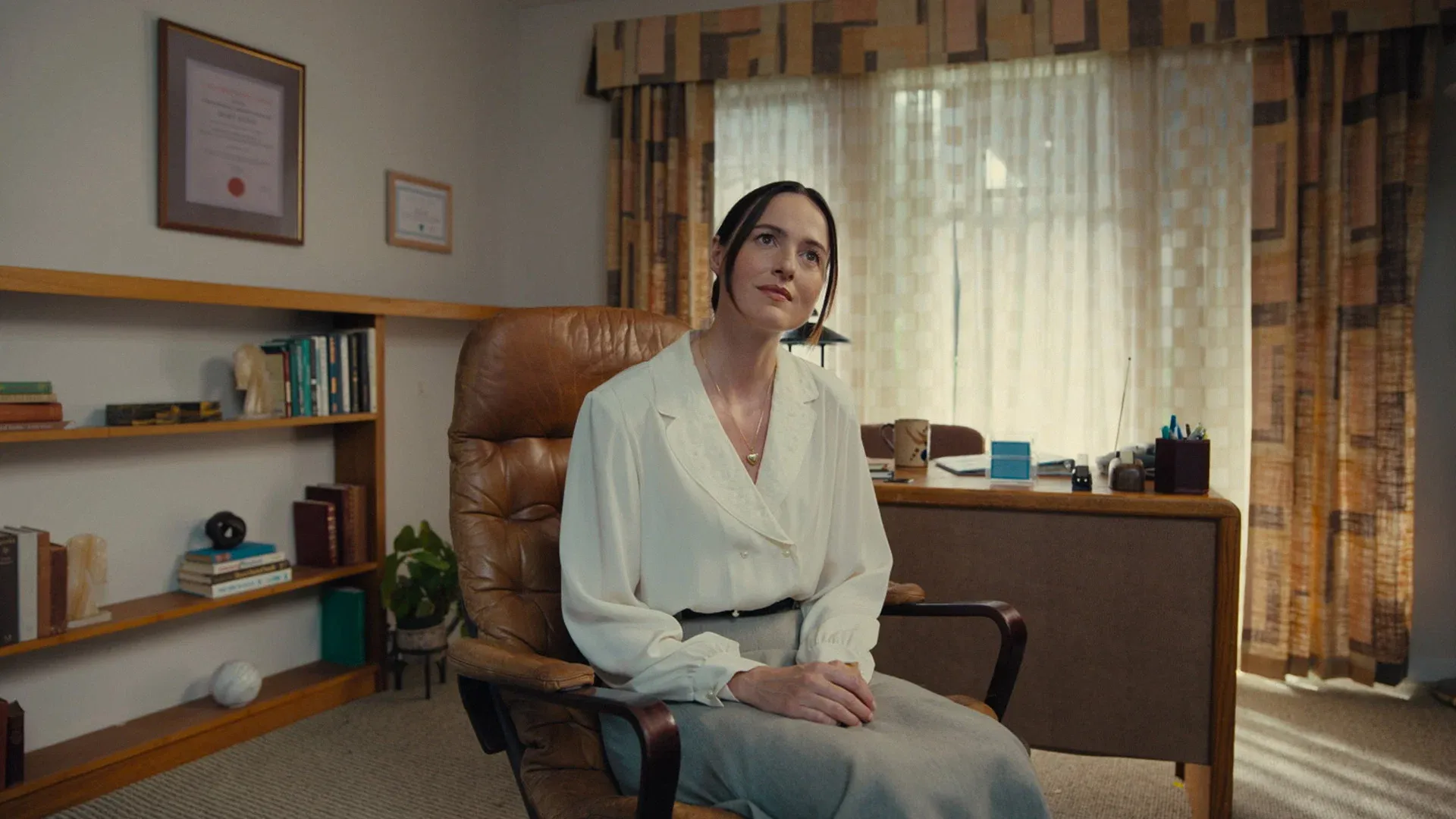
When he’s not at work, he’s in therapy, working through anger issues over his divorce. His therapist, Doctor Mary (Joachim Trier’s go-to star Renate Reinsve), struggles to remain professional as she suffers his outbursts and his relentless dodging of responsibility about his temper. Flashbacks suggest that Mary has plenty of experience suffering under the influence of a mentally unstable mother. Her tactic is to unlock those backrooms of the psyche, to help others release the anger inside in the hopes that they will come to see for themselves what they need to do in order to effect meaningful change.
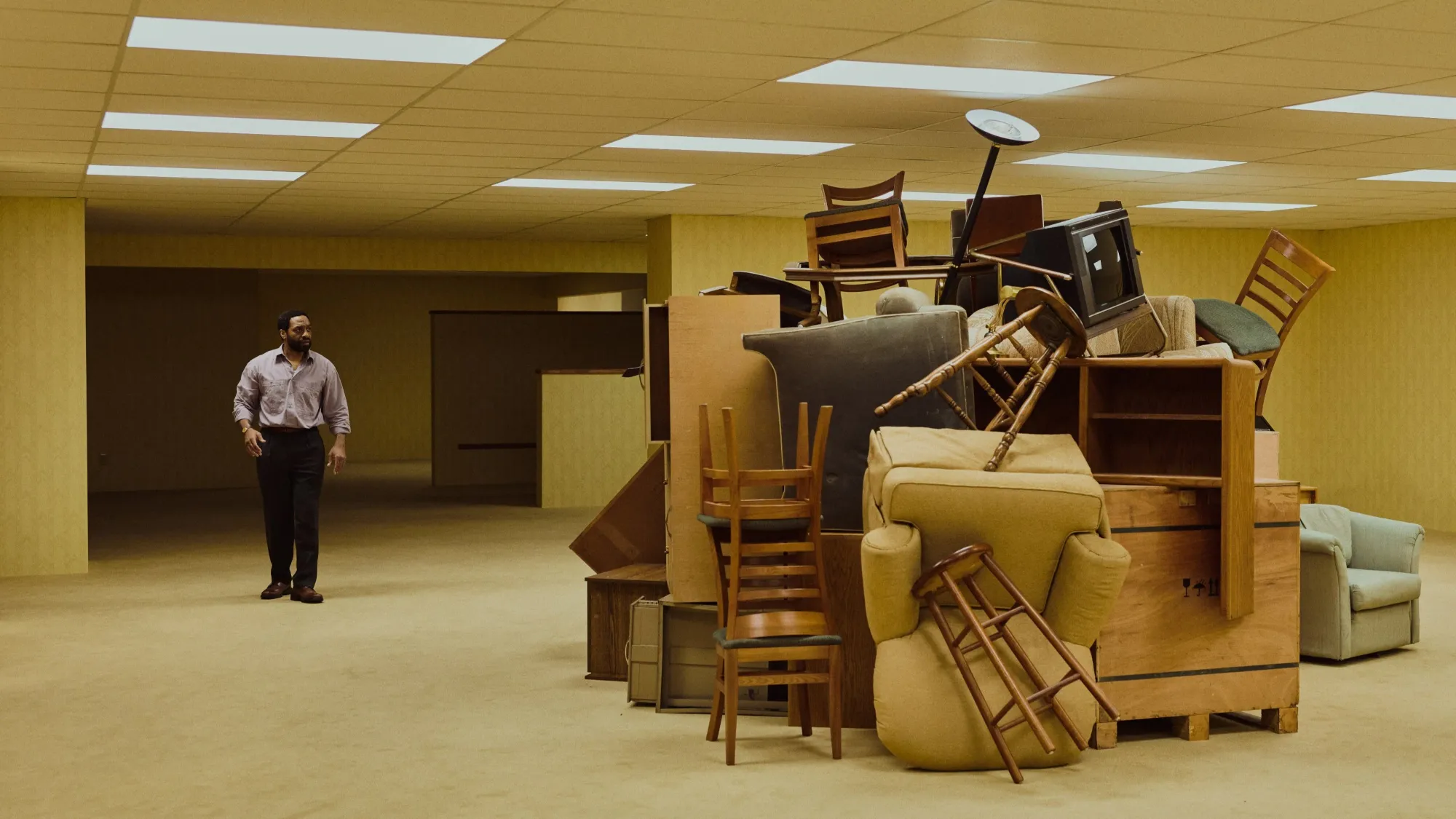
This is a meaningful subject to explore in science fiction and fantasy. It’s been done so many times. But the challenges facing filmmakers increase over time, as audiences become more and more savvy in reading the allegories, interpreting the signs, and anticipating twists. Viewers are likely to catch on right away that the strange warren of dread-inducing corridors all wallpapered with a maddeningly innocuous yellow pattern.
Occasionally, Backrooms earns our attention with aesthetically inventive revelations. The labyrinth is amusing, occasionally surprising, and oppressively relentless. But the thrill wears off quickly. I kept waiting for something that would actually frighten me, and it never really came. I never liked The Blair Witch Project because I felt like much of what people were interpreting as terror was actually just the effect of motion sickness. I got a similar vibe here, as XXXX frequently shifts to a documentarian POV, using handheld camera techniques to destabilize us, dizzy us, and make us anxious about what we cannot see beyond the frame. I was glad to be back on my feet as soon as the credits rolled.
I might be inclined to guess that Soodik and, perhaps, Parsons have had bad experiences with lazy therapists and have become distrustful and perhaps even resentful of the whole discipline. Which is a shame. But even if this is an honest expression of frustration with, or even fantasy retaliation against, therapists and healthcare professionals, it feels like a petty lashing out and not a meaningful move toward any kind of truth-telling.

It’s also possible, I suppose, that Soodik and Parsons empathize with therapists whose clients are seeking only affirmation for their mental illness and harmful behavior rather than redemption. One of the horrors of this horror movie lies in Clark’s resistance Dr. Kline’s guidance and his denial of accountability. Perhaps they want us to consider the consequences of such stubborn and selfish tendencies. I don't know. I wish the film had been as interested in developing the characters of Clark and Mary — beyond their trauma scars, anyway — as it is in its production design; it might have made a more meaningful investigation of such matters.
But before the end came, I found myself troubled by another aspect of the film. The farther we follow Clark through a film otherwise populated with white characters — his white therapist, his white ex-wife wife (appearing in photos), his white assistant and white videographer — the more I find myself asking why this protagonist is a Black American. He is portrayed as clueless, prone to embarrassing himself with flamboyant sales tactics, angry at the white woman who left him over what seems like justifiable concerns, and then we see a version of him aggressively endangering the life of another white woman. Given the cruel caricatures currently being revived in American culture by those who want to promote and legislate racism and violence against Black people, these decisions seem tone-deaf (at best) and even damaging.
Critics are making all kinds of hyperbolic comparisons between this 20-year-old director and masters of horror like Lynch and Kubrick.
At times, Parsons’ tour of paranormal spaces recalls The Shining, another feature-length tour of a labyrinth filled with horrific wonders. But that film is full of startling events that carry poetic significance, and these lead to epiphanies about Jack’s addiction and its effects on his family. Things really mean things in that movie.
Parsons’s aesthetic sense at times casts a moody spell that reminds me of moments in Twin Peaks. But in Twin Peaks, such moments have the power of suggestion — they're not the whole show. Lynch’s dark fantasies feel profound because they open up “backrooms” of worlds that I believe in and care about, worlds within which love and epiphany seem possible. This film’s biggest problem is in its first act, when it fails to establish three-dimensional characters. In Fire Walk With Me, my favorite five minutes find FBI agents Gordon Cole and Dale Cooper tapping into another dimension where David Bowie is lurking in the corridors like a mad ghost. But that only lasts five minutes, minutes which then haunt the rest of the show. Seemingly ordinary encounters are ever after charged with the ominous possibility that other forces are at work, other levels humming with activity like electrical fields all around them. Here, once we’ve fallen into the Zone, we’re stuck there without answers or anything resembling closure.
I’m reminded of how I lost faith in the storytellers of TV’s Lost after the first season — and then lost faith in so many television series inspired by that show — as subsequent seasons seemed designed just to keep us coming back, rather than leading us to any satisfying epiphanies or insights. Are we building something meaningful here, or are we designing drug-like entertainment that sparks dopamine hits without any actual nourishment? Do we want mere entertainment, or might we dare to hope for revelation — and, thus, receive some manner of wisdom?
Add this to the list of A24 films that are high on concept but low on substance. I hear chords, but not a melody; moods but not meaningfulness.
And nevertheless, the early reports suggest that we have, for better or worse, a blockbuster on our hands. Backrooms looks likely to inspire sequels and spinoffs. So I can look forward to reading even more derivative dystopian nightmares in future creative writing classes. I swear — sometimes I feel that I’m trapped in a labyrinth of undercooked apocalypse stories, with figures who barely qualify as characters, moving from one violent or traumatizing encounter to another, with no “Game Over” announcement in sight.
A Backrooms Film Forum quorum!
Once I’d made sense of my disillusionment by writing about it, I looked around for opinions from critics I find consistently reliable and insightful. And while I’ve learned some things about the origins of the film, I find I'm not alone in my frustrations.
Sarah Welch-Larson at Seeing & Believing writes that Parson’s debut “For better and worse, Backrooms is best when it abandons narrative and focuses on tone. ... The premise is upsetting, but there’s not much story underneath — just a series of empty rooms populated only by whatever demons you bring with you.”
Mitchell Beaupre at Letterboxd enjoyed it more than I did. He writes,
The backrooms themselves are haunting, and Parsons effectively lures us into their walls with an unnerving curiosity, a suspenseful slow dread that is captivating until its terrifying.
But it only works when you simply let the mystery be. The more the script tries to tie itself into knots with added dimensions and revealing information, the more it crumbles. Just let the weird, creepy place be a weird, creepy place! Even the ending serves to make it clear that none of that stuff was ever really of much interest or import, and its abrupt conclusion lands the fact that the middle stretch of this is where it thrives.
I had to laugh over Georgia Coley’s enthusiastic Letterboxd announcement of an interpretation: “the real horror is american consumerism and the cheap and unmoored corporate placelessness that plagues our thoughtless hollow architecture!”
Scott Renshaw of Salt Lake City Weekly likes the concept, but, he says (on Letterboxd), “expanding that concept to a straightforward narrative strips away much of the unfiltered uncanniness of the concept, with backstory for the two main characters ... that makes this yet another entry in the already bulging It’s About Trauma Actually horror archives.”