The Big Short (2015)
Adam McKay, director of Anchorman and Step Brothers, has his first Best-Picture-nominated film at the 2016 Oscars.
If you haven’t yet seen it or read about it, that may be because the subject matter doesn’t appeal to you. It’s a high-spirited, humorous investigation of a horrible chapter in American history: the chapter in which our democracy was pretty much overthrown by liars and cheaters who robbed us of 99% of America’s wealth.
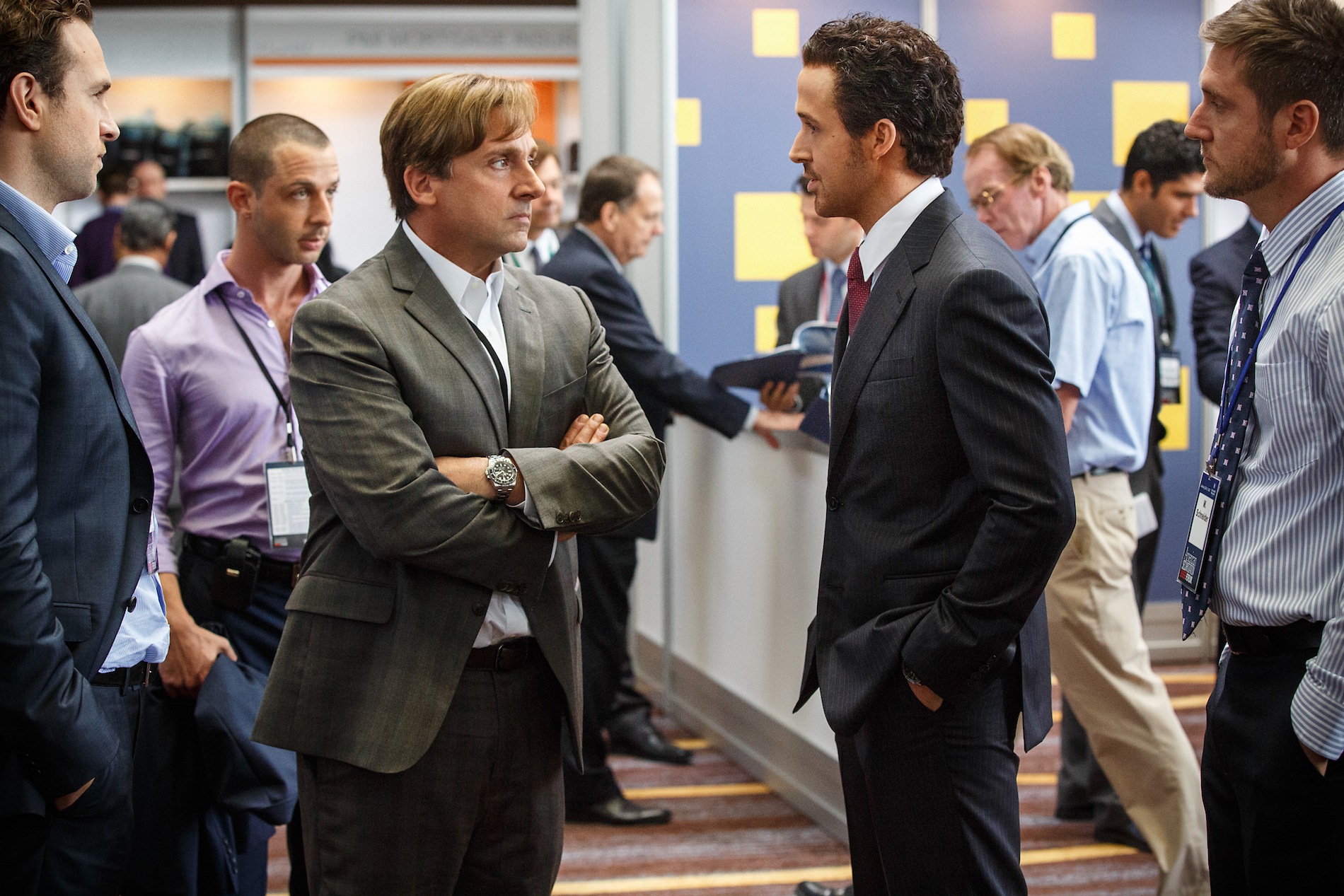
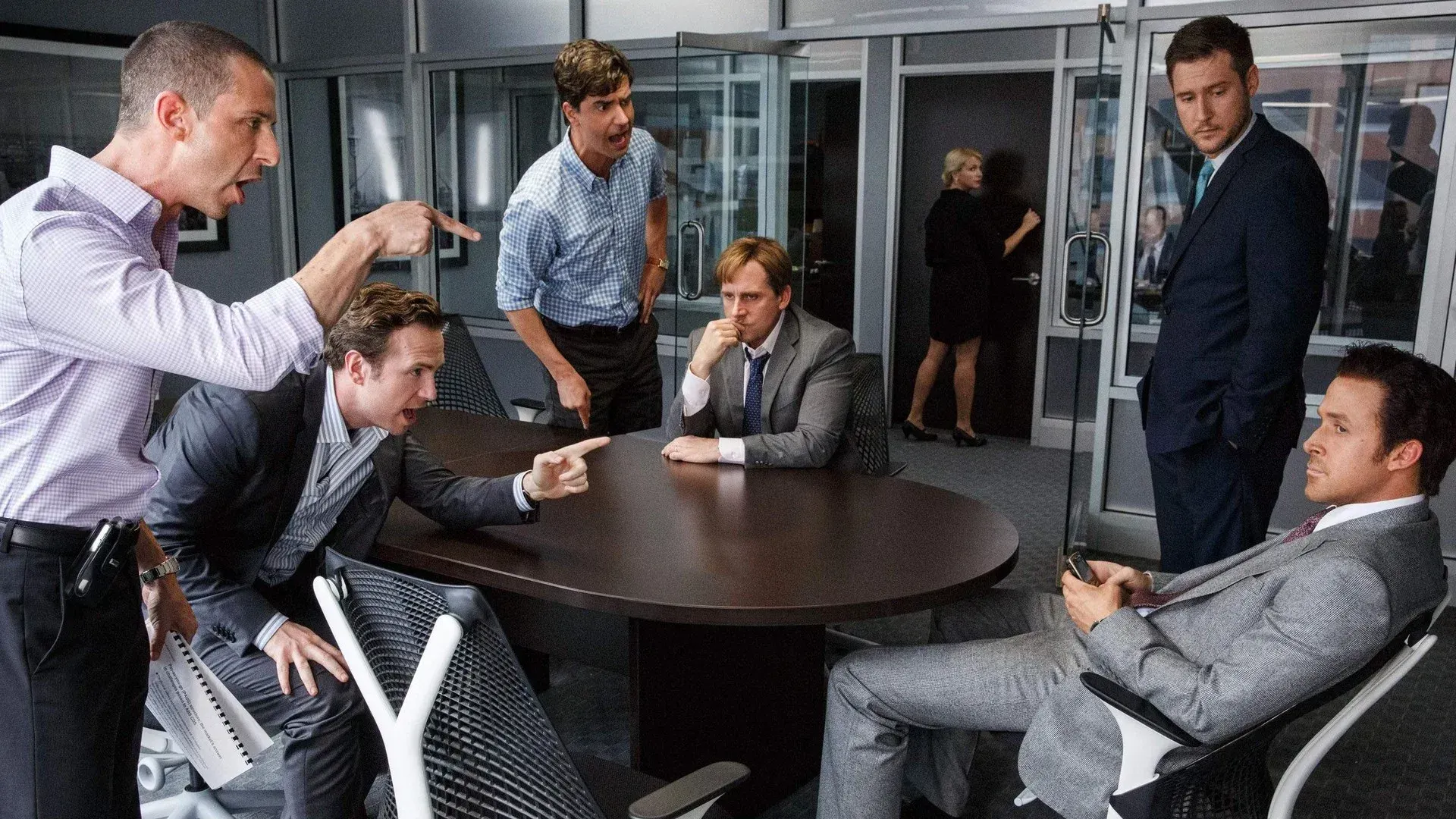
Based on Michael Lewis’s book of the same title — a detailed autopsy of the American economy, devoid of the movie’s satirical flourishes — the film traces the recent financial crisis that resulted when the markets collapsed due to rampant greed and an epidemic of ignorance. It stars Christian Bale, Steve Carell, Ryan Gosling, Brad Pitt, and about a dozen other bromancing cool kids.
And yet, while it’s nominated for Best Picture, Best Director, Best Supporting Actor for Bale, and Best Adapted Screenplay, I found it as to be as frustrating as it is engaging. That’s not because it does anything badly — the editing is fast and clever, the script expertly weaves a tapestry of plot lines, and the actors invest in their characters to strike a wide range of notes from whistle-blowing sincerity a la Michael Mann’s The Insider to the absurdist comedy of Anchorman. It’s just that it does too many things well that feel conflicting and incongruous. For every scene well-written and well-acted (and there are many), there are interruptions, segues, and flourishes that feel showy, snarky, and smug.
And ultimately, the story that it tells does not go far enough.