
Children of Men (2006)
This review was originally published on Christmas Day 2006 at Christianity Today. It is reprinted here with permission.

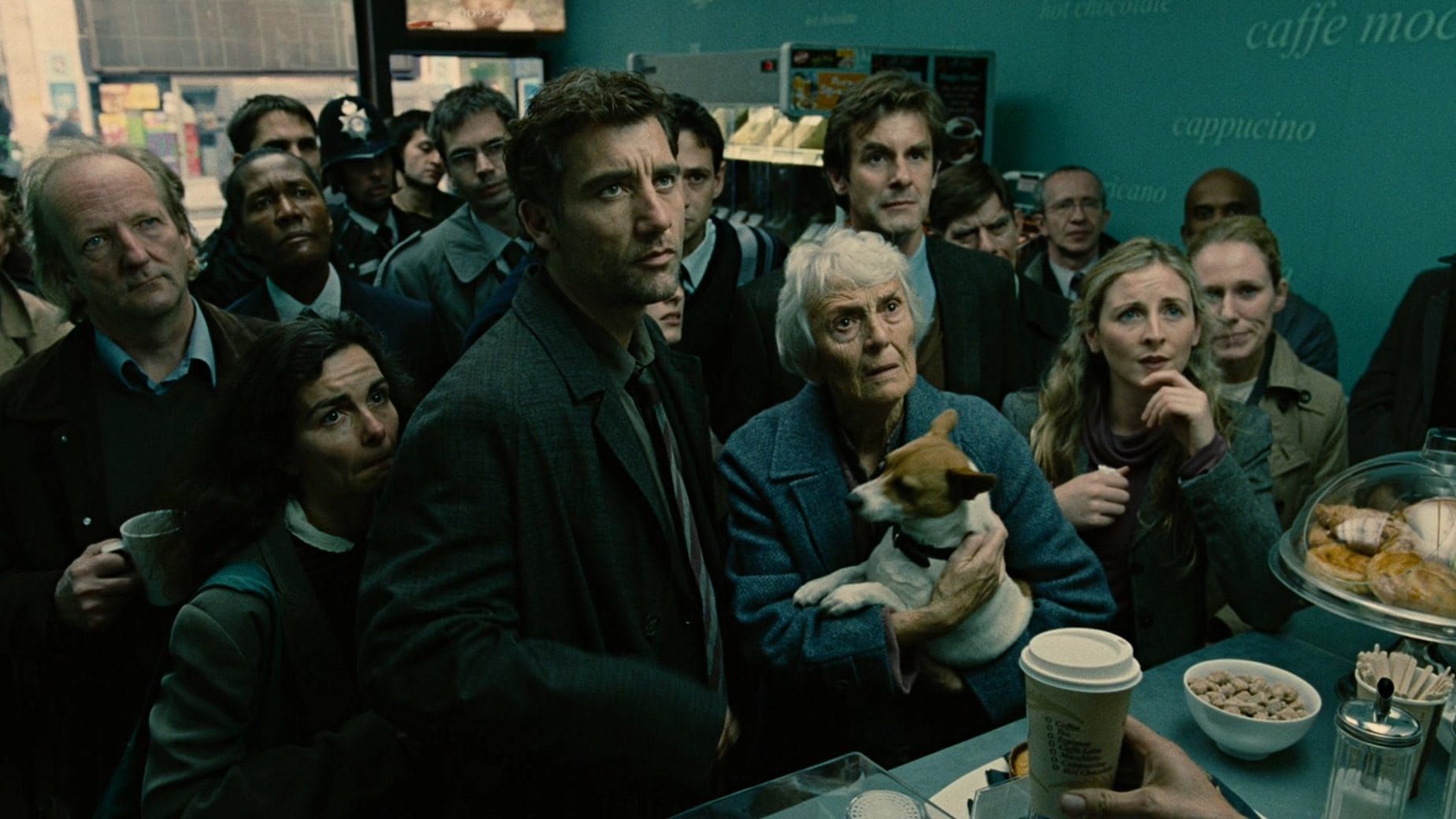
In my maintenance work on the labyrinthine archives of this website, I came across the startling realization that there is no record here of my Children of Men review. My original review was published on Christmas Day 2006 at Christianity Today, just after I’d interviewed director Alfonso Cuarón. Funny thing — the movie bears a far more “striking resemblance” to 2026 than it does to what I remember of 2006.
Back then, the hot debate was about just how much dramatic license Cuarón was taking with P.D. James’s novel. If the film was released today, I suspect the debate would be about over whether the film is a meaningful political commentary about the rise of anti-immigration violence, as a Black Lives Matter story, as a “Woke Agenda” diatribe, or as another lamentable White Savior story.
Me, I’m wondering is if Cuarón will ever make another movie that enthralls, enchants, and moves me as much as this one (or, for that matter, his best-of-franchise Harry Potter and the Prisoner of Azkaban, or his early masterpiece A Little Princess). I’m not passionate about either Gravity or Roma, as they are just too distractingly showy to ever draw me into the sufferings and struggles of their central characters. Like his colleague Alejandro González Iñárritu (Birdman), Cuarón has become so caught up in technical showmanship that I find his work counteracts my suspension of disbelief — the determining factor in whether a film moves me or not.
Anyway — here's my original review, and some excerpts from my Film Forum coverage of the movie.
Standing in a stable, a man stares, thunderstruck, at a pregnant woman. It’s unmistakable — that baby is the hope for humankind’s redemption. The severity of this revelation leaves him weak in the knees and almost speechless. Almost.
“Jesus Christ,” he says.
Is he taking the Lord’s name in vain? Perhaps. Or perhaps he’s being reminded of something … a similar occurrence two thousand years ago.
In Alfonso Cuarón’s movie Children of Men, the name of Christ is anything but a throwaway expression. Echoes of the gospel — both subtle and obvious — occur at every turn, reminding us that God gave us hope by providing a vulnerable, miraculous child to a dark, dying, violent world. We watch as a man and a woman take enormous risks, seeking help among the humble, and fleeing from cruel and malevolent men in power. It can’t be an accident that the film opens in U.S. theaters on December 25.
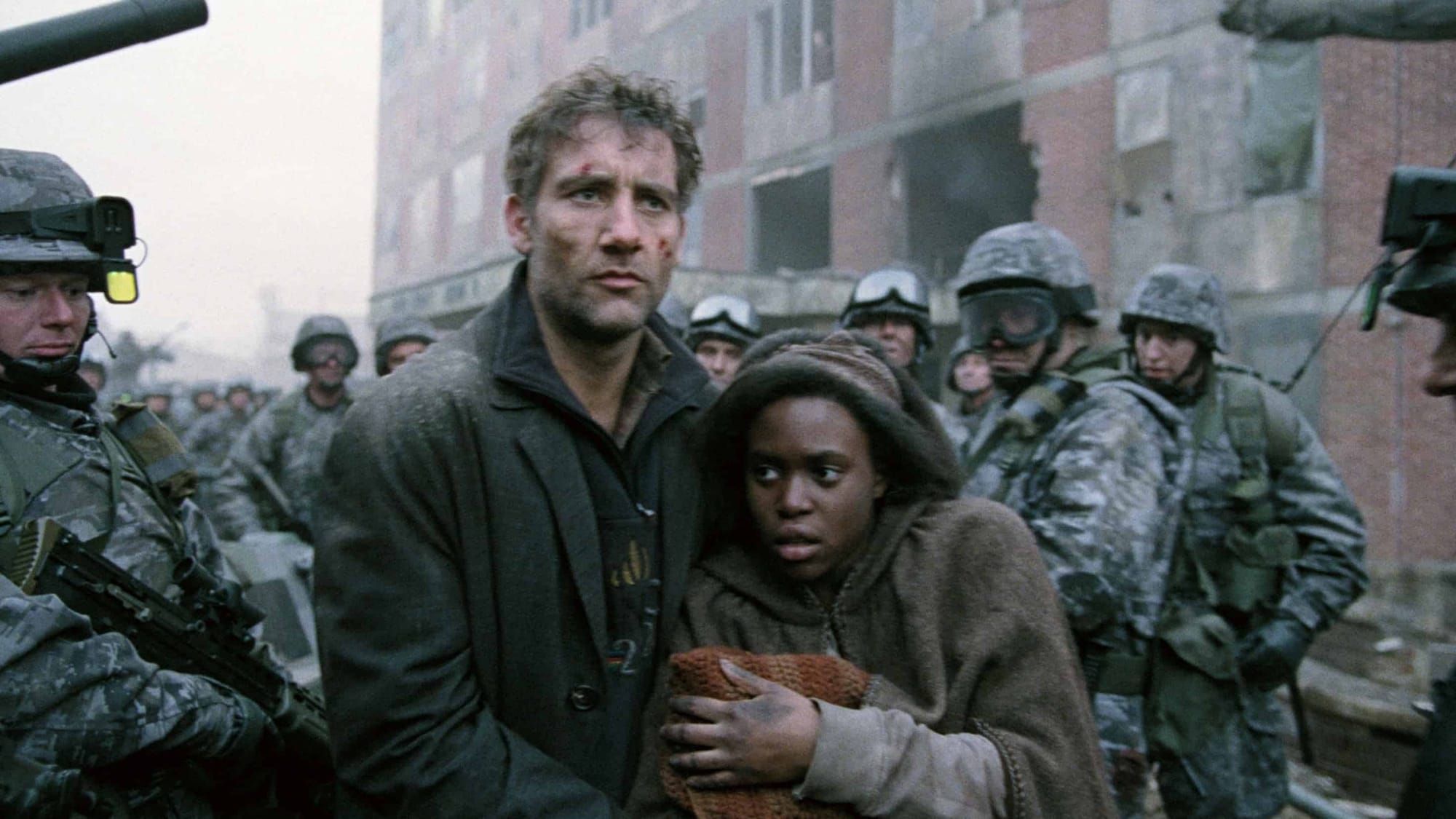
Still, for all of these allusions to the Christmas story, Children of Men bears little resemblance to The Nativity Story, the more traditional depiction also now in theaters. Cuarón has crafted an intense, decidedly R-rated parable that offers a bleak vision of the world’s near future — or, as Cuarón himself would say, its present.