
In 2003, 28 Days Later revitalized a genre, cautioned us about viruses and rage, and divided Christian film critics
From the archives at Looking Closer, here's my original review of 28 Days Later, along with reactions from critics I quoted in my Film Forum column at that time.
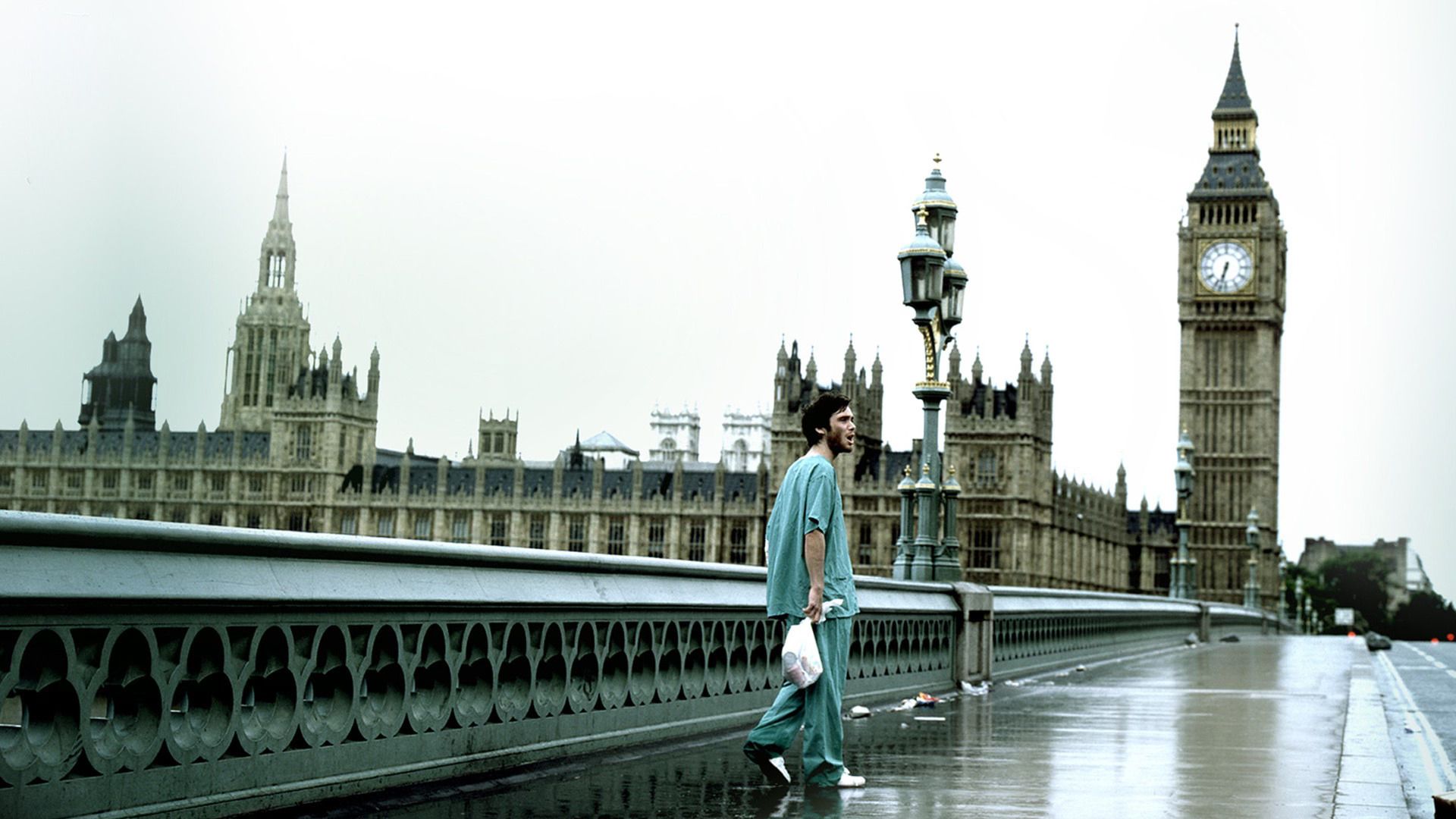
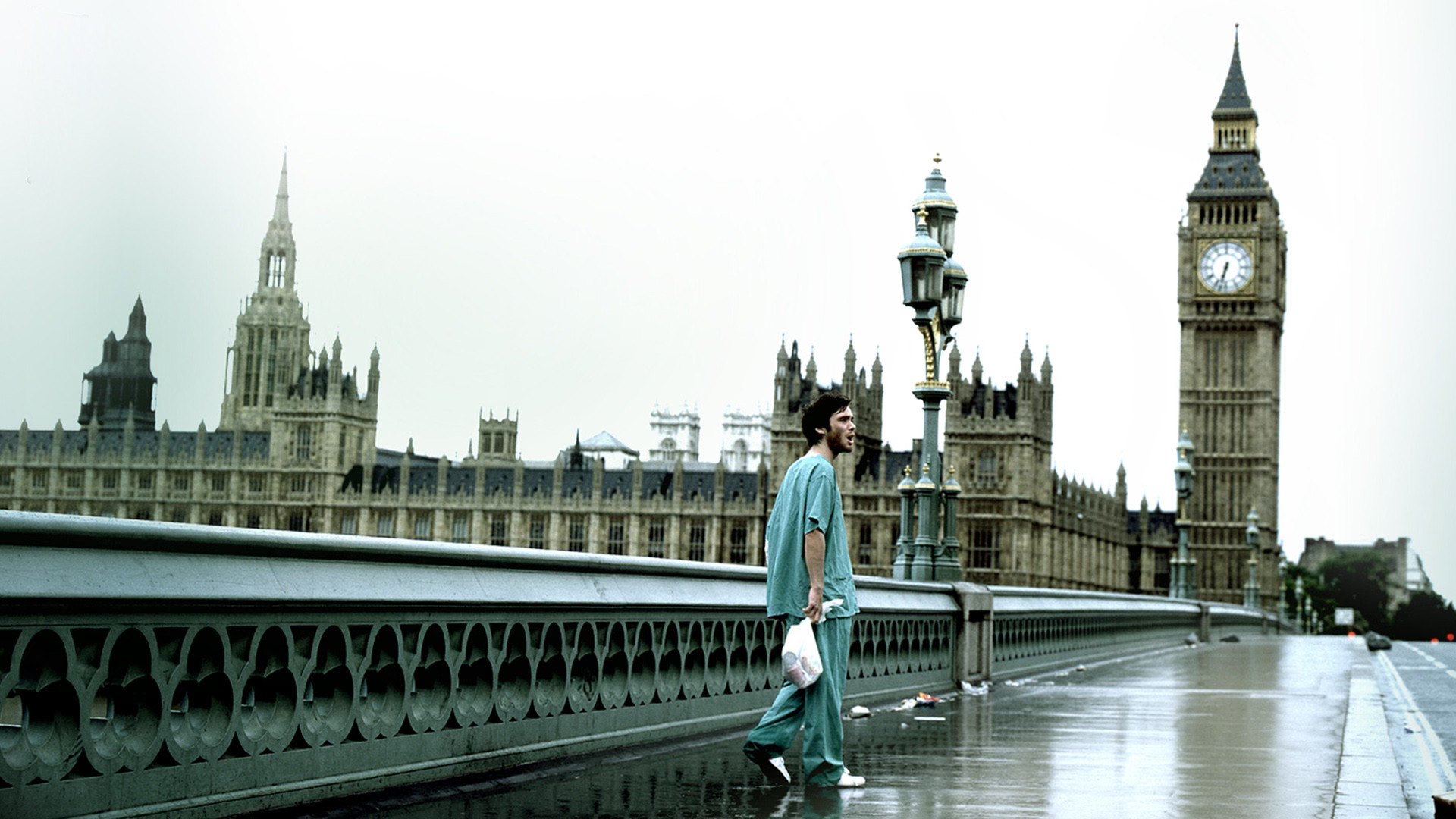
With Weapons opening in theaters today (I hope to have a review up very soon), and with 28 Years Later still stirring up fascinating conversations (like this one at Filmspotting, which has made me have second thoughts about my initial impressions), it seems that George Romero’s influence on our imaginations is still strong. I thought this might be a good time to look all the way back to the Danny Boyle movie that started the “Later” franchise.
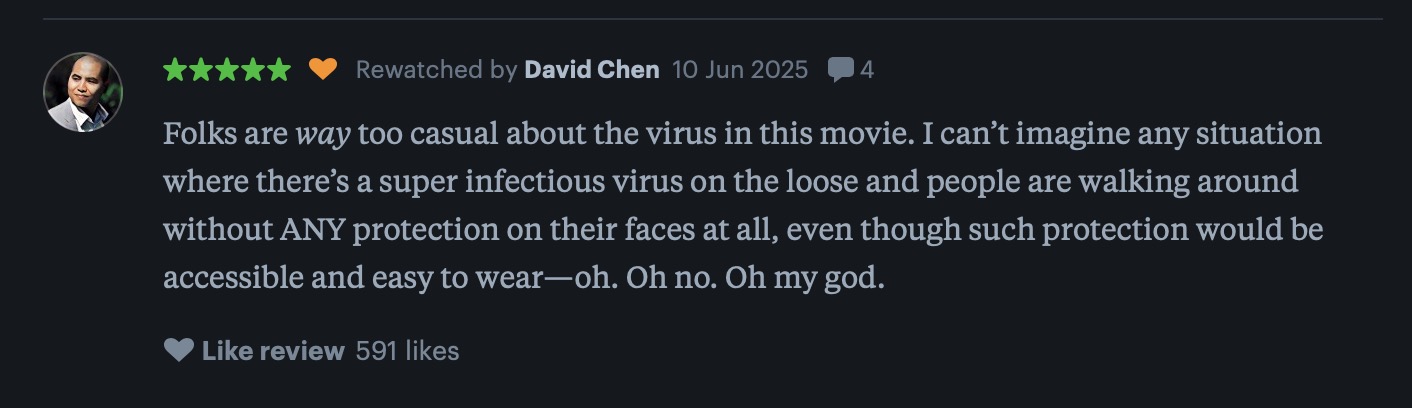
I’m not the only one reconsidering the film. Here’s film critic David Chen on Letterboxd having a moment of clarity:
When 28 Days Later opened in 2003, I was in the early days of writing my weekly Film Forum column for Christianity Today. Here’s what I reported that other Christian media critics were saying about the Boyle/Garland movie.
Note: Originally, each review I quoted below had a link to its source. I’ve removed the links that have since gone bad, those records vanishing from the Internets. I’m disappointed that so many have disappeared. (One, though, I deleted simply because I cannot in good conscience send anyone to their site, which has long been a propaganda machine for far-right and Christian nationalist agendas.)
Michael Elliott (Movie Parables) calls it “a horrifically violent, apocalyptic treatment on rage and human survival in the face of destructive chaos.” He concludes that it's "not for the squeamish or skittish," but it is meaningful. "What sets 28 Days Later apart from the typical zombie/horror B-movie fare is its examination of human nature."
Mike Furches (Hollywood Jesus) writes, "Many who will be critical of this movie for its style without ever understanding the intent of the director and writers. [This is] a well-thought-out supernatural thriller that calls into question the willingness of any of us to resort to evil actions or change the surroundings to bring about a better world around us."
Heather Mann (Relevant) says that the movie "asks things of an audience that few movies have done for 20 or 30 years. It is quiet and spare in the way that many 1970s sci-fi movies were. Instead of showcasing gratuitous gore and mind-numbing action, this movie has thinking characters who ask the audience to think."
Gareth Von Kallenbach (Phantom Tollbooth) calls the film "a very ambitious and unsettling work. 28 Days…is at times a very violent film that shows the inner rage that many believe lurks inside all of us. It seems that Boyle is drawn to stories that show the darker side of the soul and…how ordinary benevolent people can be driven to extreme actions when pushed."
Tom Snyder (Movieguide) writes, “The movie's strong moral worldview is spoiled by humanist elements, very strong foul language, gory violence, and graphic, but non-sexual, male nudity.”
David DiCerto (Catholic News Service) says, "Underneath the prolific bloodshed, the film . . . attempts to honestly, albeit heavy-handedly, raise philosophical questions about humanity's impulse toward aggression. Boyle, however, chooses to approach them from a secular, evolutionary stance, relying on the vernacular of biology and psychology, while refraining from religious concepts like original sin."
As I look back over those reactions, I can remember how frustrated I was with the knee-jerk reactions of so many critics. Like typical religious-media reactionaries, they were quick to complain about things that made them uncomfortable — like, the fundamental traits of the horror genre, or the possibility that the artist’s worldview might be different than their own. They were preoccupied with red-flagging anything that might offend Christians, anything that might discomfort the tribe. They weren’t engaging in earnest artistic analysis. They weren’t interpreting the film; they were just judging it.
I was pleased whenever I found thoughtful engagement with the film’s ideas, and an openness to considering what wisdom might be found there if we paid attention and did not rush to judgment. I remember the film ranking very highly among the Christian film critics of the Arts and Faith community with whom I corresponded daily. So many of them are still writing today, still cultivating meaningful conversations in the arts. And I’m glad that so many of them have become close friends.
Remember—Give Me Some Light is a reader-supported journal. If you’d like to receive occasional posts in your Inbox, sign up for a free subscription. If you’d like to unlock the whole site, and have access to first-impression film reviews, join the host of paid subscribers who make this work possible.
Here’s my own take on 28 Days Later from that original season of the film’s release.
This review was originally published at Looking Closer in 2003, after the film opened in the U.S. It was republished in 2004 when the new version of the site was launched.
And let me apologize in advance: As I read this, I’m surprised at how little attention I give to some of the fundamental aspects of filmmaking. I don’t mention the cast at all, even though I remember being impressed with both Cillian Murphy and Naomie Harris. (And their careers have become more and more impressive in the decades since then.) I suspect that this was a review I wrote in a hurry, with no editors involved, and no audience beyond my own blog.
After seeing the preview for 28 Days Later, those who love violent zombie movies rushed to the theatre hoping for chaotic bloodletting and absurd violence.1 Most others assumed it would be just another icky horror film, and they steered around it as if it were typical roadkill. And who can blame them? Derivative, disposable horror movies show up almost every week these days, and those worth discussing are rarities indeed.
But Danny Boyle (Trainspotting) had a lot on his mind while he assembled this low-budget, high-tension thriller about zombies and the apocalypse. The result is, yes, terrifying, but not just in the “Yikes!” sort of way. It’s scary because, while we may never be stalked by slimy zombies, we are coming to know more and more what it is like to live in the midst of an angry, violent, explosive populace.
Like the best horror films, 28 Days Later taps into our primal fears. And like the best science fiction, it reflects things about the present and dares to prophesy about the monsters waiting for us around the corner.
Boyle’s troubling tale takes a cue from Stephen King’s The Stand, examining the effects of a massive and aggressive virus on a heavily populated city. It opens with a bicycle courier named Jim (Cillian Murphy) waking up in a hospital. He disconnects himself from the abandoned medical equipment that someone had apparently been using to monitor his condition. And then he heads out into a city that has strangely turned to a ghost town.
Or better… a zombie town.
We soon learn that an epidemic has wiped out Jim’s world, a plague that began when scientists performed cruel experiments on monkeys, forcing them to watch newsreel highlights of the atrocities that human beings visit upon each other. The tests led to an outbreak of a virus appropriately named “Rage.” Rage takes over its host organisms and reduces them to barbaric, beastly behavior.2
So Rage victims are not technically zombies… they’re not the undead. They are human beings whose higher natures have been overcome by a demonic acceleration of their baser appetites, turning them into murderous, ravenous beasts who mindlessly seek to kill those with more civilized and spiritually mature faculties.
In a panic, Jim hurries to a church for help, only to find the congregation slaughtered and bloodthirsty monsters lying in wait for him. He learns that attacks are not the only danger: contact with a mere drop of blood from the infected can render a man defenseless against the disease. Running for his life, Jim stumbles onto some survivors who teach him how to fight the heartless monsters. Together, they strive to learn the truth behind the rumors of a military outpost that offers refuge for the uninfected.
What they learn is hard to accept — that evil is contagious too, and even harder to escape. Even if uninfected human beings manage to hold these irrational Rage-monsters at bay, other threats will rise in the human heart and corrupt us in other ways. To resist these forces, Jim and his friends will need more than barricades and weapons. Their resources are running out, and anyone who might be alive and able to help them is probably across the sea. They will need more than humanitarian aid and a Bono-led fundraiser.3
Be warned: 28 Days Later is extremely violent and, at times, bloody enough to send the squeamish running for the exits. I am not a fan of the genre, because it seems to exist as an excuse to play upon our fears and to indulge in excessive violence and gore. This zombie movie, however, kept me riveted with its ideas, characterizations, and with the way it accomplishes so much with so little.
Screenwriter Alex Garland’s predictions are not too far off the mark. While I doubt there is any virus that can turn us into the bloodseeking, ranting, raving creeps that haunt this thriller, we have certainly seen the public more easily stirred up into violent outbreaks in recent years. And there have been rumors of nasty viruses that are growing stronger as our devices for hindering them get stronger. So the “ghost-town” aspect might not be such an outrageous idea.
Moreover, as I watched Jim and his companions fight for survival, I thought of the plight of indigenous Africans who live today in fear of the forces that murdering their communities. Even now, Sudan’s indigenous population is crying out for help while their own Arab-dominated government funds this century’s first genocide.
I’m not just “reading into it.” Despite its disturbing visions and fantastic premise, Boyle’s film has critics examining it as a relevant tale for the era of SARS, AIDS, the West Nile Virus, and epidemics of civil unrest. Charles Mudede of the Seattle weekly newspaper The Stranger writes,
No book or painting could have captured the late ’90s better than The Matrix; no sonata or sculpture could have better captured the post-Iraq War 2 mood than X2. If X2 got to the terrifying heart of the days leading to our most recent war, then 28 Days Later got to the heart of SARS. True, SARS came about after 28 Days Later was made (2002), but the environment that made the disease all the rage for the better part of the first half of 2003 is the very same environment that makes 28 Days Later the best horror film of our time.
Perhaps the most important lesson of the film is this: A response to evil that is merely rational and forceful, lacking love and compassion, will lead to whole new atrocities. Evil thrives within the hearts of human beings, and it excels at corrupting any devices we design.
Danny Boyle may have meant to write off religion by showing the bloodied church and the monstrous clergy at the beginning of the film. Who can blame him when every day serves up so many examples of deceitful church leadership? Still, he subverts his own anti-religious prejudice, punctuating this film with flourishes of sacred music, which seem to suggest that there may be a greater good worth considering, and that we may have to look beyond mere military might and appeal to the powers of heaven if we want to survive our own corruption.
I wouldn’t write that line today. It comes across as condescending, and assuming the worst about horror movie fans. As I’ve become much more appreciative of horror as a genre, I regret being so flippant. ↩
Looking back, it’s easy to read 28 Days Later as anticipating the societal breakdown of the COVID pandemic, as so many chose the path of childish indignance at being prompted to mask up for the safety of their vulnerable neighbors. I’ll never forget the videos of temper tantrums in places of business. I’ll always remember, as if it were a nightmare, one particular video of a girl from my high school who is now a wife, mother, and politician, ranting — as if Rage-infected — in a grocery store parking lot that the store’s security would not let her in without a mask. What good were all of those years in Christian education for her if what matters to her is her right to do whatever she wants, damn the consequences, even if it spreads a deadly contagion to those without defenses to survive it? I have friends who lost family members to COVID, and it’s likely that you do too. Now, thanks to this cultural selfishness, we have a government that is aggressively striking down our defenses against the next pandemic, acting on ridiculous conspiracy theories and demonizing good science. 28 Days Later doesn’t seem so outlandish anymore, does it? ↩
I’m already nostalgic for the days when pop-culture figures were at the forefront of cultural campaigns for progress, for compassion, ↩