The Boy Who Believed in Airplanes: reflections on Empire of the Sun (1987)
In my last Good Letters column for Image, I turned to Steven Spielberg's Empire of the Sun as a way to express my vision and gratitude.

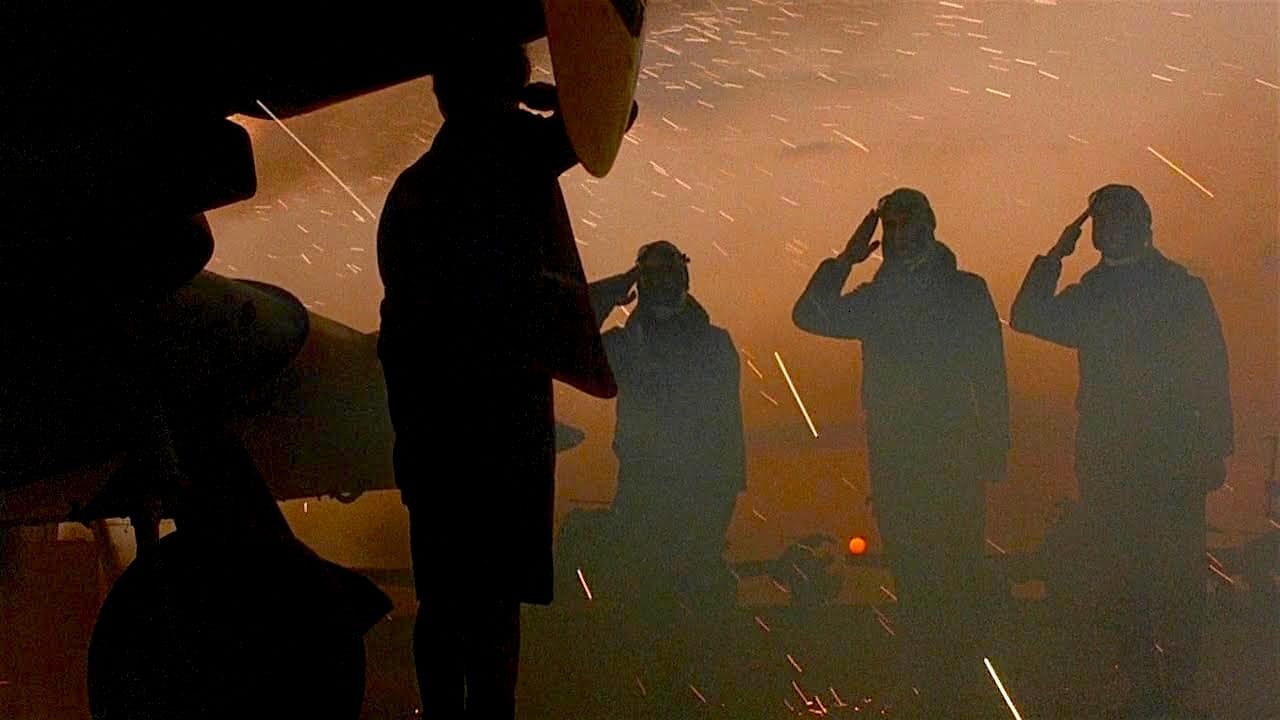
This evening, beginning at 6:30 p.m., at Seattle’s headquarters for literary endeavor, Hugo House, I’ll gather with readers and cinephiles to celebrate the release of my new book Lost & Found in the Cathedral of Cinema — a memoir about the movies that kindle our imaginations, transform us with beauty and wisdom, and shape our souls. I’ll invite visitors to talk about the films that have changed them. And I’ll talk about several that have changed me.
One of the films I’ll talk about is Steven Spielberg’s Empire of the Sun.
And so it’s time that I restored a long lost essay of mine — a reflection that I contributed to Image on their blog called Good Letters. This was my last offering there after several years of publishing personal essays on film every month. That was one of the richest experiences I’ve ever had as a writer, and it was an emotional goodbye for me — but I was moving on to bigger and better things: an MFA in creative writing, and the early drafts of this book, which would become the focus of my creative attention for eleven years.
I hope I’ll see you tonight at Hugo House!
Tickets are free. Join me for a memorable evening of conversation and celebration.

Matthew was a high school senior, two years ahead of me. He was a gifted musician, a generous friend, and not too cool to hang out with a sophomore like me. I learned a lot from him. His interests in books, music, and movies influenced mine.
But one Saturday afternoon in 1987, as we emerged from a matinee of Steven Spielberg’s Empire of the Sun, Matthew startled me into silence by complaining about the movie. He was smarter than me, a better talker. I was too intimidated to respond. But I disagreed. Fiercely. What he found dispiriting (and “way too long”) I found enthralling and transcendent.
It may have been that afternoon, as I wished for the eloquence to argue, that I began my journey into film criticism.
I went back to Empire of the Sun again and again, yearning for the words to explain why — and more importantly how — such a “dark” film could move me so deeply. It was a mysterious experience, a tangle that needed sorting out. I needed to discover my thoughts through the hard work of writing them down.
And here I am, still discovering, in this — the last post of my four years at Good Letters.
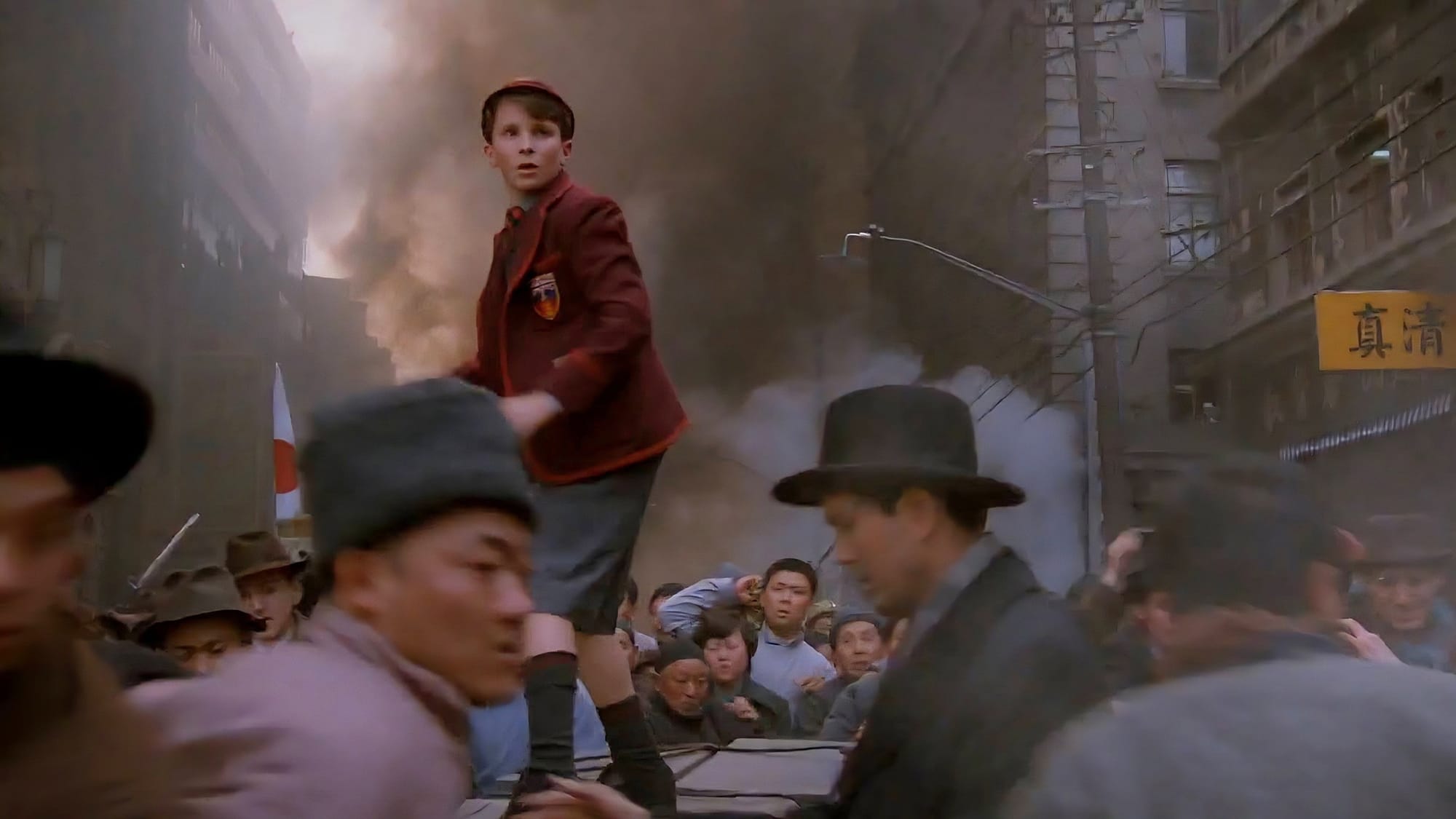
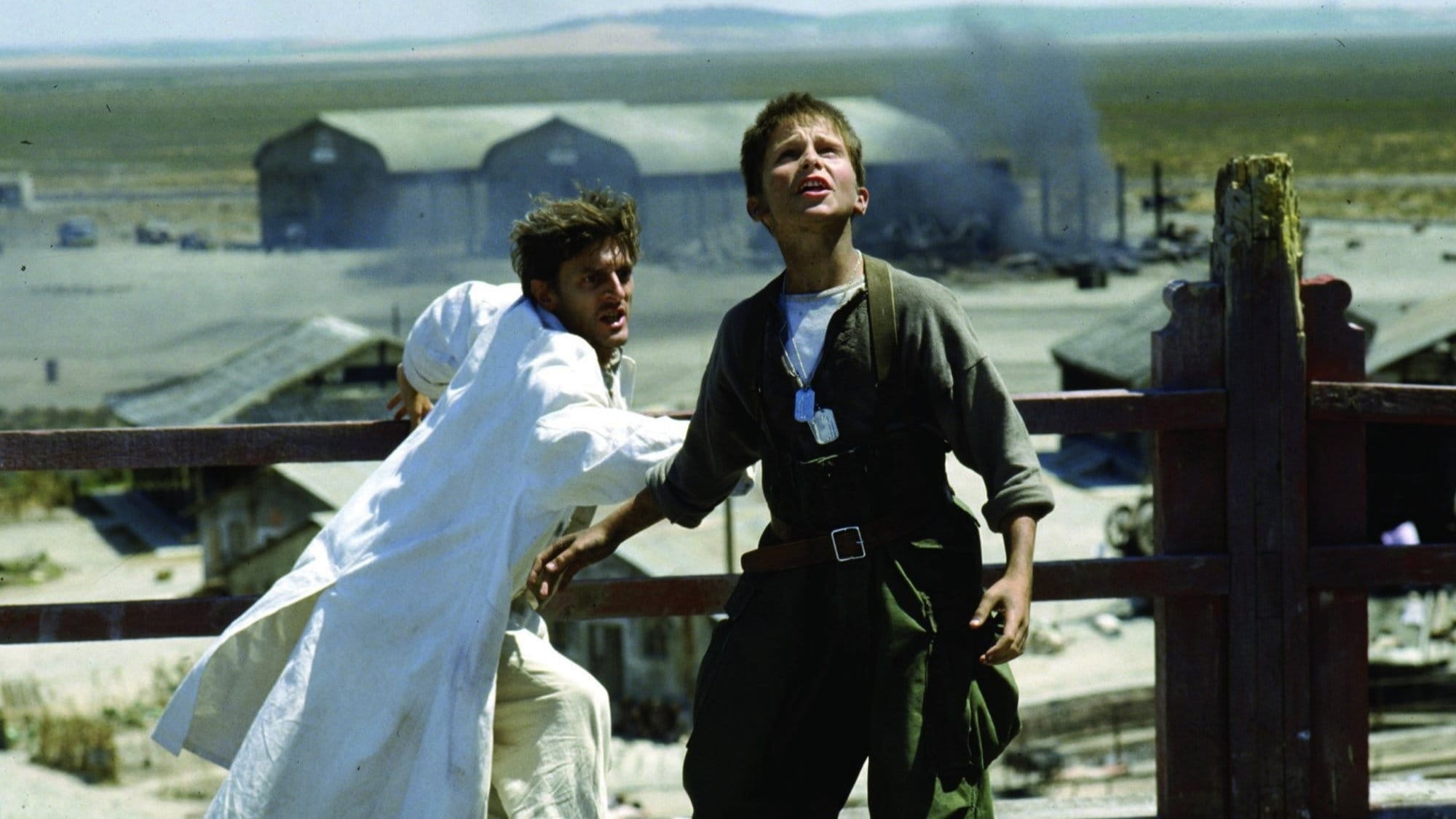
I’m still don’t know why Empire struck me like a bolt of lightning. I didn’t grow up with wealth and privilege like Jamie — the young war survivor played so beautifully by Christian Bale. Bombings and invasions never tore up my world, or separated me from my parents, the way Jamie’s world and family were devastated by Japan. I’ve never had to fight for a boiled potato to survive.
I knew about how the British in China had suffered in Japanese labor camps, because a few years earlier I’d become obsessed with Eric Liddell. Liddell, as portrayed in 1981’s Chariots of Fire, inspired me to study his life, and I learned that he died in a labor camp just like the one where Jamie perseveres. But beyond that, this history didn’t interest me.
So why, then?

Perhaps it’s Jamie’s spirit. He’s an odd, solitary child who lives half in his imagination, half in a world of grownups. That was me, at that age. Jamie is fascinated by the mysteries of God and the mysteries of flight. That was me — as intrigued by my father’s theological library as I was by 747s that passed low over my backyard.
Jamie is obsessed with airplanes. His love is obvious in his knowledge of each model’s particular details. For him, airplanes are as exotic as dragons — magical monsters of speed, smoke, and glory. Airplanes make anything seem possible, even salvation. Each one lifts him up out of his fears and sufferings, and turns his attention heavenward.
As his favorite — he calls it “the Cadillac of the Sky” — roars over the camp, he loses his composure. Eyes wide, mouth agape, he reaches out. He’s touching something sacred in this dusty, diseased camp.
I can relate. Even as I strove with Jamie’s frenetic energy to impress my elders and teachers, eager to gain early access to the adult world, I was easily distracted by dreams.
Movies were more inspiring than airplanes. I’d rush to The Oregonian newspaper each morning to ogle movie advertisements. I’d study the pictures, memorize names of cast and crew. I read reviews with the reverence of a theologian reading Paul’s epistles. I lived for 99-cent double-features at the Village Theater, three blocks from home.
There’s something holy in this fusion of light and sound. Cinema is a lens that can bring glory into focus in even the worst movies. Thanks to Spielberg, my pre-teen self imagined himself as Indiana Jones; I lived in pursuit of Spirit-filled treasure. Today I look like an adult beleaguered by years in a labor camp, but when I look up at the screen, I’m a spellbound child all over again.
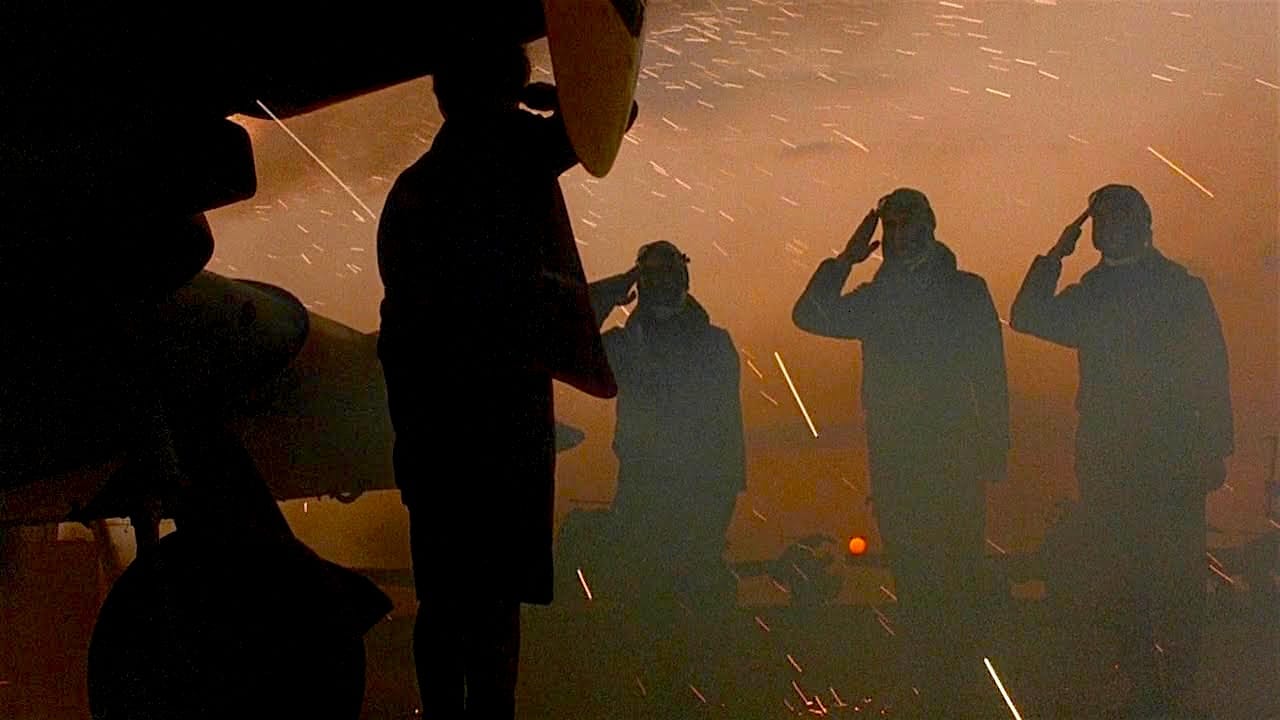
In its 152-minute running time, Empire gives us both a specific portrait of a childhood ordeal and a grand “pilgrim’s progress” parable. Like Ofelia in Pan’s Labyrinth, Jamie seems to belong to a different kingdom, pledging allegiance to different powers than those around him. When his captors sing, he can’t help but salute and contribute a song of his own. When a boy beyond the barbed wire plays with a toy airplane, the word “enemies” dissolves — Jamie finds a friend. Later, trying to revive his bloodied friend, Jamie chants, “I can bring everyone back… everyone.”
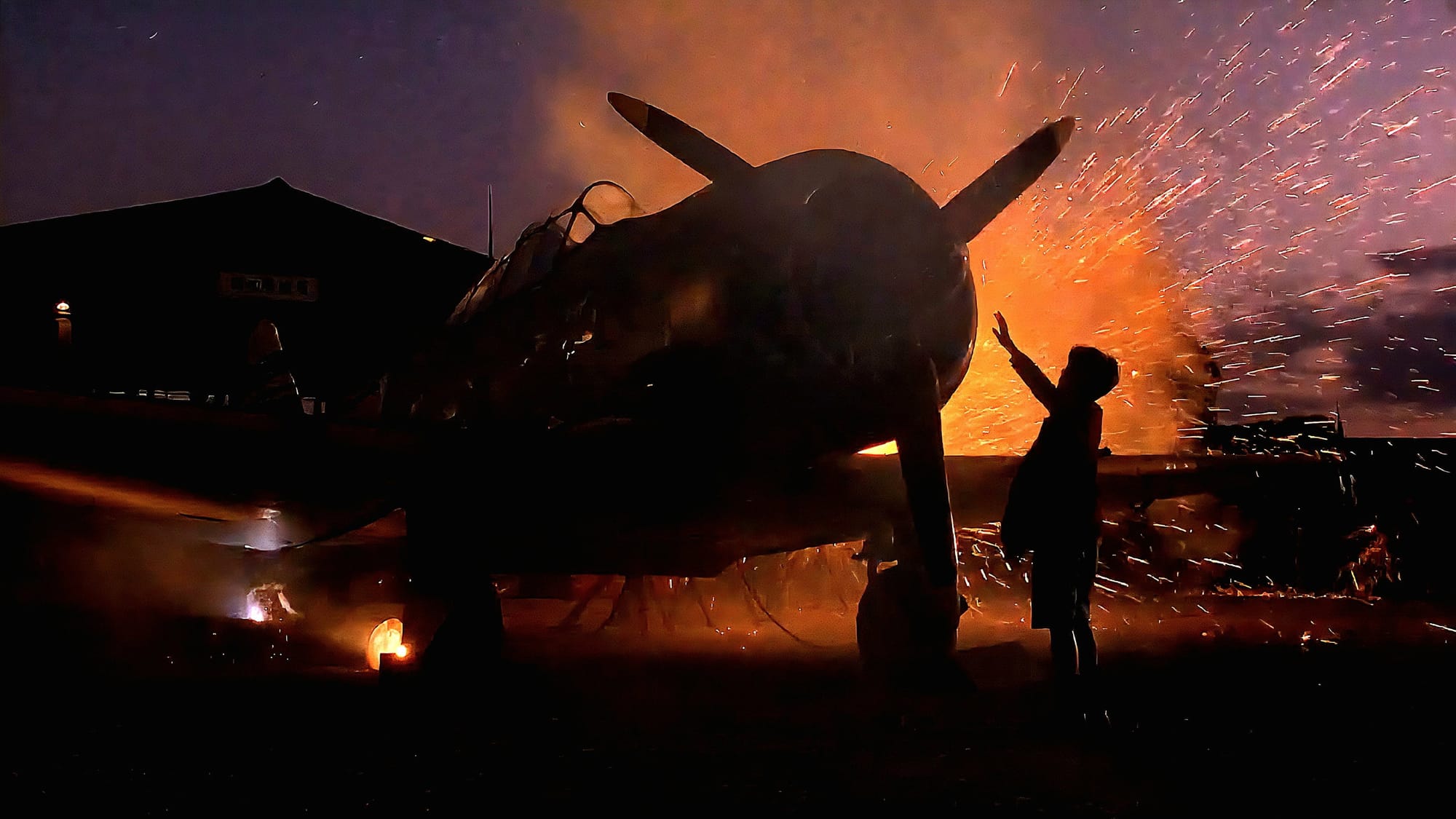
In that moment, we’re watching both Jamie and Spielberg. With the power of cinema, the filmmaker wants to revive and preserve what may well be lost, like Indiana Jones “bringing back” history’s mysteries for reverent observation. He wants to keep hope alive, even as human cruelty disillusions the world.
So do I. Movies can only do so much. But at their best, they cause us to lean forward together in hopes of touching something revelatory, of glimpsing something real, through a screen darkly.
Writing for Good Letters, I’ve felt like Jamie — ecstatic, leaping about like a fool, trying to point out spirit-lifting experiences as they flash by, manmade but magical, beautiful and mysterious, able to revive faith in the disheartened.
I believe our capacity to go on in hard times, to maintain faith in eventual liberation from our “labor camp” trials and terrors, has everything to do with our willingness to remain vigilant and to bear witness to beauty when it is revealed.
Alas, “labor camp” pressures now require me to turn my attention to other kinds of work for a while. I’ll have to surrender this project, like Jamie surrendering his suitcase full of his favorite things, until some easier season.
I’m grateful for you who have encouraged me. I’m especially grateful to Scott Derrickson, whose prompting made my Good Letters adventure possible. And I’m more grateful than I can express to the hard-working Image team — especially Greg Wolfe — who serve with vision and stamina, serving us with beauty until our eventual liberation, restoration, and reunion.