Ethan Hawke is a Depression-era Odysseus in The Weight
So far in 2026, Ethan Hawke’s turn as an unjustly imprisoned man is my favorite performance by an American leading man.

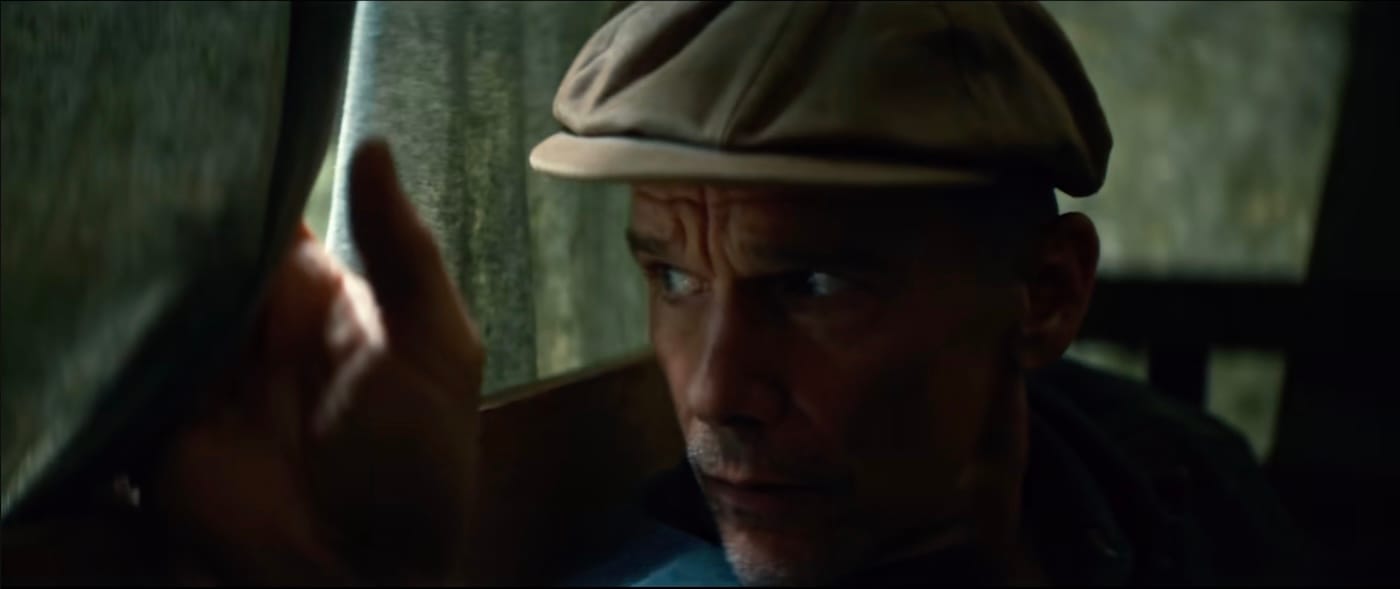
I’ve been an Ethan Hawke fan since Dead Poets Society arrived back in 1989, and I’ve felt a strange kinship with him ever since. I’m less than a month older than him. We share a love for Flannery O’Connor, and I greatly admire Wildcat, the movie he made about her. And when I discovered that his journey has led him to identify as an Episcopalian, as I have done (with some disclaimers) for several years now, I began to wonder if he might not be my favorite living actor. (Since Daniel Day Lewis “retired,” I haven’t been sure how to answer that question.)
Given how many incredible performances Hawke has given us — my favorites are those in Linklater’s Before trilogy — it’s strange to realize he’s never taken on a challenge anything like The Weight. But here he is, headlining the impressive directorial debut of longtime editor and producer Padraic McKinley, a suspenseful survival-in-the-wilderness adventure with the gravitas we usually associate with Revenant-mode Leonardo DiCaprio, Fugitive-mode Harrison Ford, Sorcerer-mode Roy Scheider, or Russell Crowe in, well, Russell Crowe mode. And he’s fantastic. So far in 2026, this is my favorite performance by an American leading man.
The Weight’s narrative is, yes, weighty in its intensity. (It has nothing to do with The Band’s classic song of the same title, thank goodness. I was braced to hear it come on during the end credits, especially since a character named Anna had been introduced.) But it’s not a complicated story. I’m not sure I’d describe it as derivative, as I can’t think of another film that hews closely to this storyline. We might hope that the title indicates a certain profundity that will resonate at the conclusion. Instead, we’ll have to settle for what creenwriters Matthew Booi and Shelby Gaines, who worked with Hawke previously on his Blaze Foley biopic, are serving up: several breathtaking, high-stakes action sequences arranged on a simple framework.
We follow World War I veteran Samuel Murphy as his Depression-era struggles go from bad (he’s a single father facing eviction from a bare-bones flat) to worse (life on the streets searching for a hole in the wall where he can keep Penny, his cherubic daughter, safe). Unjustly imprisoned after defending himself from thugs, he watches Penny led away to a children’s home where she will soon become a ward of the state beyond his capacity to recover her. Can he get his sentence shortened and escape a hell of hard labor before Penny’s swallowed up by the system?
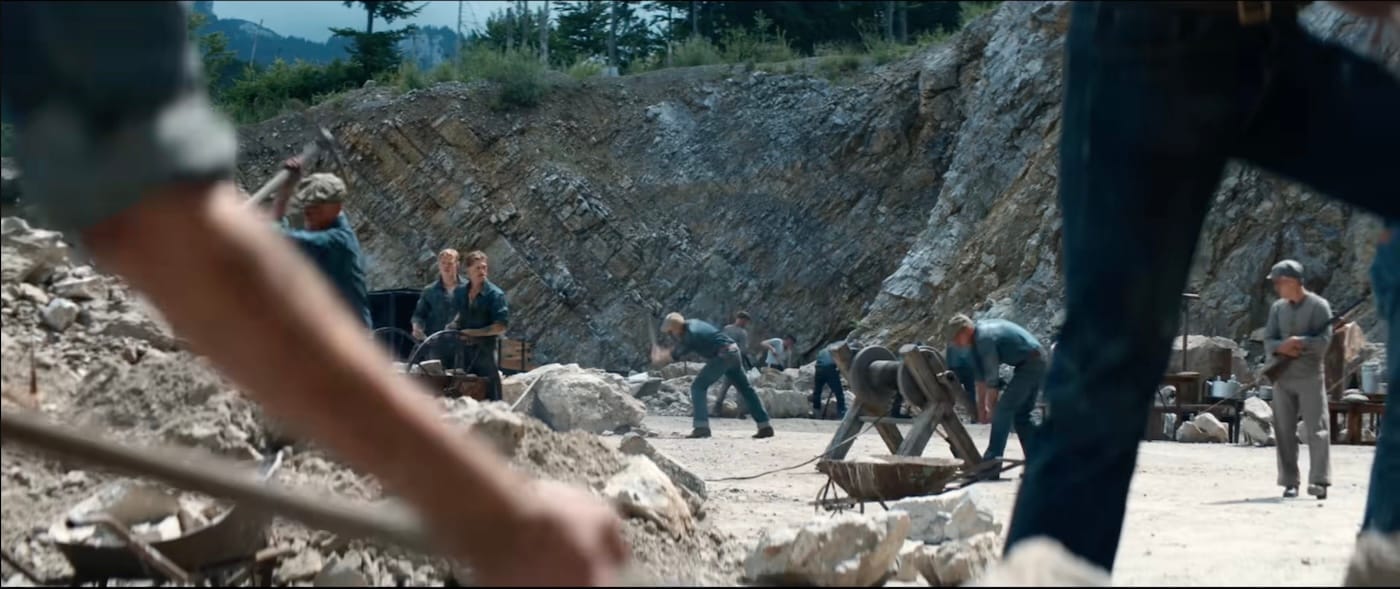
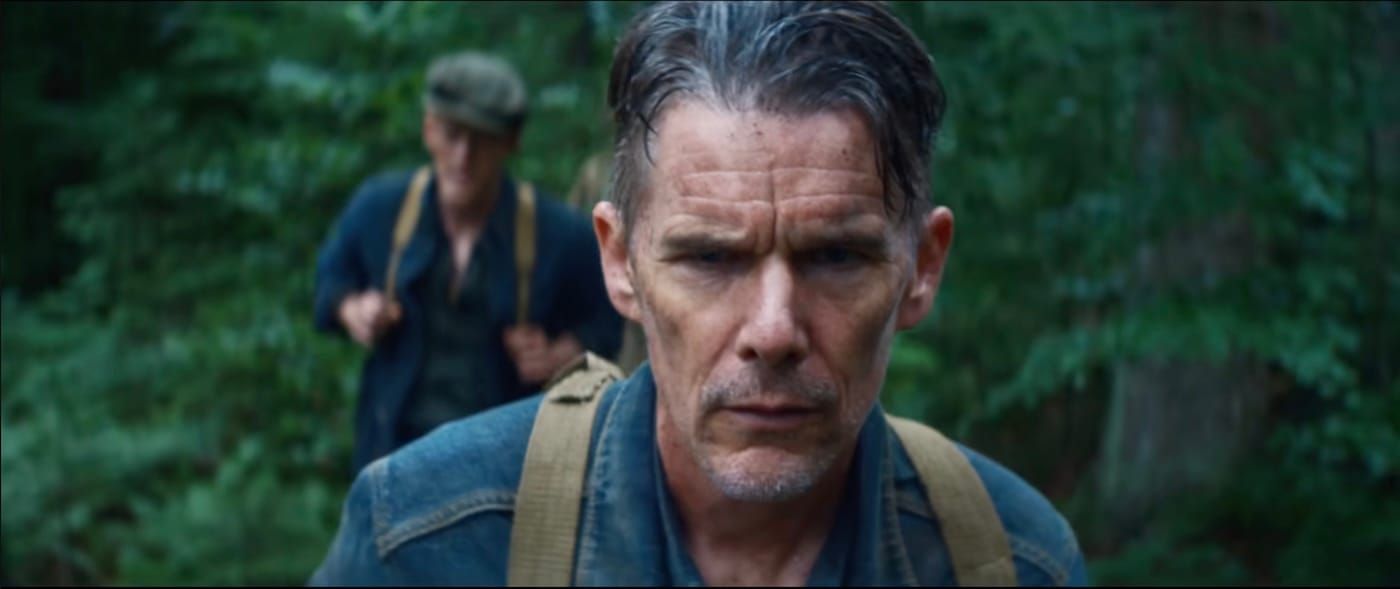
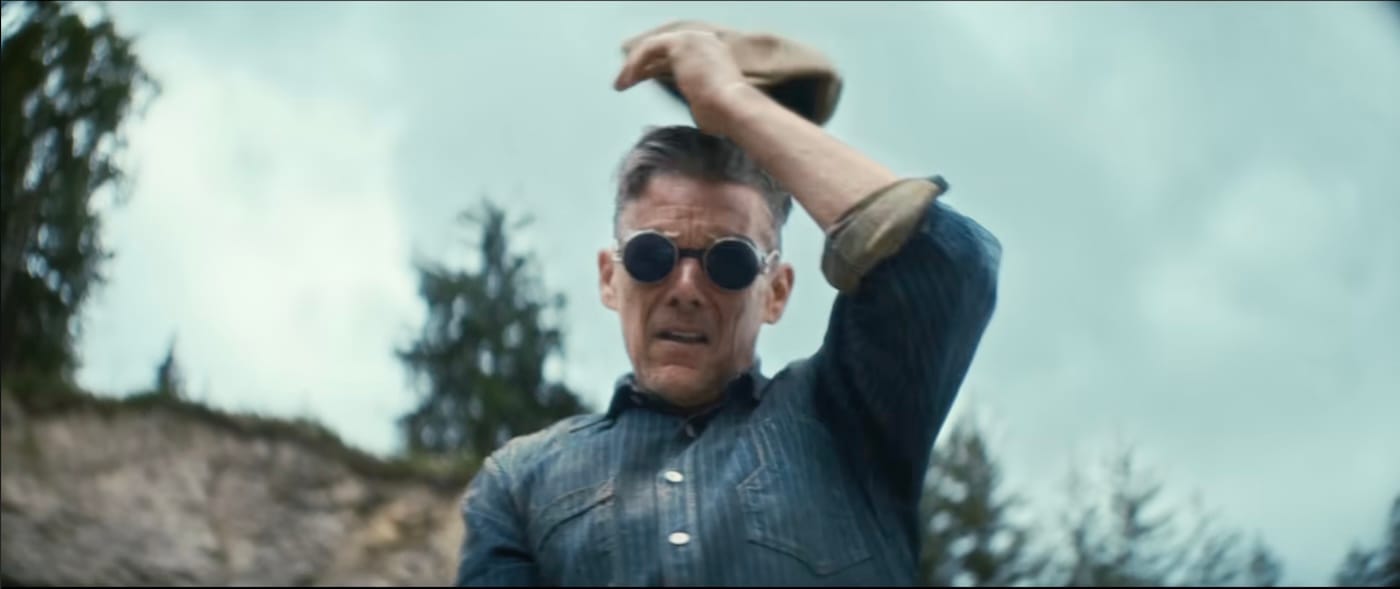
If an Ethan Hawke performance has ever been described as muscular before, it was probably in reference to his intelligence and his eloquence. (I’m listening to him read an audiobook right now, and there are very few voices I’d consider equal to his for the job.) But The Weight is not a movie about smooth-talking your way salvation. For the first time, we find an Ethan Hawke character surviving on a redundant, familiar, primal refrain: “I just want my daughter back.” The Weight is a movie about a desperate father suffering physical trials for the sake of his daughter to the point of annihilation, swinging pickaxes and fighting the elements and then fighting his own traveling companions out among the brambles and bark of Oregon’s Deschutes County. And Hawke’s face in close-up looks increasingly like a sculpture carved by wind and rain and horror.
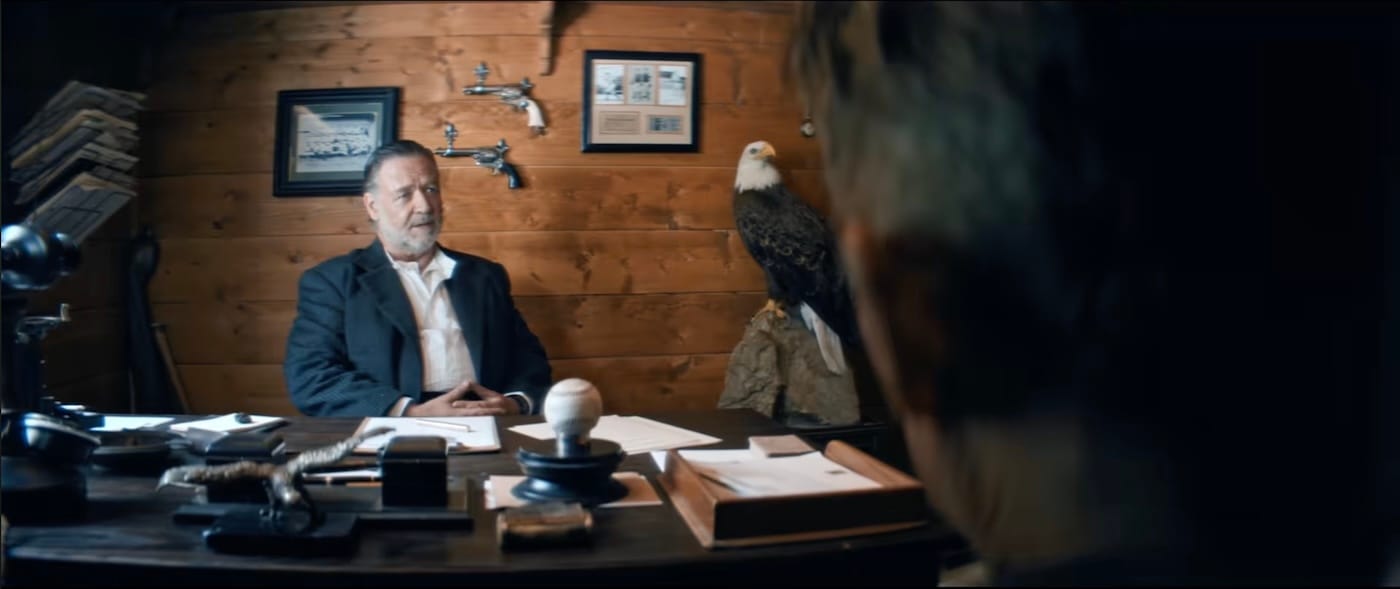
So Hawke’s Murphy gives us a firm focus throughout. But we’re given even more reason to stick with him through somewhat the somewhat predictable paces of a wilderness survival story due to the persuasively brutal influence of the film’s heavy — the strict and hard-hearted Warden Clancy (Russell Crowe, whose fondness for draping cruelty in the American flag recalls Gangs of New York’s Bill the Butcher).
When Clancy offers Murphy an early release if he will complete a dangerous mission, Murphy accepts the challenge, even though he’s smart enough to smell deception in Clancy’s demeanor. The mission? According to Clancy, President Eisenhower’s order to gradually close up the gold mines has made the miners restless, and they’re staging revolts, stealing the gold they have mined for themselves. Murphy will travel with three fellow convicts, carrying a cargo of gold bars from a Klamath Falls gold mine to a rendezvous point, staying ahead of any gold-hungry opportunists from the mine. They are joined by two Clancy-appointed guides who will make sure nobody tries to take off with the gold.
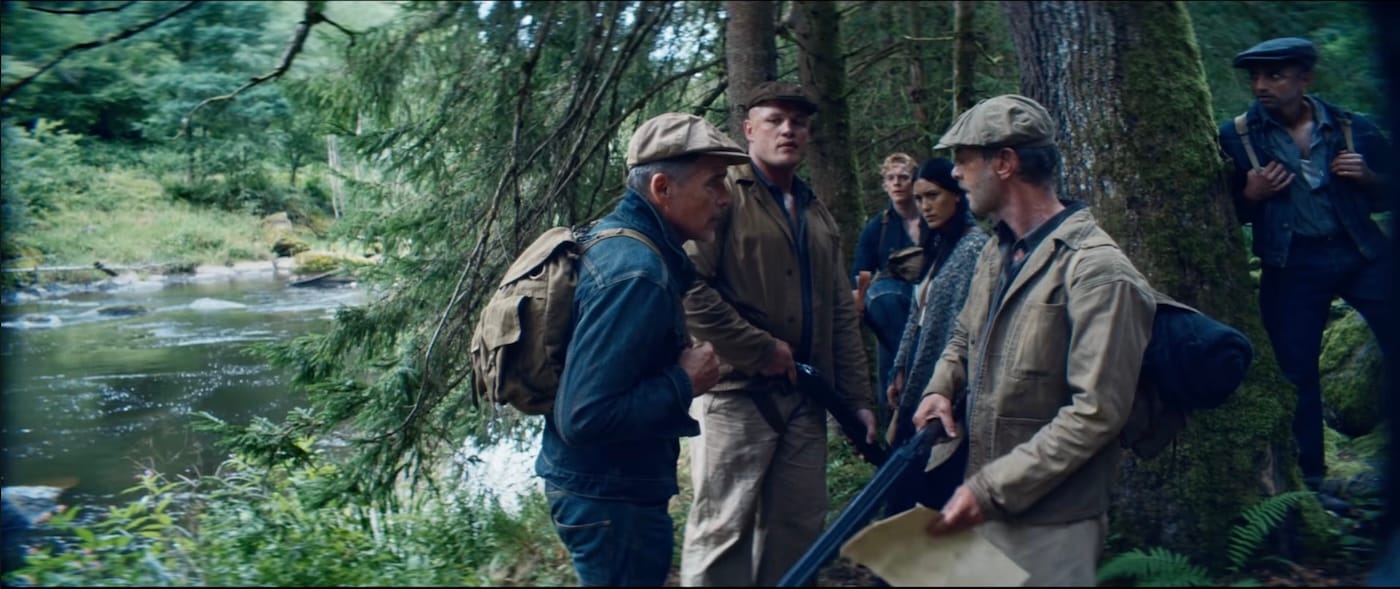
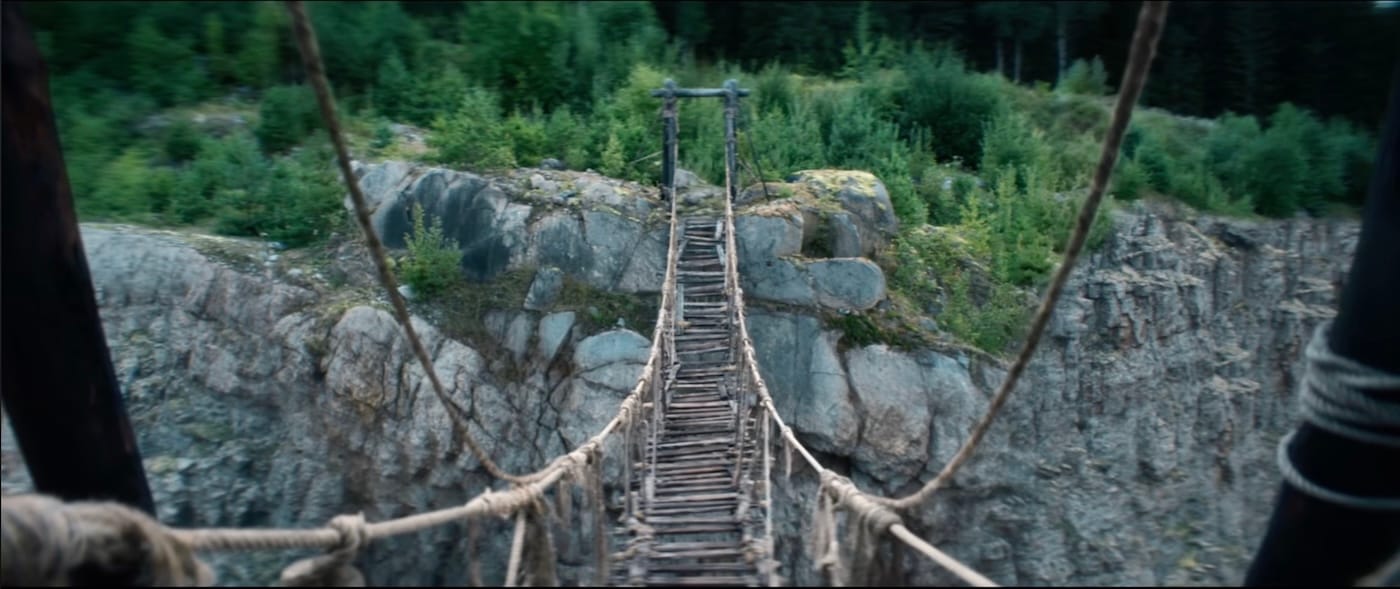
It’s a long and treacherous journey on foot, fraught with dangers above and beyond greedy miners. They’ll have to contend with rickety rope-bridges over deep canyons, raging rivers, and unpredictable forest-dwellers who seem to smell the value of the secret cargo. And then there’s the Indigenous woman (Julia Jones) who, simmering with suppressed rage and unreadable intentions, joins the mission.
While the adventure unfolds at an energetic pace, I found myself wishing I could slow things down to savor the travelers’ surroundings. Weary as I am of artificial environments and overstuffed big-screen fantasies, I was overjoyed to find myself in a real-world context without any evident digital animation or extravagant special-effects explosions. The Weight lives in a genre of adventure filmmaking that is much rarer than it used to be, probably because the logistics of staging such storytelling in the wilderness is more complicated and expensive than relying on special-effects teams to manufacture visual landscapes. (You’ll see why so many critics are making comparisons to William Friedkin’s Sorcerer, even though I don’t think anything here comes anywhere close to that film’s messy moral morass or its staggering storm-lashed suspense.) If I hadn’t been so impressed by the deepening lines in Hawke’s rugged visage — how can this be the same person who played that innocent adolescent in Dead Poets Society? — I might have thought I was watching a movie that had been lost in a studio’s archive for decades.
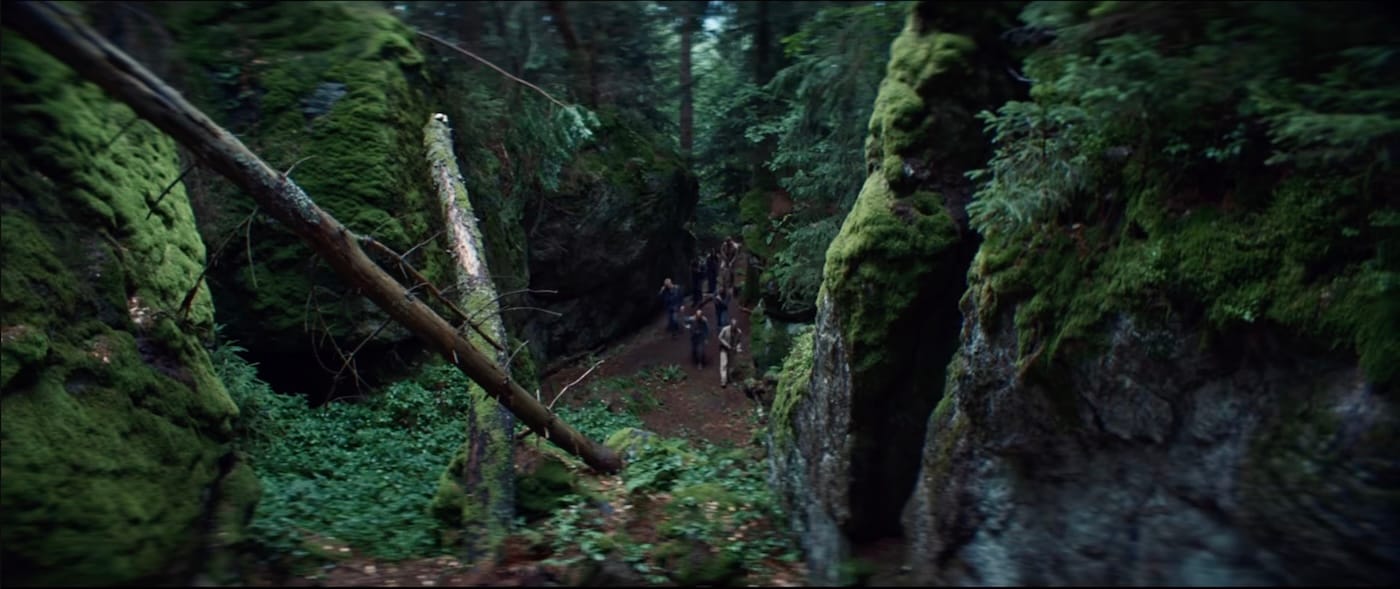
Just as I was delighted by last year’s contemplative epic Train Dreams, I was moved again to feel immersed in the old-growth forests of the Pacific Northwest. The slick, artificial environments of most sci-fi films of the last 20 years have a certain sameness that makes them forgettable, but I’ll never forget the green alien-world jungles of the 2018 sci-fi film Prospect. Since those filmmakers (directors Zeek Earl and Chris Caldwell) took on the challenges of filming in a real wilderness, I felt immersed in a mesmerizing strangeness — and the cameras were rolling not on another planet, but on the Washington peninsula just a couple of hours from my Shoreline home! As Peter Jackson’s The Lord of the Rings films reminded us 25 years ago, nothing compares to the panoramic beauty of the natural world on a big screen. It makes a difference to see real light reflecting off of real, organic material.
That’s why I will continue to recommend The Weight for years to come: The characters traverse persuasively perilous territory, and Hawke’s performance, which makes him look like he lived alone in this wilderness for months before they started shooting, make this a memorable adventure. I wish I was equally enthusiastic about the film’s narrative arc.
The adventure is ultimately just as episodic — and just as nerve-wracking — as Nolan’s The Odyssey (even though it’s almost an hour shorter). And it confronts us with similarly messy conundrums for the conscience. We want to see this Odysseus get home to his remaining family. And we know he’s making moral compromises, serving a corrupt master, in the hopes of surviving and finding a better future. We want to see Clancy and his villainous cronies punished for their corruption even as we hope to see Murphy achieve the task that Clancy has set for him. And it’s likely that we find it easy to accept the violence Murphy carries out against even more violent men because we understand his motivation. And we want those who give in to their worst impulses along the way to pay for their sins, even as we want Murphy absolved of anything he does to escape his unjust suffering.
Ultimately, while we may feel relieved by a somewhat abrupt conclusion, we may also feel a bit unsatisfied at the lack of insights we might take away from this story. There are points along this journey where I find myself hoping that Murphy’s path might send us home carrying gold bars of wisdom. But I don’t think that happens. Murphy’s fellow convicts fall into an intriguing dispute about the differences between capitalism and communism, but it doesn’t ever feel like this argument is rising meaningfully from the circumstances at hand. Also — it’s one thing to see bad guys get what they have coming; it’s another thing to conclude on a note that feels implausibly sunny, as if any of these travelers who has paid such heavy prices and participated in so much violence might just be able to shrug it off and drive away smiling.
Having said that, I find great pleasure in seeing one of the greatest American actors give one of his finest performances, and to see him do so in tension with the great Russell Crowe, who strikes a few sparks along the way that remind us of the giant he used to be on the big screen’s stage.
Art isn’t a competition, and Hawke is on a run that’s ensuring he'll be remembered as one of our all-time great leading men no matter what year-end awards say. But if any Best of 2026 votes come down to Matt Damon or Ethan Hawke this year, I know which Odysseus will get my vote.