
First impressions of The Currents
The Currents, the new film from writer and director Milagros Mumenthaler, is immediately one of my favorite films of 2026.

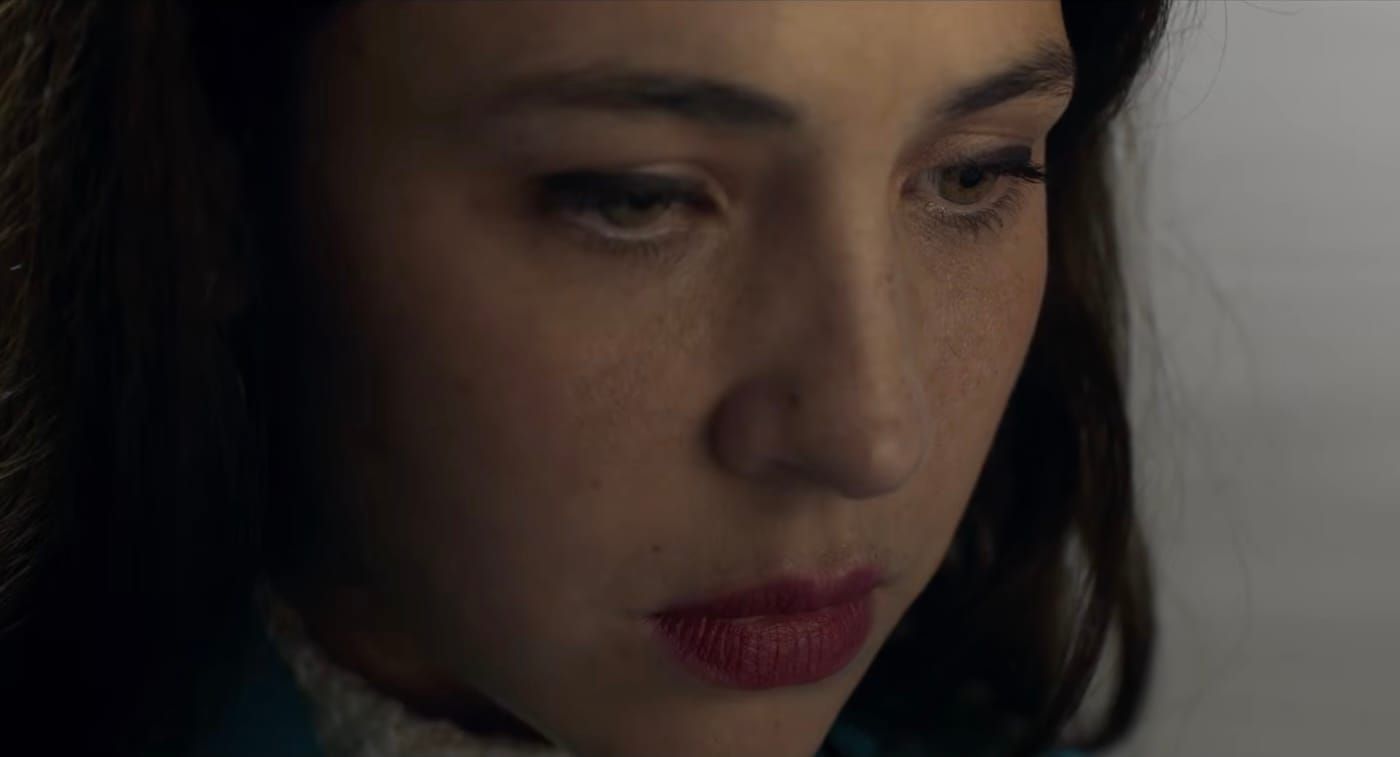
The Currents, the new film from writer and director Milagros Mumenthaler, opens with Catalina, a fashion designer from Argentina, receiving an award in Geneva for her work, and a few minutes later she nearly drowns in a river just a short walk from the ceremony. It’s a jarring start to a film that never gives us easy explanations as to the why of this crisis. But the work we do to understand her decision — and, indeed, to understand anything about her life — is rewarding.
And in order to effectively express my admiration for The Currents, I must first spotlight a movie I’ve seen dozens of times since it first reached Seattle theaters in the early 1990s.
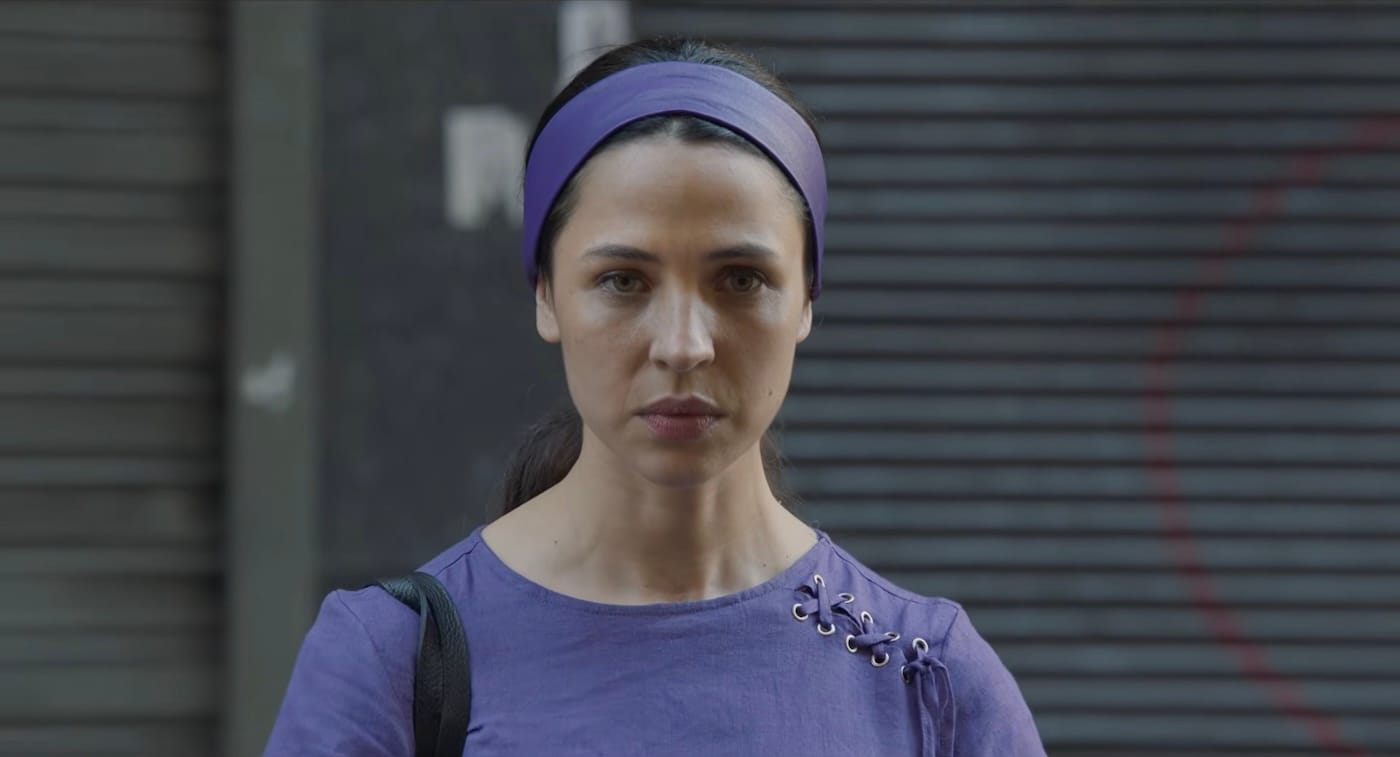
In director Krzysztof Kieślowski’s masterpiece Three Colors: Blue — that’s often the answer I give when people ask me to name my all-time favorite film — a woman’s life is broken into two possibilities. Julie, the survivor of a car crash that took the lives of her world-renowned husband (a composer) and her young daughter, pursues the second of the two possible lives: Still shaking from the trauma, she tries to leave the world of her life before the crash behind her, and starts fresh. She pursues a world of “freedom” in solitude, where, supported by the fortune she has in the bank, she can afford to do “absolutely nothing” and be accountable to absolutely no one. In this escapist world, Julie can experience some degree of happiness. She can repress the pain of her traumatic loss. She can live like a ghost, unbothered, with no responsibilities.
But as she pursues that second life, her first life haunts her, tugs at her, refuses to give her any peace. If she surrenders to its call, she will have to turn back and engage with her past, with unanswered questions about the health of her marriage before the crash, with the anguish of her daughter’s absence, and with the unfinished compositions her husband left behind. In other words, the first life requires an acceptance of suffering, while the second is a fantasy that requires living in willful denial.
The Currents has a lot in common with Blue. And I wouldn’t be surprised to learn that it was a primary inspiration — although Todd Haynes’s Safe and Lucretia Martel’s The Headless Woman, both compelling psychological studies of women in crisis, are also likely inspiration for reasons you will find obvious if you’ve seen them.
Still, The Currents is very much its own movie, with particular mysteries on its mind. And while Catalina, the woman in the spotlight, has to reckon with conflicting identities, that struggle leads her in unpredictable directions. The poetic language of Mumenthaler’s mise-en-scène is sometimes similar to Kieslowski’s. And both filmmakers’ protagonists seek escape from their struggle in deep water (Catalina in the river, Julie in a swimming pool). The lead performance here from Isabel Aimé González-Sola leads me to guess that she studied Juliette Binoche’s performance in Blue; González-Sola’s many subtle expressions, Gioconda smiles (at least one of which made me laugh for how exactly it matches one of Binoche’s in its complexity), and frequent signs of profound mystification about her own reactions and responses to things become as eloquent as any spoken dialogue, and arguably more so (since she’s grappling with questions that would be almost impossible to paraphrase).
Okay — I risk losing readers if I spend more time on these comparisons. I bring up the Kieślowski film up only to give cinephiles a sense of how ambitious, how sophisticated, and how meaningful this film really is.
So, I’ll turn now to the details of this film.
González-Sola’s character Catalina is known as both Cata and Lina, depending on the context. And this clearly underlines a divided nature, a dichotomous life.
Lina enjoys wealth and privilege and influence as a fashion designer, married to a suave and sophisticated financier named Pedro (Esteban Bigliardi), with whom she lives in a tower suite high above the street and raises the adorable Sofía (Emma Fayo Duarte). Lina has “help” at the house, staff we catch glimpses of as they busy themselves in the background of her routines. But after she returns from the award ceremony in Geneva, where she hit a personal “high” of achievement before plunging to the river’s depths, Pedro expresses frustration with the obvious change in her demeanor: “It’s as though you never came back.” Cinema-literate viewers will quickly catch on that these literal highs and lows are important for us to notice as we try to diagnose Cata/Lina’s troubles.
We will learn, gradually, a little more about Cata, as she was known before her professional and cultural ascent. But while we get a detailed tour of her privileged existence, her previous life remains shadowy and submerged for most of the film. We slowly and only partially solve her mysteries by tracking her erratic tangents.
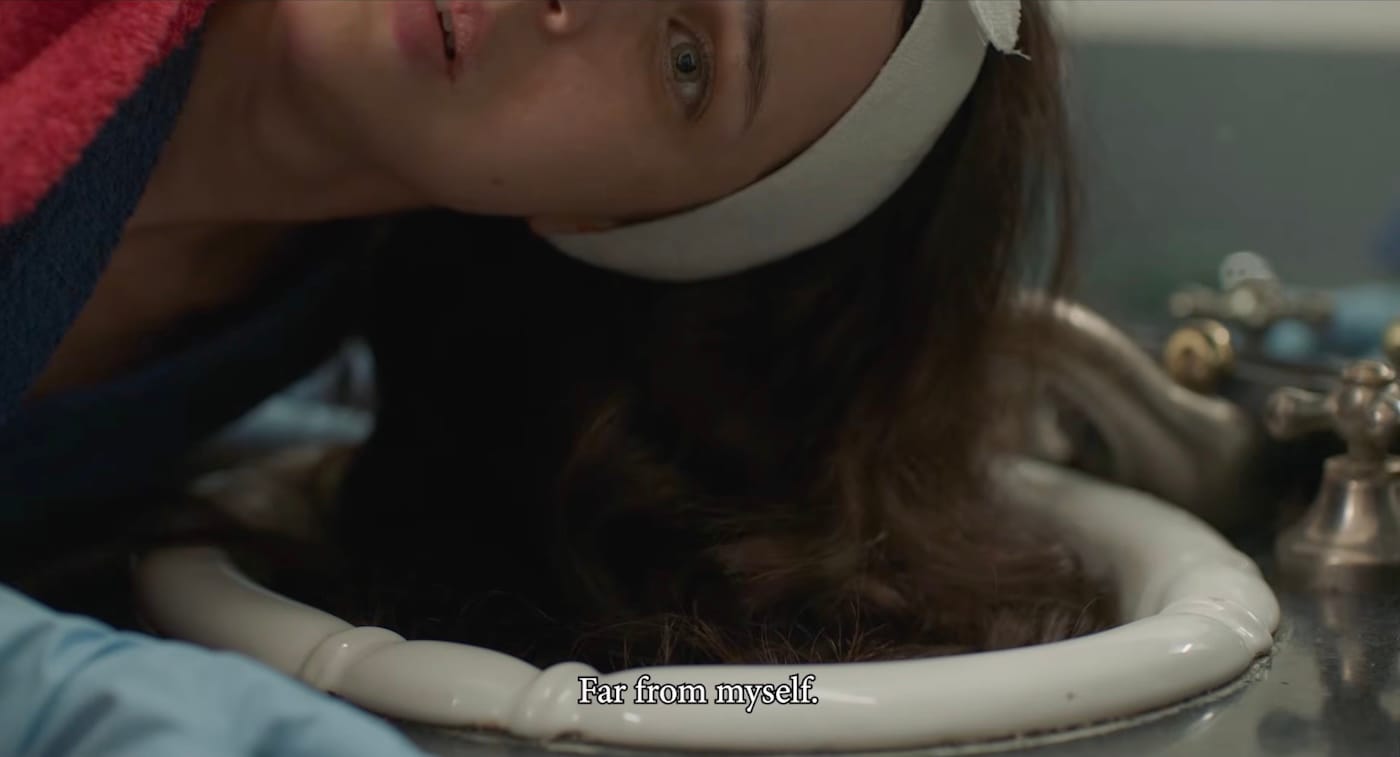
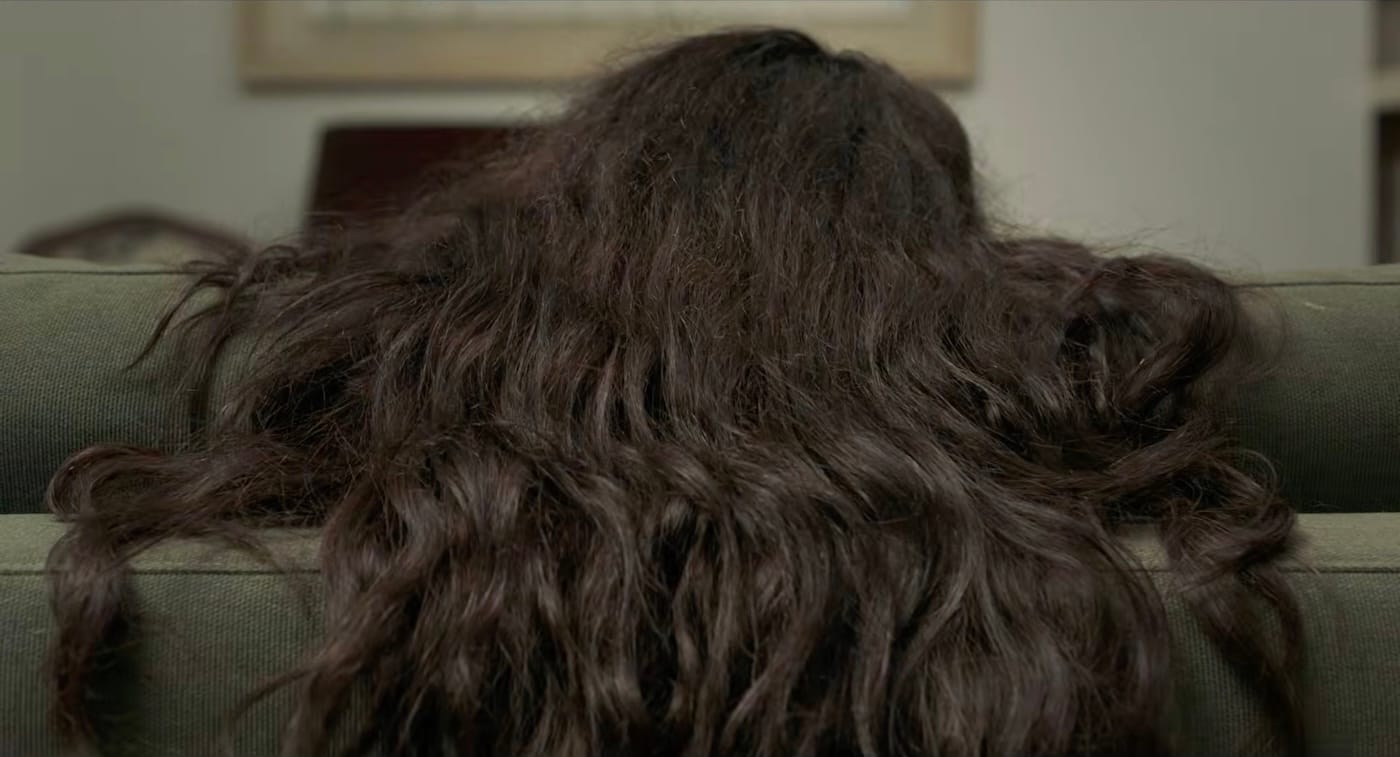
Where Blue’s Julie was haunted by a motif from one of her husband’s unfinished musical compositions, Lina is haunted by matters related to water — thus the film’s title, and the horror-movie aspect that gets the most attention in reviews and post-screening conversations. She suffers a severe hydrophobia. Something as simple as the prospect of washing her hair in the sink, or the sound of her daughter in a bathtub, can almost paralyze her, due to her immersive, epiphanic experience in the plunge.
That opening-scene ordeal in the water seems to damage the wall she has raised against her past, and she suffers what surges through those breaks: memories, unresolved troubles, and perhaps a measure of shame about her youth in the ground-level world (a place we see fleetingly revealed by the searchlight of Buenos Aires’s Palacio Barolo tower). Her attention becomes increasingly fragmented, her impressions unreliable.
One particularly disruptive surge from her past comes when she reconnects with a hairdresser name Amalia (Jazmín Carballo), a woman from her past who agrees to help her with some treatment for the hair she has become too terrified to wash. After the treatment, Lina shows evidence of having trouble with the kindness and generosity common to lasting friendships. It’s a paradigm that threatens the consumer culture of her privileged state. She is only comfortable with transactions in which people are monetarily compensated for what they contribute. (Blue’s Julie, too, reacts to trouble by paying for commodities in order to preserve independence from relationships.) The blessings of relationship require intimacy, openness, transparency — and Lina’s not up for that.
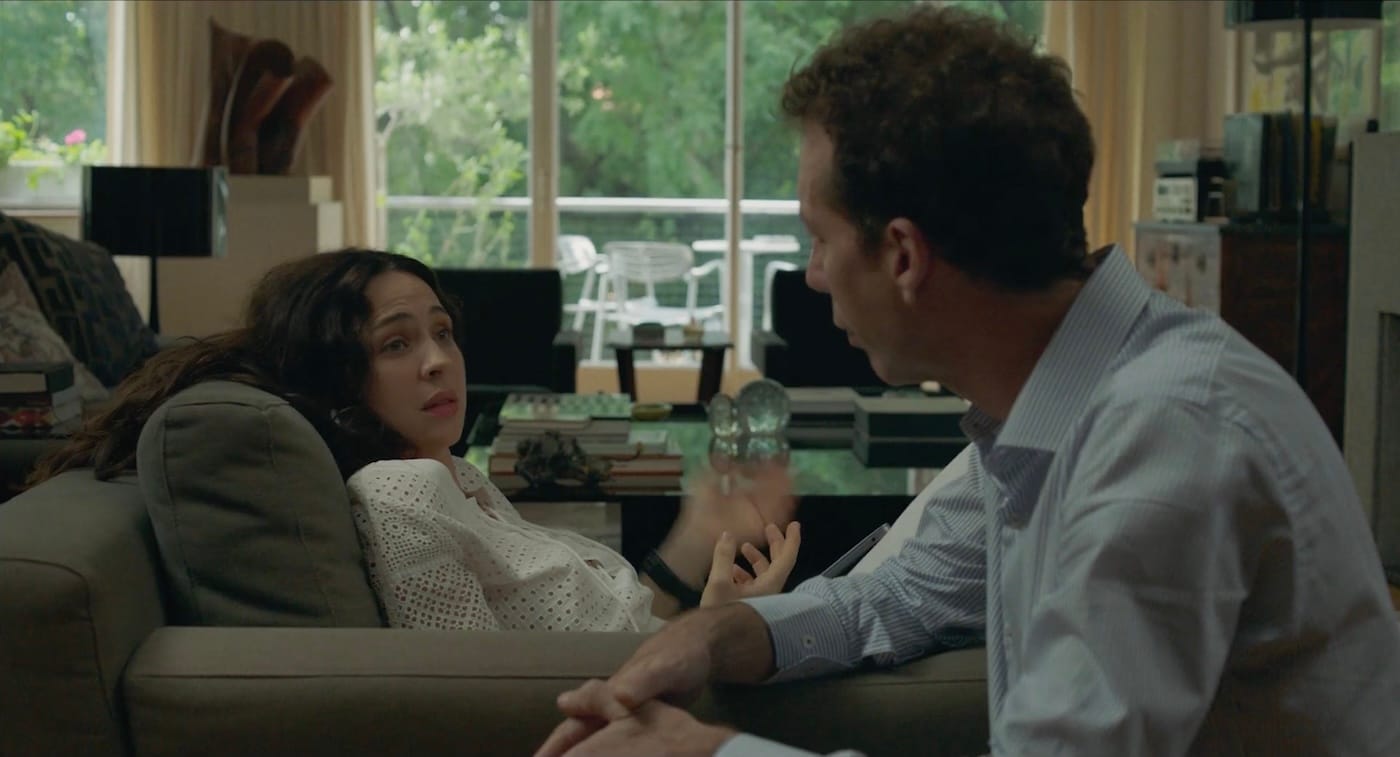
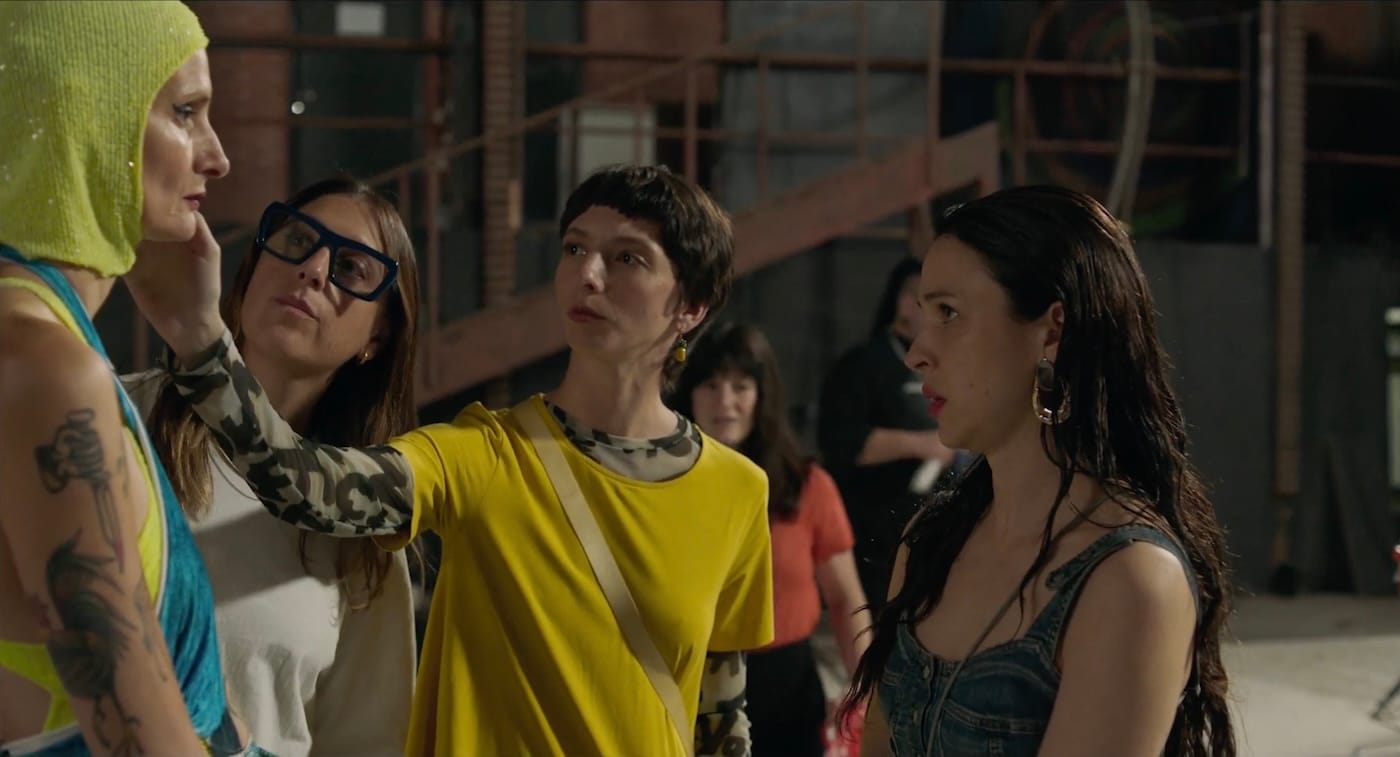
But Lina is also haunted by fabric. The attention to cloth is treated with more subtlety, and I find it more intriguing and rewarding as a focus. At work, Lina deals with a kaleidoscopic array of glitzy and sensual fabrics in her role as a sought-after professional, but she is stopped in her tracks, in a pivotal moment, by a glimpse of humbler needlepoint, and by the subject of the image in that hand-crafted piece. Will she open herself, and trace the threads back to the truth about her Cata self, this not-so-ancient history that destabilizes her emotions and behavior?
I am fighting to avoid dwelling too much on the echoes of other films I sense in The Currents. Daunting stairways bring Hitchcock’s Vertigo vividly to mind as well, and that film, too, concerns a woman torn between two identities. Another film that I found myself thinking about was Laurent Cantet’s Time Out. In that film, a man starts straying from his day-job responsibilities to look at people from inside the sealed bubble of his car, and to yearn for things that are missing in his life. Cata/Lina does some similar things, running from her obligations to stare into other people’s lives as if searching for clues to a mystery she’s afraid to solve. And (I may be reaching here) I think there might be a few Wizard of Oz references too — the way a heavy gust of wind and a close-up on Lina’s shoes precede her journey into a world that is strange to her; the way she fixates on the shoes worn by powerful female authority figures that hover around her conflict.
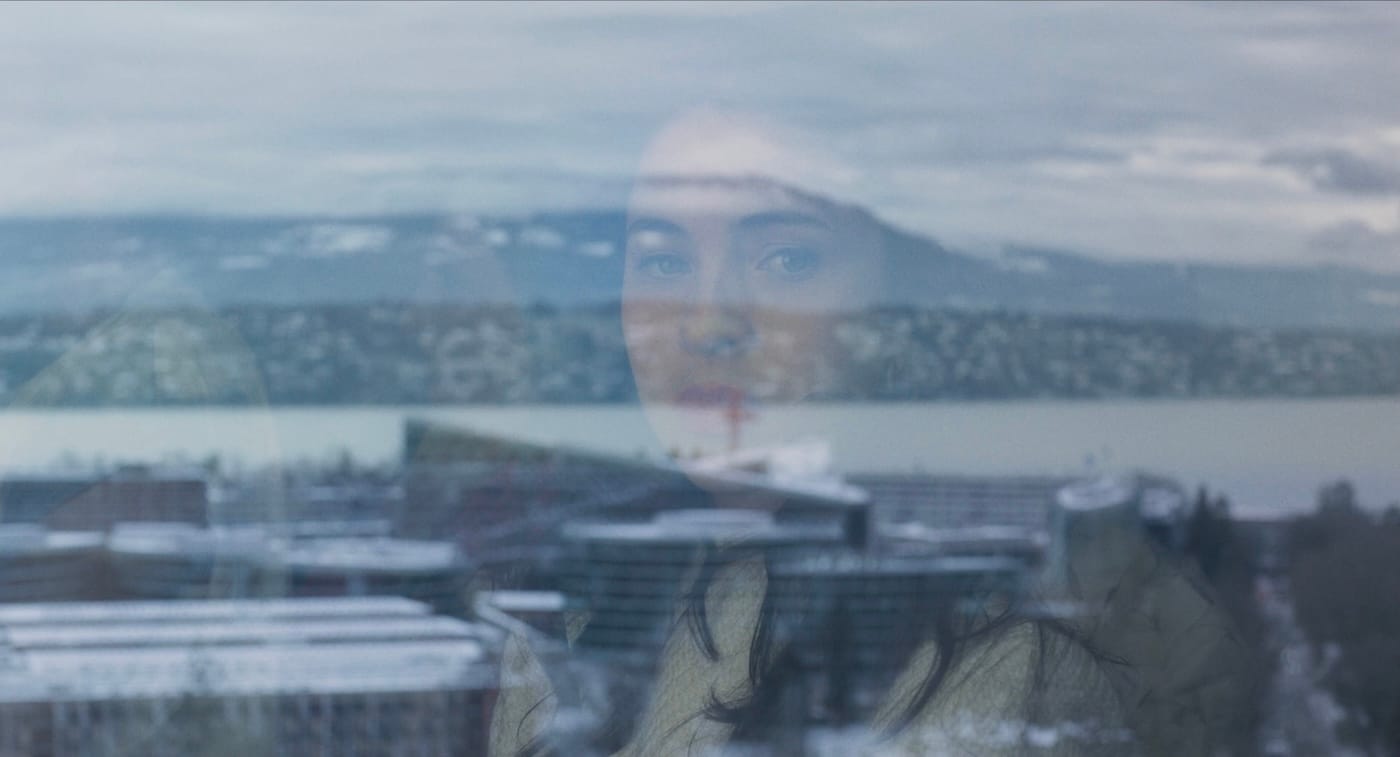
But The Currents is much more than the sum of its influences. It has a lot on its mind, including the ways in which screens and mirrors can lure us farther and farther from who we really are and where we really came from. And among the many mysteries we find ourselves pondering is the nature of Cata/Lina’s sexuality. Did the decision to marry Pedro and commit to a traditional family cost her dearly? Was it a compromise for the sake of professional success? Has she been repressing same-sex inclinations?
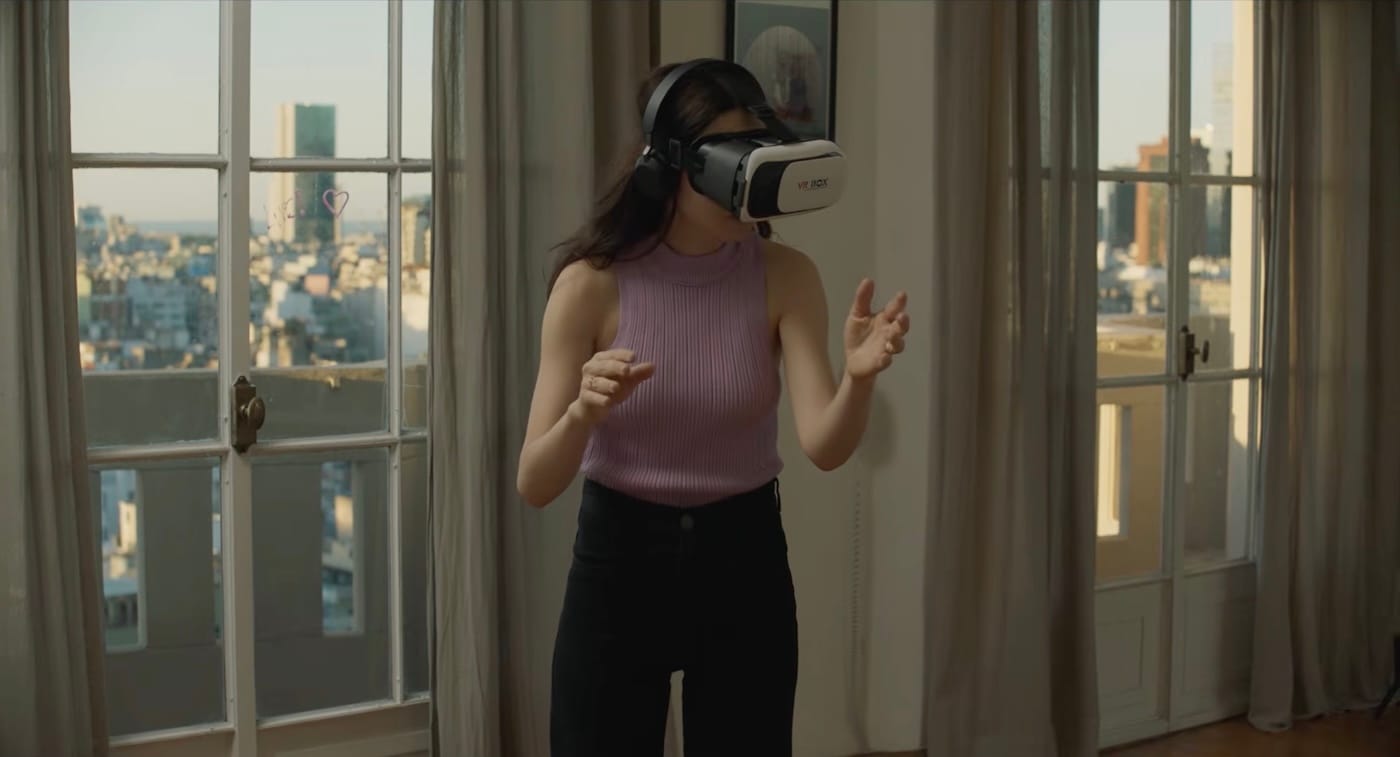
And yet, it is never preachy or moralistic. It attends closely to storms of intuition and emotion beyond the reach of language, troubles that, triggered by sense can catch us by surprise and remind us of all that remains unreconciled within us. Lina’s fits related to water and her aggravations related to fabric can both be activated with an accidental brush against a barbed branch of memory. It seems that unresolved tensions have taken up residence somewhere in her body that can only be released by human touch. Or by a visit to an address she has become too busy to bother with.
I have to admit that, as I look back over lists of films that enthrall me enough to bring me back again and again, it was almost inevitable that I would fall hard for this film. I don’t think it’s nearly the masterpiece of the Kieślowski film, and it’s not as viscerally gripping as the Haynes film. For most of its run time, it feels like transcendence is within its reach, and I was hoping for a conclusion that would resonate like the last triumphant chords of Blue, or profoundly perplex me like that gasping struggle that closes Safe. But the film seems to diminish, strangely, in its final minutes. Maybe I’ll find more meaning in the denouement next time.
For now, though, I’d call this a fantastic first date with a sensual and extremely ambitious film. The Currents is easily one of my favorites of 2026,* and I can’t wait to see what Mumenthaler does next.
* The Currents played festivals in 2025, but it didn’t become accessible to me until this year. I missed it during a few Grand Illusion/SIFF screenings earlier this month, but I’m thrilled to find it streaming on a sick day when I need something powerful to take me out of my discomfort.