First impressions of The Odyssey — Part One: an odyssey of my own
Here's Part One of my reflection on Christopher Nolan's sensational new film and the conversations and conflicts surrounding its release.

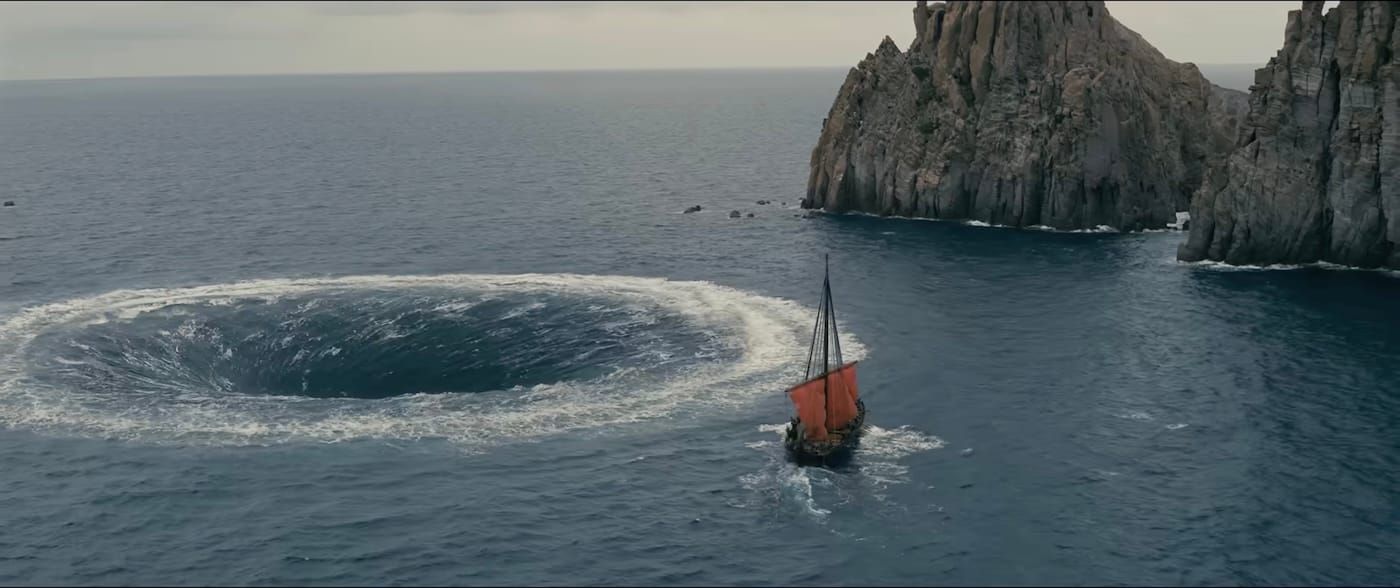
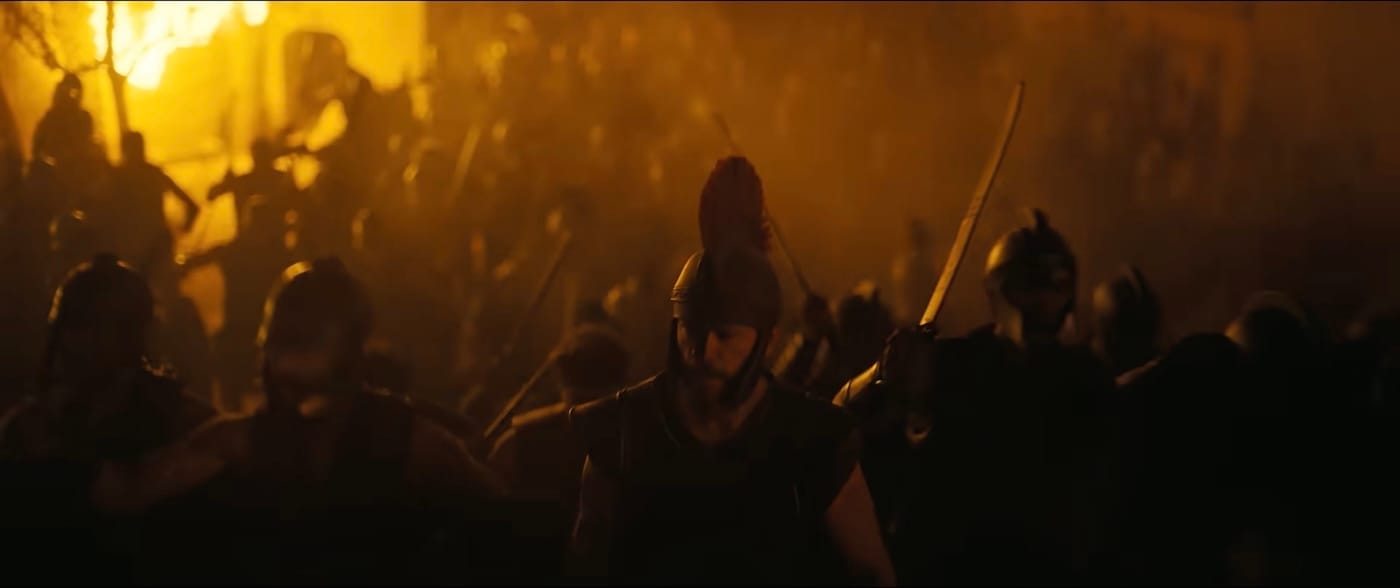
Do you hear that? The rumbling in the floor, in the walls, in your bones? That’s the sound of armies clashing.
One of these warring forces is a company of idealists who believe that gods care about virtue and generosity. Another is made up of chest-thumping brutes who believe they are destined for cultural supremacy even as they betray the laws of decency and human kindness. Women are bringing influence to bear: Some scan the scene hoping to find one honorable man in a world of egomaniacs, while others roll their eyes at the raging testosterone, lament the folly of patriarchal societies, call into question the integrity of even the mythic hero Odysseus.
And I’m just talking about film critics! Yes, the pundits, the professionals, the Substackers, and the alpha males are up in arms, as if a great deal depends, in this election year, on who gets to judge the summer’s biggest, loudest movie.
The film they’re debating is The Odyssey, the latest from Christopher Nolan. Nolan, the auteur. Nolan, who obsesses about films that test our capacity to track non-linear narrative (Memento, Tenet). Master of the Dark Knight. Oppenheimer Oscar winner. And one of the last opening-weekend giants, one who looms over the industry like a Cyclops with an IMAX camera for an eye. We might also call him the Lord of the Bass Note: If you ever notice a movie making the floor, the walls, and your bones shake, it’s probably a Nolan film.
And The Odyssey According to Christopher Nolan is epic.
But of course it is — the ancient poem upon which it based is The Epic. Nolan’s Odyssey, like Homer’s Odyssey itself, focuses on a much bloodier clash than any recorded film critics’ debate (so far anyway). This is a story of armies returning from the Trojan war, but they are still fighting it in their minds, in their memories, in the meaning they seek to make of that madness. It is a story of those men asserting their perceived supremacy; fighting for or against each other, monsters, gods, and themselves; and roaring their complaints in self-righteous fury or in self-doubting distress. And as they do, their competing lusts for blood, for sex, for power, and for immortality cause them to betray and desecrate all that might be holy in humanity. They threaten all hope for human flourishing and a future peace.
At the same time, it’s a story of the woman who love and who loathe those men, and the torments they suffer — even as some of them respond by tormenting the men.
Nolan’s movie, like its source but with more obvious and direct intent, challenges us to decide what we value. It’s a movie that asks us if we believe in gods, or any god at all — and, if we do, how we think such powers might speak to us. It’s a movie that makes bold claims about the relevance of such ancient storytelling to this present darkness.
Based on box office numbers that make clear The Odyssey actually deserves the term blockbuster, this is not a movie that needs my review in order to find its audience. But as the film’s themes tap into some of my deepest convictions, I feel compelled to pay close attention participate and contribute to the critical conversation — particularly in view of some of the terrible, horrible, no good, very bad responses that I’ve been reading.
My long journey to writing about The Odyssey
So, where was I when the battle began? Why did I not sound my barbaric yawp, string my bow, and march out onto the battlefield of opinions during these first three weeks?
I was missing in action.
Sure, I was right there for the main event on the film’s opening Friday, elbow to elbow with hundreds of my neighbors in a packed Seattle IMAX theater. Together we endured the deafening explosions and the reverberations of Ludwig Göransson’s score, surges of sound that crashed like Poseidon’s angry ocean waves over the bows of Odysseus’s boats.
By that point, many critics who had attended the glamorous premiere had already published detailed, passionate reviews. And by Saturday, there were hundreds of reviews, articles, rants, and raves to read. I felt fired up, eager to jump into the melee.
But I did not get back to my post so quickly. For three weeks — three weeks that have felt like twenty years’ worth of trouble — I have been navigating an odyssey of disruption, rowing against the waves on a circuitous route from distractions to crises, frustrated that I could not get “home” to my desk so that I could compose my thoughts. One complication: I’ve had to fulfill some demanding obligations related to book promotion. (I’m not complaining. I’m thrilled to have a new book, and to have communities showing up to my readings and book-signings.) But there have been much greater disruptions. A crisis in my family has rendered Anne and I emotionally exhausted. And (this is not unrelated) that stress has taken such a toll on me that the sudden onset of alarming symptoms sent me running to an Urgent Care clinic, and the Urgent Care nurse did some tests and sent me straight to the ER, where I spent twelve hours anxiously enduring a variety of tests. (Good news: I will live!) Soon after that, I sought counsel from a therapist about how to manage the harm that my family is suffering.
And now, at last, I drag myself from those stormy seas and return to my film critic’s post.
I feel older. Memories of this film are already blurring and fading. And I find my various moviegoing communities in disarray, their reactions and responses to this film scattered across a vast map of opinions. Almost all of them seem incapable of talking about this film without commenting — sometimes ranting — about matters related to present-day politics and religion. So, I’m wary of weighing in.
Is everyone already exhausted by the discourse? Have we all settled into our opposing camps? Or is there still some meaningful discussion to be had?
Is it worth sharing my impressions of the film at this point — which have evolved dramatically since I staggered out of that theater late Friday, July 17?
For whatever it’s worth, here I go.
The battle for The Odyssey as it stands today
Christopher Nolan’s adaptation of Homer’s epic is, as we might expect from Nolan, the most ambitious filmic adaptation ever made of that greatest of Greek myths. I feel quite confident in saying so. The only film in recent memory that has drawn from Greek mythology and attempted anything anywhere close to this in scale is Wolfgang Petersen’s Troy. That was more than two decades ago. And I don’t feel any desire to go back and revisit it at this point. But this? I think we’ll still be arguing about it in 20 years. Nolan has taken a story that has so often been shallowly summarized as celebration of masculine brains and brawn and given it what is, by my lights, a meaningful revision.
The controversy and conflict among the film’s first responders focus, predictably, on whether or not Nolan has a responsibility to rigorously recreate the details of the text on the screen. This argument flares up like an annoying rash every time a filmmaker gets our attention with a page-to-screen adaptation. I teach a class on the ethics of adaptation in which we study several intriguing and provocative examples: Carlo Coloddi’s The Adventures of Pinocchio, Norman Maclean’s A River Runs Through It, Alexander Weinstein’s “Saying Goodbye to Yang,” Miriam Toews’s Women Talking, and Richard Adams’s Watership Down. This has brought many rewarding essays to my attention, and my favorite — one that the students find insightful and worthwhile — is Lauren Wilford’s “Sacred Tests and Ruined Childhoods,” a reflection on the critical wildfires sparked by Darren Aronofsky’s Noah. You would be wise to read this piece before reading my take on The Odyssey any further (or at least bookmark it to read afterward).
But beyond the debate about fidelity to the text, there adjacent skirmishes that are burning even hotter. And that’s because Nolan has stepped up in the midst of America’s battle between those who would defend and perpetuate a history and a culture of patriarchy and misogyny and those who seek a moral revolution that leads us toward, well... “liberty and justice for all.”
And he has delivered a more enlightened Odyssey. This version creatively questions, analyzes, and ultimately rejects the hubris and folly of what we now call toxic masculinity as well as the coercive violence that so many men perpetuate today with catastrophic consequences for their enemies, their neighbors, their world — and, thus, themselves.
And, being a Nolan film, The Odyssey works the surround-sound systems so hard that Richter scales are probably detecting earthquakes, even as it fills IMAX screens with apocalyptic conflagrations and the furrowed faces of remorseful men burning the world and then asking “What have I done?”
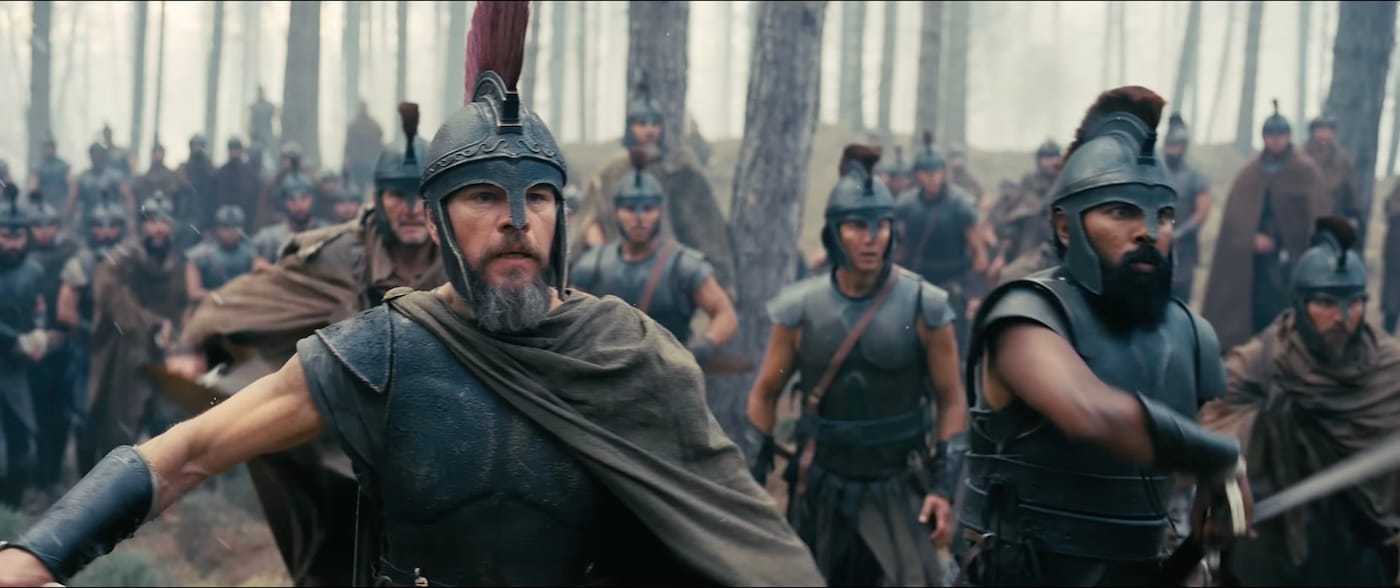
Insightful moviegoers everywhere are rightly recognizing, in review after review and podcast after podcast, that Nolan is revealing the foundational text of his whole body of work. As in The Prestige, the Dark Knight series, Inception, and Oppenheimer, The Odyssey is the story of a genius who employs his powers to change the world only to recoil in horror and remorse, realizing how he has contributed to ruin.
As I work on composing my take on this film, I’m finding some profoundly affecting responses from some of my favorite critics, even as they express a range of reactions from exhilaration to distress. I think in particular of reviews by Georgia Coley (Sojourners), Steven D. Greydanus (US Catholic), Alissa Wilkinson (The New York Times), Justin Chang (The New Yorker), and Letterboxd responses from Sam Van Hallgren, and Mitch Capps. Ezra Klein's essay in The New York Times is also worth reading. These pieces take some of the pressure off; these critics have highlighted some of the matters I was most eager to emphasize, and some have done so with eloquence and wisdom greater than my own.
I’d like to see more attention devoted to how The Odyssey, more than any other Nolan film, gives close and empathetic attention to women. The women of this version suffer as much or more than anyone for the moral blindness of the men, are given room to rage, to grieve, to strike back, and to remind us of all that might have been. The Odyssey looks like a film made by a man who is awakening, at last, to the importance of the experiences of women. And that’s a good thing, given how little regard his first film, Following, seemed to have for its one female character.
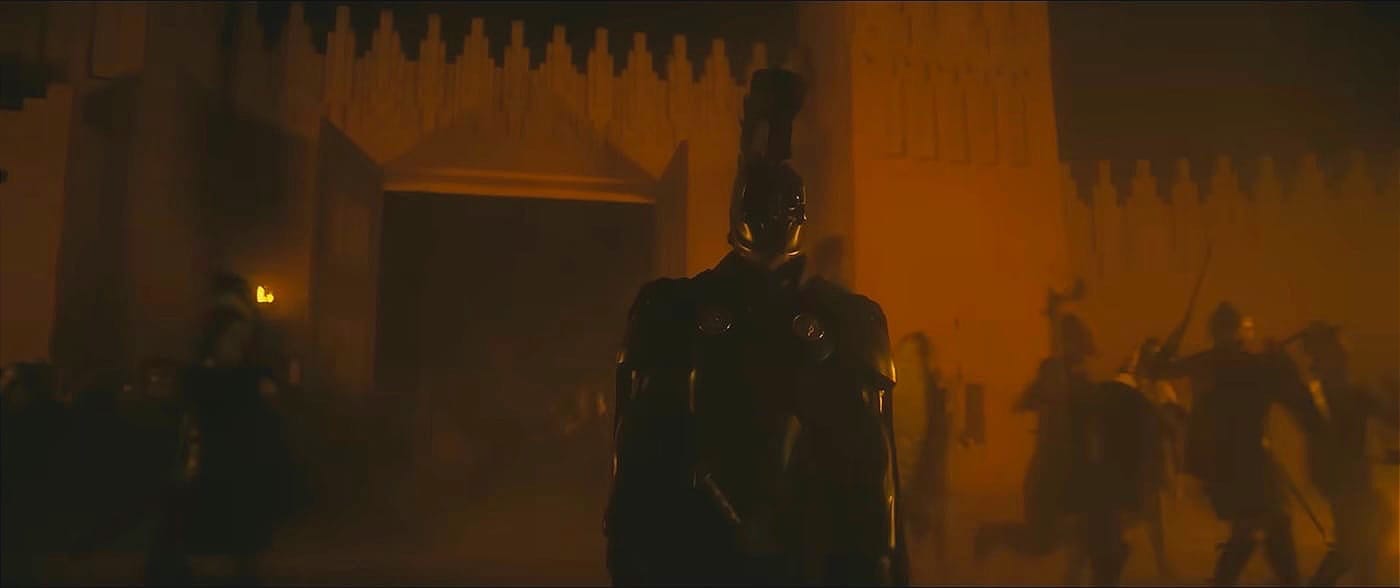
And speaking of having empathy for women: I’m also reading some of the most ferocious thumbs-down reviews I’ve read in recent years. Some of them have respectable complaints about casting, about Nolan’s revision of the conclusion, and about other matters worth debating. (I found one Letterboxd complaint from someone with the handle “_Csil” particularly compelling.)
But a lot of the complaints I’m seeing on social media are coming from testosterone-obsessed soldiers of patriarchy, misogyny, and racism — those culture-warrior insurrectionists who are burning down the America they claim to be saving. Apparently, they wanted a filmic adaptation of Greek mythology that served as a steroid for their fragile white male egos. Any attention to questions of conscience trigger their insecurities and shift them into postures of self-defense (or, worse, violence toward quieter, more contemplative ways of engaging with art). What they’re getting here is a hero who examines what he’s done and has a capacity for regret and shame. A man who comes to repent of his nationalistic military violence. A man who remembers that godliness calls for embodying generosity and grace, showing reverence to women and children, and offering privilege and hospitality to the poor and the refugee. (It is on this point that Coley, Greydanus, and Klein are particularly strong.)
What’s more, they’re upset by this vision of a diverse world. They go absolutely berserk when they behold a non-white actor in the role of Helen of Troy, that most worshipped paragon of beauty; and a trans man in the role of a brave soldier whose slaying haunts the hero. And they’re recoiling at the truthful reminder that all of humankind — and, indeed, all of creation — is one body, and any damage one deals to an Other’s body does damage to oneself and to the world as a whole. In this Odyssey, those who rely on coercive force and violence to dominate other cultures and genders are revealed as the lowest and most wretched of creatures, ultimately judged by divine law, bound for suffering in Hades. (Irony of ironies, some of these contemporary Klan members claim to represent Christianity, when the fundamental concepts that offend them are deeply rooted in the teachings and example of Jesus.)
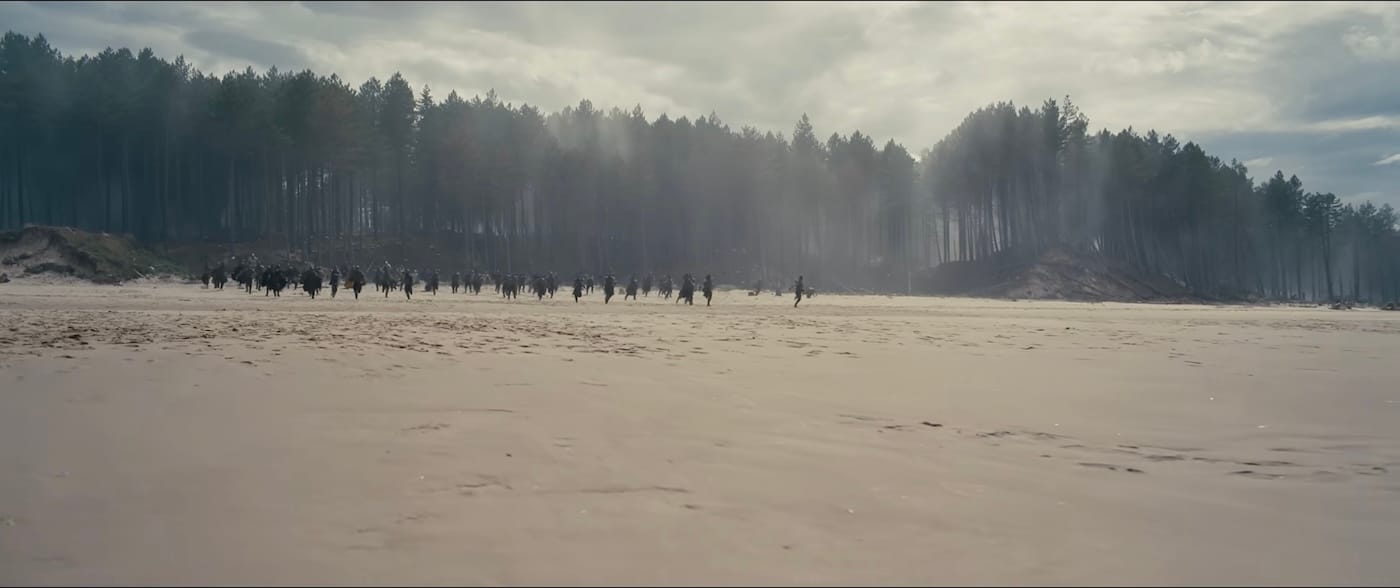
At the same time, I’m reading far more reactions and reviews of The Odyssey that stand among the most hilariously hyberbolic raves I’ve ever read. They treat this movie as if it’s the first immersive widescreen epic ever to make meaningful use of a full silver-screen canvas, and the first to use surround-sound capacities to awe-inspiring effect.
Okay, maybe it’s the most immersive big screen movie you’ve ever seen, but don’t then jump to the conclusion then that it’s the greatest and most immersive big-screen movie ever made. I’m old enough to remember seeing Lawrence of Arabia, 2001: A Space Odyssey, Apocalypse Now, Close Encounters of the Third Kind, Blade Runner, The Lord of the Rings: The Fellowship of the Ring, and Mad Max: Fury Road on Cinerama-sized screens, cranked up to rock-concert volume levels. All of those stick with me more vividly many years later than The Odyssey does after two weeks.
So, perhaps I’m going to fight a long and lonely battle on this battlefield, doomed to be lost in the clamor — because while I am grateful for, and even deeply moved by, the movie’s conscience, there are quite a few reasons that this, like almost all Christopher Nolan films, does not inspire the kind of lasting reverence in me that the aforementioned landmark films do.
The Odyssey gives us so much — too much, really — to write about in a single review, or even a ten-page essay. This is a movie that will inspire whole collections of academic essays, and podcasters will obsess over where this film ranks in their Best of Nolan lists.
I don’t have the energy to write a book-length response to this one — especially since I've seen at least a dozen movies in 2026 that mean more to me than this one does. But I can offer a few of the notes that have survived my recent storm-tossed voyage, and perhaps they might give you some questions to consider, some lenses through which to reconsider the film.
You’ll find those in Part Two, which is coming right up.