First impressions of The Odyssey — Part Two: What does this movie love?
In Part Two of my reflections on Christopher Nolan’s The Odyssey, I consider what Nolan’s movie does well... and what it “loves.”

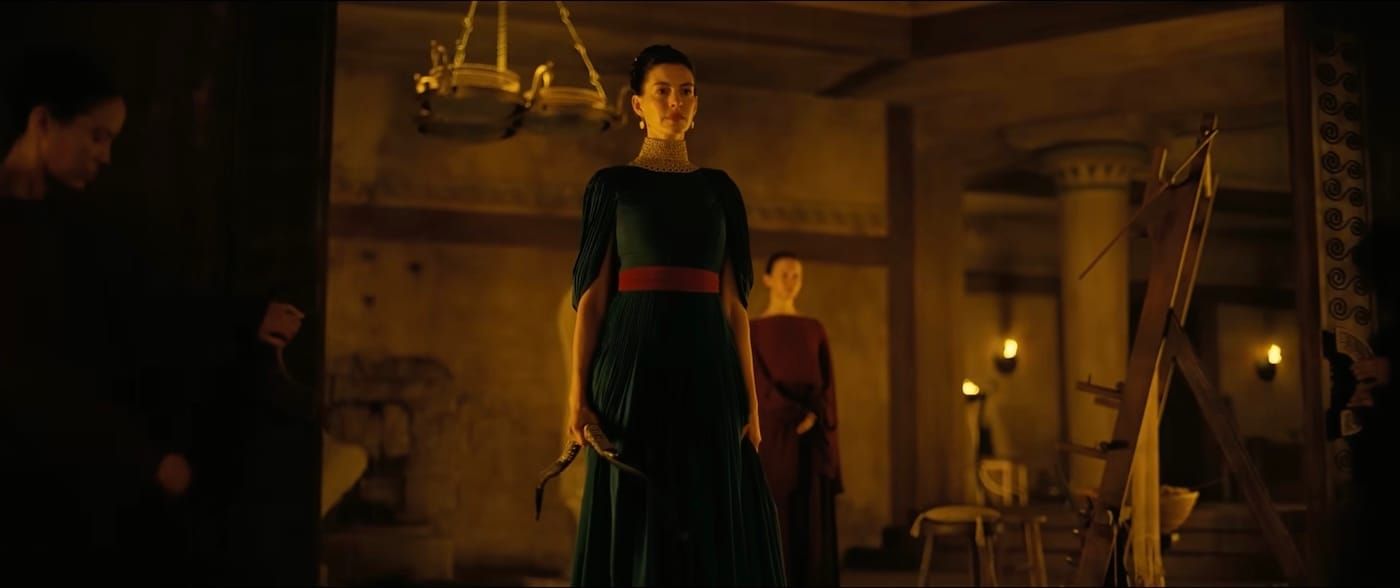
We moviegoers are weeks into our wandering from port to port, coming to terms — literally and figuratively — with every episode, highlight, and controversy presented to us by Christopher Nolan’s The Odyssey. It’s exciting. I haven’t seen so many heated exchanges over a film in many years.
I’ve seen The Odyssey on IMAX twice now, and I’ve read so many perspectives that I’ve lost track. And I suspect that a lot of readers are beginning to suffer from Odyssey fatigue.
But as I’m still on this journey of reckoning with this movie — indeed, as it feels like just the beginning of one — I’m going to write about my conflicted thoughts and feelings in the hope of making progress, making discoveries, finding words that ring true, and then revising those that don’t.
Some viewers’ passionate, combative, and even hostile responses remind me of the early days of my critical engagement with films — back when I felt it was important to arrive at “the right judgement” for a film. I had a lot to learn back then, especially about humility in the presence of art. I’ve learned to hold my opinions loosely, as my mind changes with time and experience. That makes the experience of writing film criticism and comparing notes with other viewers so much more rewarding, so much less contentious. I enjoy reading other views, learning from some more than others, and moving forward, developing a relationship with the subject, rather than seeking to solve it or conquer it. Ideally, my conversations with others about the subject results in richer relationships with them as well. If my first impressions of a film offend readers and make them strike a defensive pose, that’s a shame. A healthy conversation about a film is one based on the understanding that we are all in a process of exploring and understanding the subject, and that our experiences are greatly influenced by who we are as individuals with particular histories, interests, aversions, and preferences. A healthy conversation requires humility, curiosity, and an eagerness to learn and grow in the process.
Here are some of my August 2026 thoughts, such as they are, on what enthralls me about The Odyssey, and what makes me marvel at Nolan’s achievement.
And, following that, I’ll offer some thoughts about what frequently disrupts that enchantment, what disappoints and frustrates me, and what makes me hope that we will see other filmic adaptations of this text — soon, even.

(And why not? We had one just last year that hardly anybody saw, but that I really enjoyed: The Return, from director Uberto Pasolini. The legendary actor playing Odysseus in that film gave, in my opinion, an even more affecting performance as Odysseus than Matt Damon does in this one. I encourage you to check it out.)
Let’s begin with my favorite question to ask as I come to terms with a film: What does this movie love?
Not What lesson do the filmmakers mean to teach us? But what does this movie give reverent attention to?
If love is attention — as you may remember a wise woman telling young Christine (Saoirse Ronan) in Greta Gerwig’s Lady Bird — then where do we find this film focusing its attention, and ours? Many movies arrive at some kind of lesson or moral, but the ways in which they do so suggest other values altogether. Thus, for example, we hear the claim that “All war movies, even anti-war movies, are ultimately pro-war movies!” — that is, even movies that claim to reveal “the horrors of war” also draw us back again and again by way of their aesthetically thrilling violence. They claim to abhor such conflict, but the primary attraction is how they stage and choreograph the bloodshed, how they suspend our disbelief so that we are shocked and awestruck.
By my lights, the imagery of The Odyssey reveals certain loves. And its screenplay reveals others.
Nolan’s film loves the grandiosity of images suggested by the classic Homeric text. Here are a few that it brings powerfully to the canvas:
1) The Trojan Horse: a magnificent sight, a massive work of sculpture so impressive that we believe the host of Troy would drag it a great distance to set it up as trophy, a treasure, a boast outside Athena’s temple. It appeals to the vanity of armies who think they have won the war, that their city is invincible.
When the movie opens with the sight of that equine wonder rising up from the sand at the tide’s edge, it catapults me backward to my boyhood seeing a close-up of that bold, shiny horse figurine rising from the sand in The Black Stallion. There is something so primal, so timeless, so spiritually stirring about the figure of a great horse rearing up in a panoramic landscape. It feels mysterious, portentous. Even if we know the story, there is still a thrill in awaiting the revelation of this particular horse’s secret.
In this version of the tale, the meaning of this image evolves over the course of the film. As Odysseus’s adventure unfolds, his relationship with his memory of the horse changes, and by the end, as it looms on the screen once again, reflecting the flames of Troy’s fall, it is a sobering image indeed. It’s not subtle poetry, but it is poetry — and that’s a good thing, given that Nolan’s imagery has rarely aspired to poetry.
2) Polyphemus: The Cyclops is another figure who looms over Odysseus, his men, and his moviegoers. But this figure is striking in his fleshy realism, achieved by a magical merging of actor Bill Irwin’s performance and a tremendous 60-foot puppet, while the scene plays out in an actual cave.
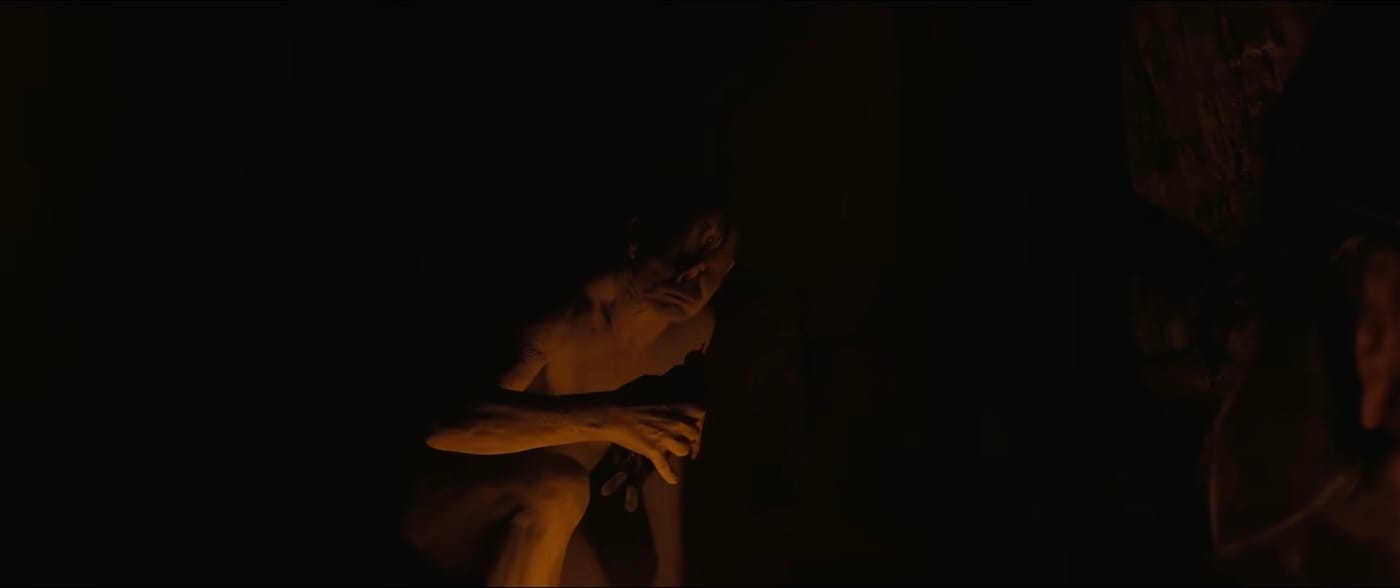
The nuances of performance and sound here make Polyphemus both terrifying and almost immediately sympathetic. We see how vulnerable, how naive, and how isolated Polyphemus is. Even as we hope to see Odysseus and Company escape this son of a god who eats human beings like protein bars, we also feel the impact of each blow they strike against this colossus. Any healthy heart will hurt as Odysseus himself resorts to fierce violence in order to help his men escape. The last blow he strikes is a vengeful one, an unnecessary and petty one, and one that costs his company even more lives in the end.
The spell breaks somewhat once we see the Cyclops emerge into the daylight. But the entire episode filmed inside the cave is awe-inspiring.
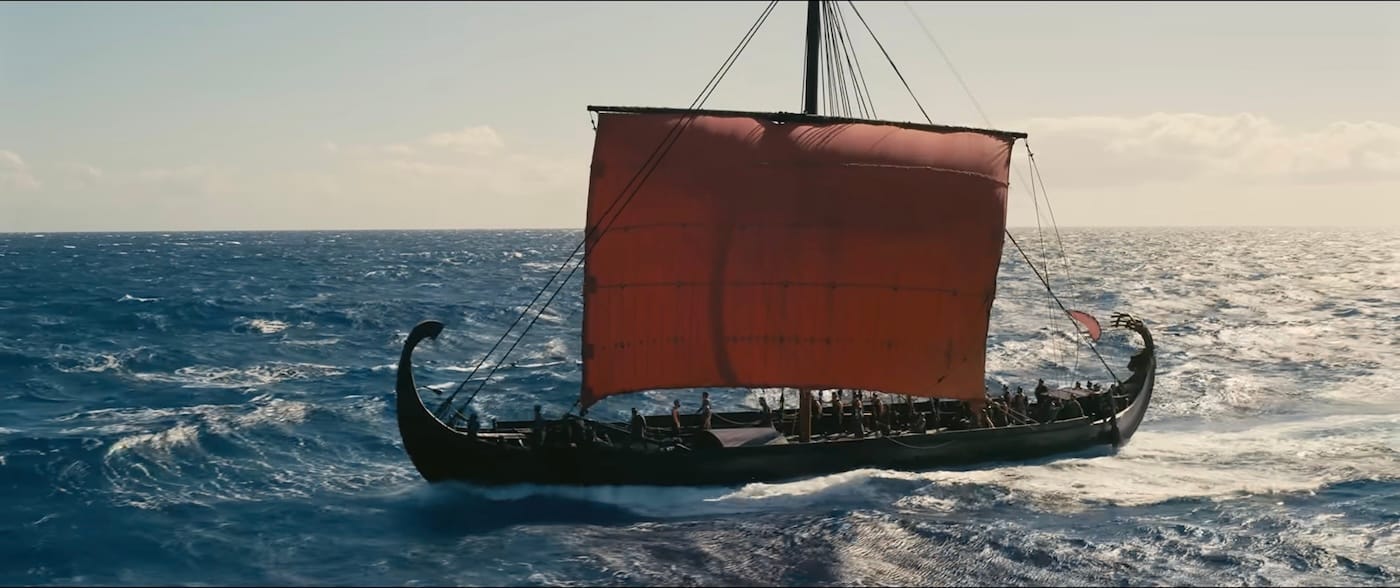
3) The Ithacan longship: The vessel in which Odysseus and his men make their voyage is immediately iconic, with its red sail like an expression of the Ithacan army’s passion (and their hubris) against the wine-dark sea.
Neither the sea god Poseidon below nor Zeus the god of the heavens is impressed, as these misguided men will soon learn.
I wish the film had given us more time to gaze upon, and sail along with, this glorious ship. So much of what makes The Odyssey an extraordinary big-screen experience comes from the ambitious efforts of Nolan and company to avoid animation and give us real light reflecting off of real surfaces, real inventions. I suspect that if Nolan had been more patient, more willing to let us live in some of these spaces, we would find that ship still sailing in our dreams.
4) The conflagration of Troy’s violent fall: The fiery siege of Troy rocks the screen twice in the film — once in a recollection glorifying Odysseus’s brilliant ploy to penetrate the city’s defenses and open the gates to Agamemnon’s army; and then, once more in his harrowing realization that this trick, the one that made him world-famous, was also a work of deep depravity, and a direct offense against the gods (gods who, in Nolan’s world, seem to adhere to a much more Judeo-Christian law than the self-centeredness and arbitrariness I remember about them from studying Greek mythology).
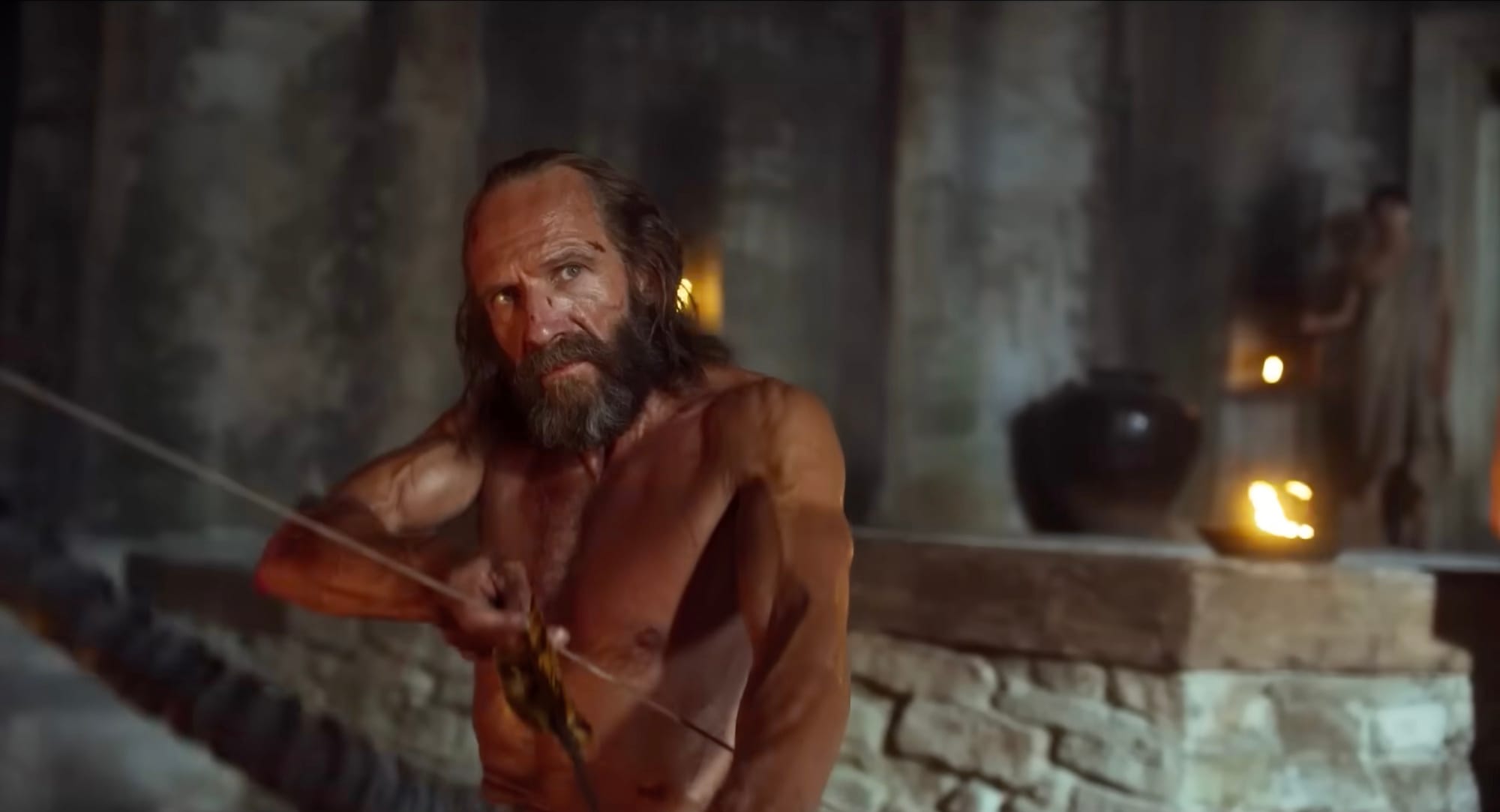
5) Odysseus’s bow: The weapon with which the king of Ithaca proves his greatness is a stunning instrument.
And the sound of its taut bowstring being plucked suggests that it’s the inspiration for all of those theater-shaking bass notes that have resounded through Nolan’s films. (Those sustained musical exclamation points have become such a signature that there’s a bright red “Inception Button” easily discovered online that lets you subject everyone around you to that ominous note whenever there’s a meaningful moment. I sometimes inflict this on my students as a startling announcement that “Time’s up!” on an exercise.) I love how Nolan establishes this sound as a deliberate warning from Odysseus before he ever fires a shot. This sets us up for an occasion near the climax that is truly thrilling.
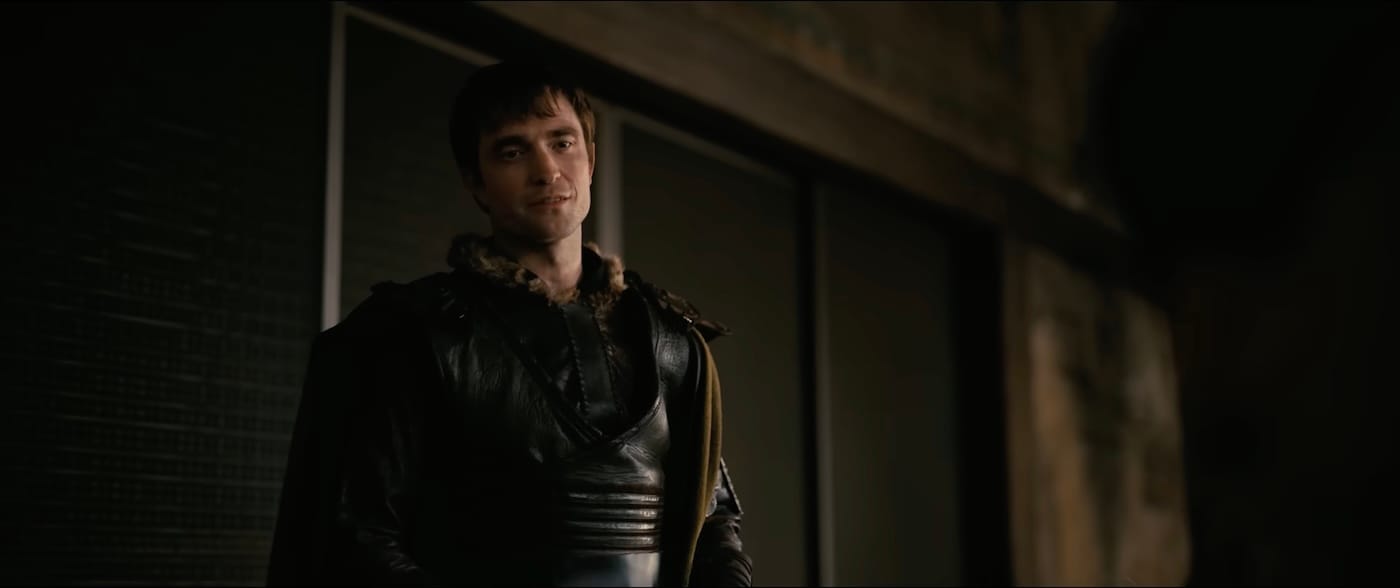
6) Robert Pattinson: Pattinson excels in kindling an audience’s loathing, and Nolan seems to enjoy twisting that knife. Pattinson is clearly having a grand time playing a morally reprehensible human being. He effectively stokes our not-so-admirable desires to see Odysseus go all Dark Knight of Justice against him. It works. It also represents one of the moments that complicates Nolan’s apparent interest in challenging our views about “righteous violence” and “just war.”
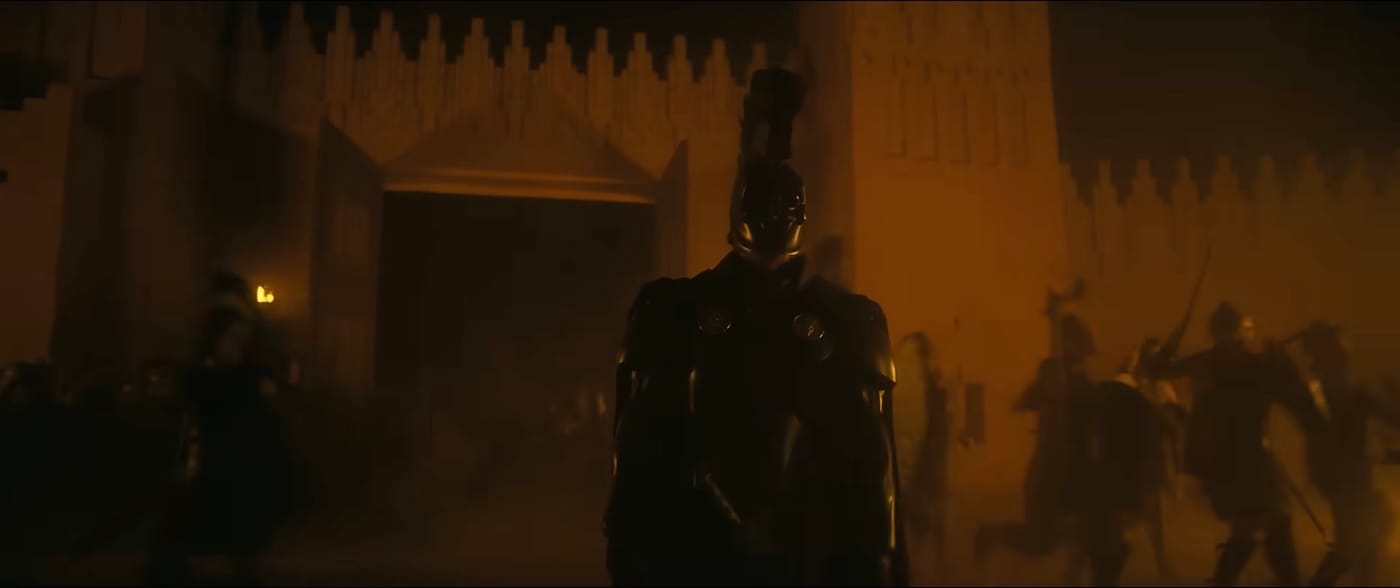
7) The horsehair-crested, Corinthian-style helmet, so famously associated with Greek warriors (now in stylish Batmobile black!) is as impressive onscreen as it’s ever been — particularly when Agamemnon strides onto the screen with the ominous presence of Darth Vader before he starts swinging that scythe of a lightsaber. This is what the kids these days call aura farming.
Those are some of the images that Nolan’s movie loves.
But it also loves its core idea, the phrase that is uttered again and again throughout the film to make sure that general audiences are forced to reckon with it...
Zeus’s Law.
Again and again, characters in Nolan’s Odyssey remind each other of Zeus’s Law, which Nolan’s screenplay defines as “Treat others the way you want to be treated.” In full, the idea is understood as a caution: We show generosity to strangers — even the poorest of the poor — because we never know when the Other might be a god in disguise.
Similarly, in Christian tradition, the Golden Rule is held up as a caution because we might be “entertaining angels,” or eventually even Jesus himself in disguise. But ultimately, we’re to understand and embrace this practice because, as the Scriptures make clear, each and every human being is not only made in God’s image but is also loved by God as deeply as any other child of God. And so, when we treat “the least” of us (“least” only by our flawed measurements) with honor and generosity and love, we show honor and generosity and love to our Creator.
Again, the film’s innovative emphasis of this idea has been powerfully interpreted, considered, and celebrated in other reflections on the film, including pieces from Georgia Coley, Steven Greydanus, and Ezra Klein. (Writer Brendan Hodges at Bright Wall Dark Room is the only one who has followed this argument to the conclusions that I myself found so troubling from my first experience of the film. But I’ll get to that in Part Three.)
For now, I will simply add that I am overjoyed to see this idea investigated in scene after scene of Nolan’s Odyssey, so that it becomes the prevailing wisdom by which the film’s characters rise and fall, by which they are judged. By implication, then, we are to come away from this movie and apply this question to our own world, our own engagement with others, our own selves. Are we offering — yes, at great risk to ourselves — generous hospitality and grace, even if that means we might suffer betrayals and consequences?
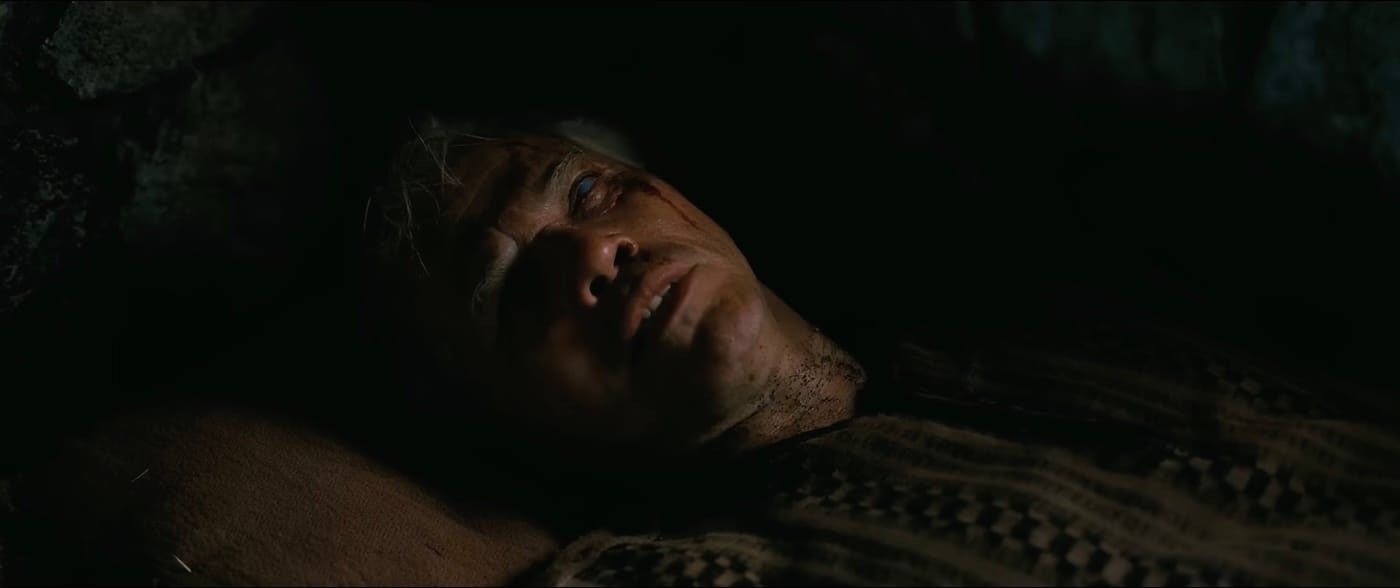
Odysseus learns that, yes, we must live by this law both as respectful hosts and respectful guests, or bear the burden of our shame. Similarly, Jesus’s own life and teachings demonstrate this: He offers such love and welcome and forgiveness to all, and those who welcome him are blessed. In the film, this leads to violence against Athena. In the Gospel, it leads to the betrayal and crucifixion of the son of God.
This is why I love the film’s central focus. This is why it breaks my heart. I live in a nation that has, more dramatically and destructively in the last several years than ever, turned its back on the Law above all laws. No, not Zeus’s Law, not really — but rather the primary command of the God of Love: Love God with all your heart, soul, and mind. And, like unto this command, love your Neighbor as you love your Self.
In Nolan’s Odyssey, there is no true hero. There are only villains, some of whom awaken — or seem to awaken, at least — to a path of wisdom and, perhaps, redemption. That path is what they call Zeus’s Law, and what I call the Gospel of the Christ.
But does Odysseus really learn this lesson? Does the film earn its euphoric finale, which seems to want us to believe that our beleaguered voyager has experienced an epiphany that will change him and the world entire?
I have more to say about that.
Why, in view of all of this greatness, am I frustrated by this film?
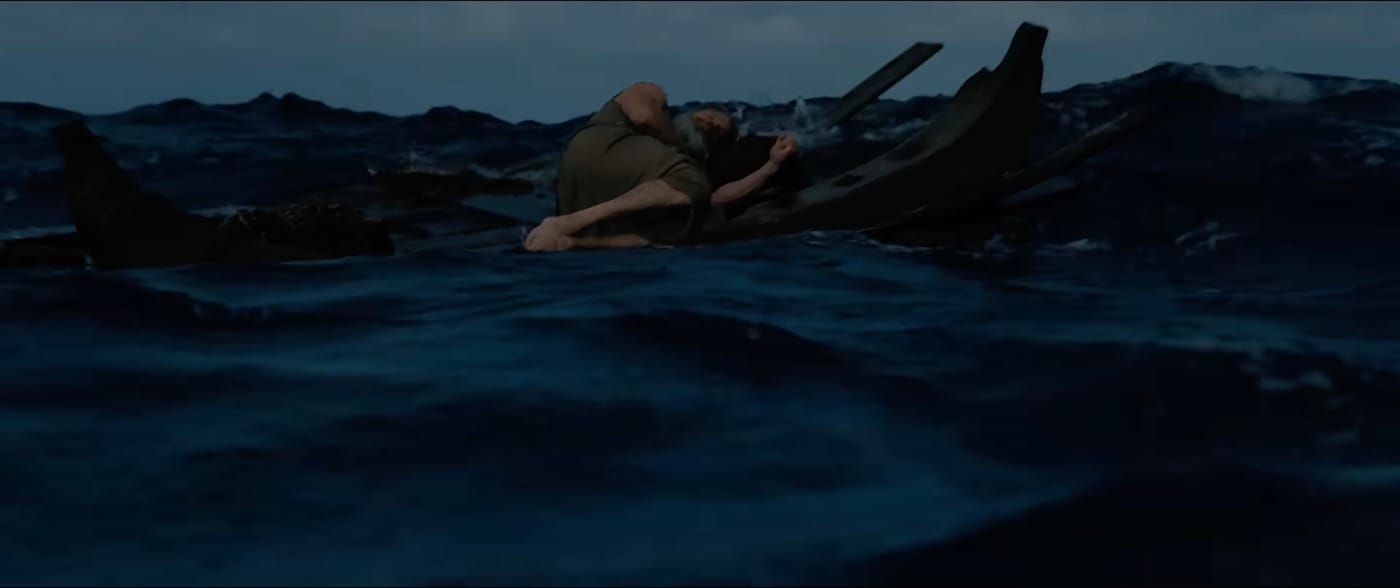
For decades, with films like Inception, The Dark Knight Rises, Interstellar, and Dunkirk, Nolan has taught us what to expect from him. We know his films will be huge. When it comes to spectacle, he’s prone to bigger swings than any other film that year has taken. We know he packs them full of provocative matters for debate, ambiguities and unresolved questions that will keep us talking. For many, well... they’ll have seen nothing like them. Very few filmmakers can achieve such grandiose visions, widening our eyes and slackening our jaws, while also speaking to our intellects, our conscience, and our hearts.
Ever since 2005’s epic Batman Begins was followed by the slightly less ambitious The Prestige in 2006, every Nolan film has been arguably more ambitious in innovation and scale than the last. With each one, Nolan has sought to leave us in slack-jawed, gobsmacked amazement at the magnitude of what we’ve seen. And while many in the audience — casual moviegoers and critics alike — come away from each film convinced they’ve experienced major works of art, I’m in the small minority that remains unconvinced that the meaningfulness of what I’m seeing is worthy of the kind of praise given to the great masters of the art. Joel Mayward’s book Theology and the Films of Christopher Nolan: Cinematic Transcendence, a substantial survey of Nolan’s filmography up through Oppenheimer, has given me more reasons to admire and appreciate these films; I highly recommend it to you. And do I enjoy and admire most of Nolan’s films. But they almost always lack a certain poetry that I tend to find essential for a transcendent cinematic experience. (And, as a student of Yoda, I’m of the “Size matters not” school of thought. I’m likely to stand apart from the crowd at the end of the year insisting that there are likely to be deeper waters in a low-budget, intimate film that gives us 90 minutes with two characters than there are in a three-hour blockbuster about gods and monsters and soldiers and burning cities.)

And I find Nolan’s Odyssey to be a fundamentally flawed work of cinema for a variety of reasons.
I’ll explore those in Part Three — which is coming very soon.