
First impressions of Rose of Nevada (2026)
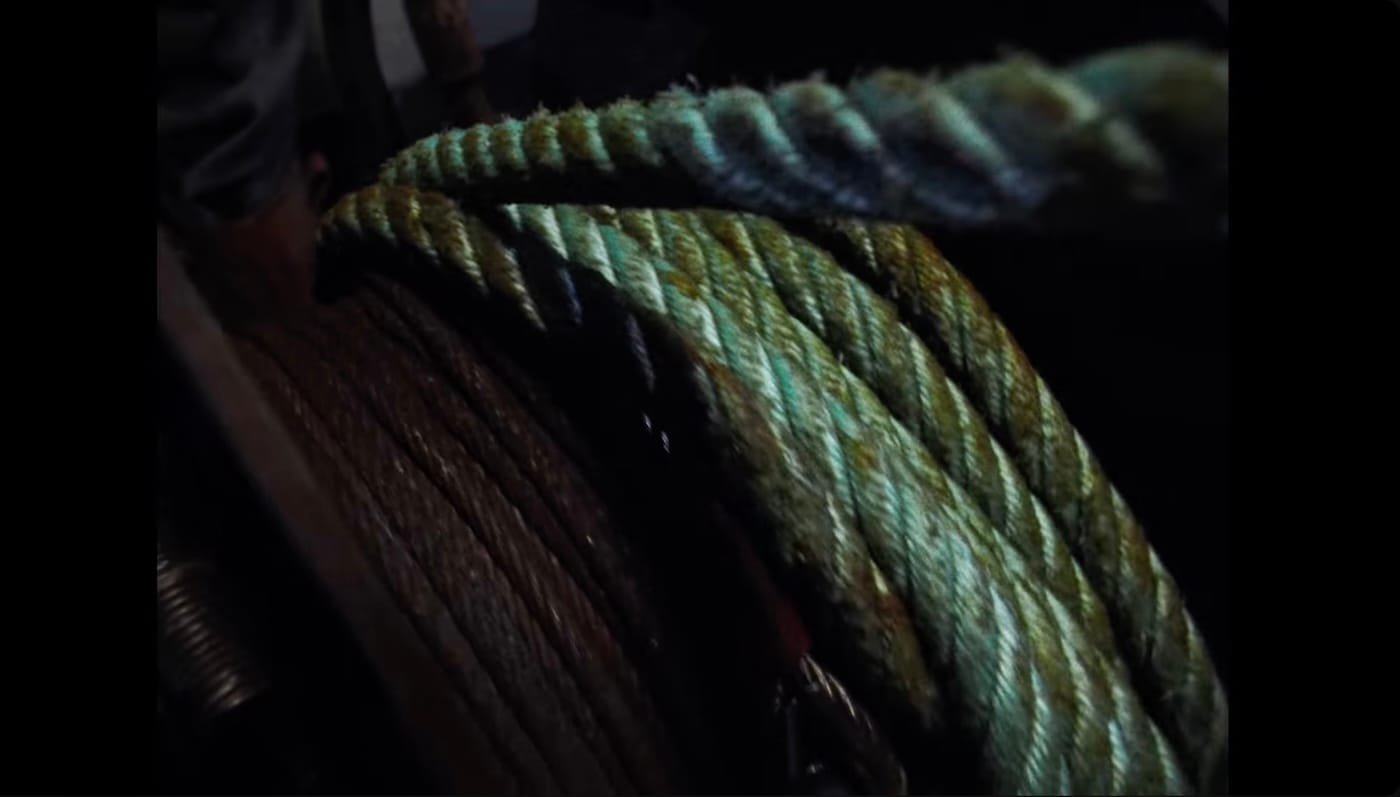
Director Mark Jenkin’s style is so distinct that moviegoers might look at something — the texture of rusting metal, for example — and say "Jenkin would do a close-up on this.”

How unlikely — that 2026 would serve up not one but two of the most compelling and unusual time travel films since Shane Carruth’s Primer more than 20 years ago. What a 2026 double feature Rose of Nevada would make with Nirvanna the Band the Show the Movie! We could call directors Mark Jenkin and Matt Johnson “The MJs of Temporal Disruption.” (“MJ” here would be a reference to the agility of Michael Jordan, not the easy appeal of a Spider-Man character.)
Where Nirvanna the Band the Show the Movie plays with the possibilities of time travel to show off a dizzying display of narrative convolutions and comic possibilities (and it makes direct references to Back to the Future), Rose of Nevada is something altogether different. This film is, on the surface, much simpler. But it also gives us a sense of spiritual and psychological depth that feels closer to the work of David Lynch than Robert Zemeckis. I wouldn’t be surprised to find critics arguing that it’s better classified as horror, for the way it flirts with the conventions of ghost stories. That is to say, Rose of Nevada is a film likely to reward multiple viewings and post-movie conversations.
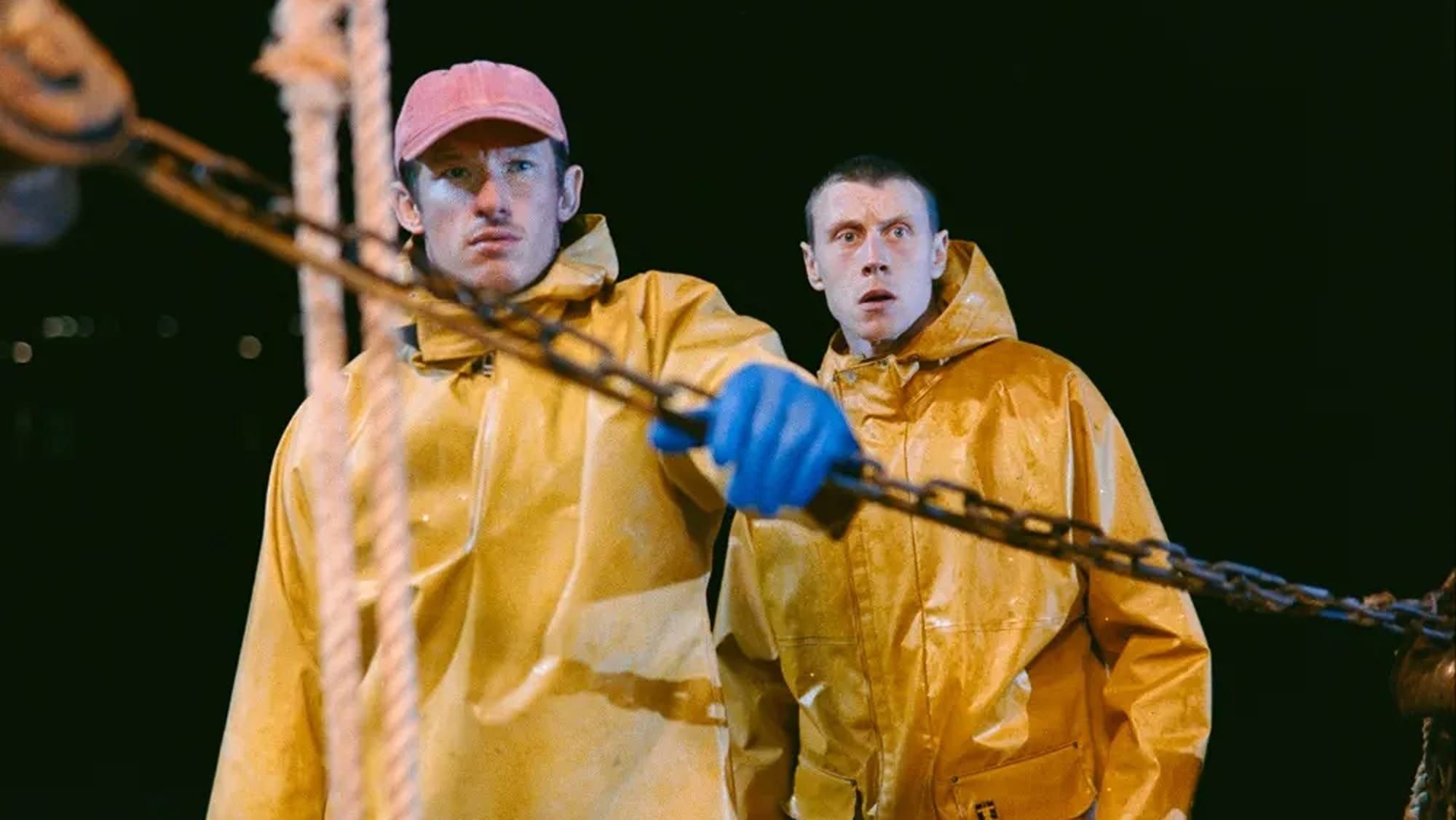
Here, we follow two young men from the Cornish seaside into hard labor aboard a fishing boat — a boat that has reappeared empty after 30 years missing at sea. Do the boat’s owners know more than they’re letting on about what went wrong in its past? Do they know what they’re doing when they send it back out with a new crew?
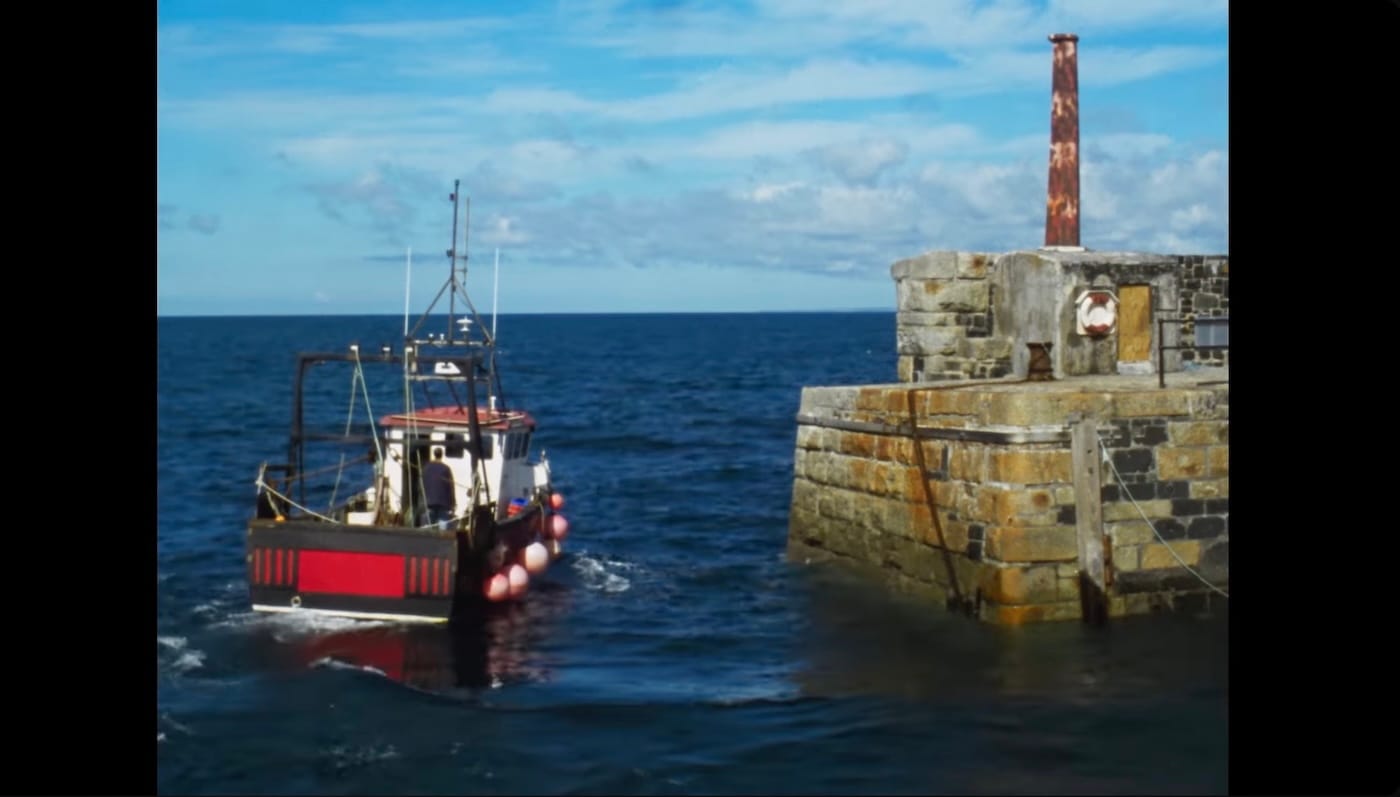
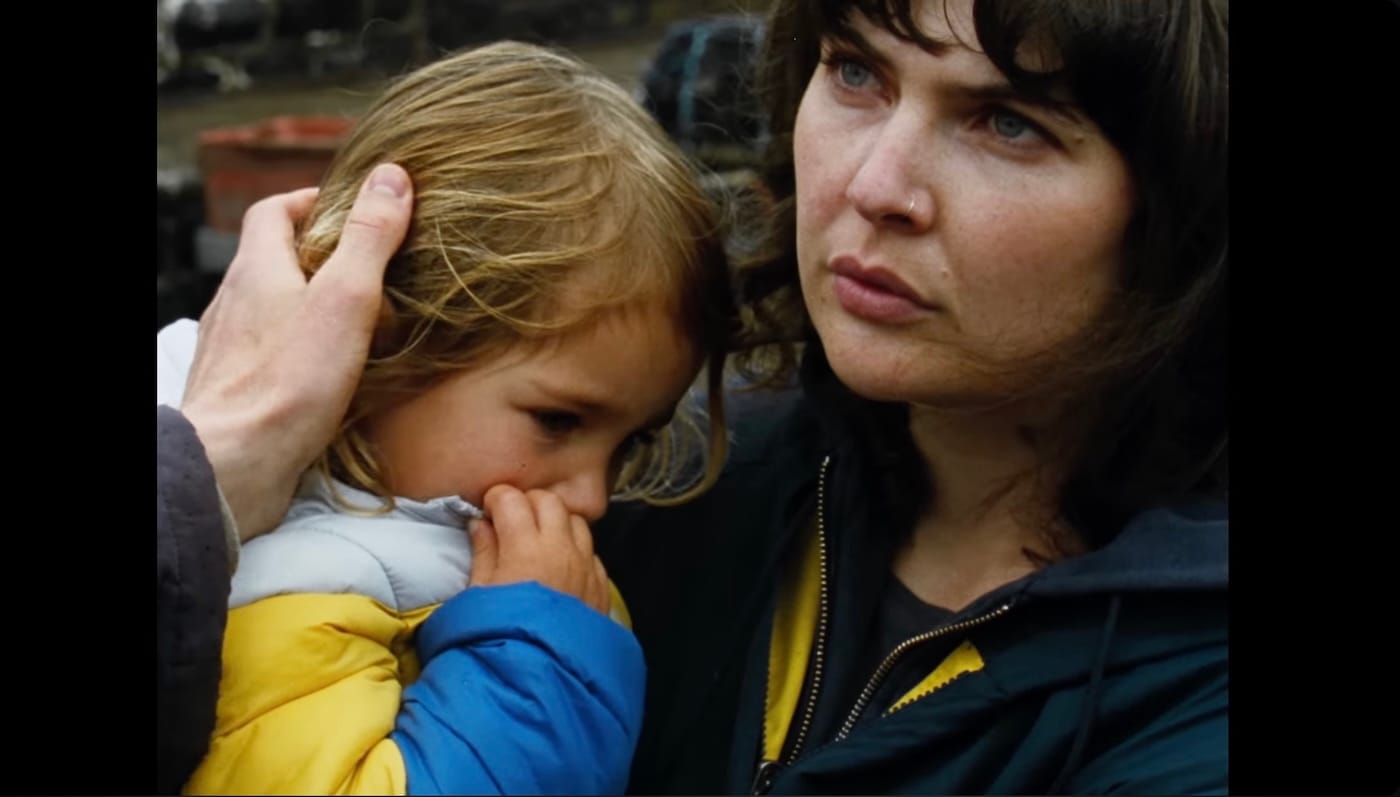
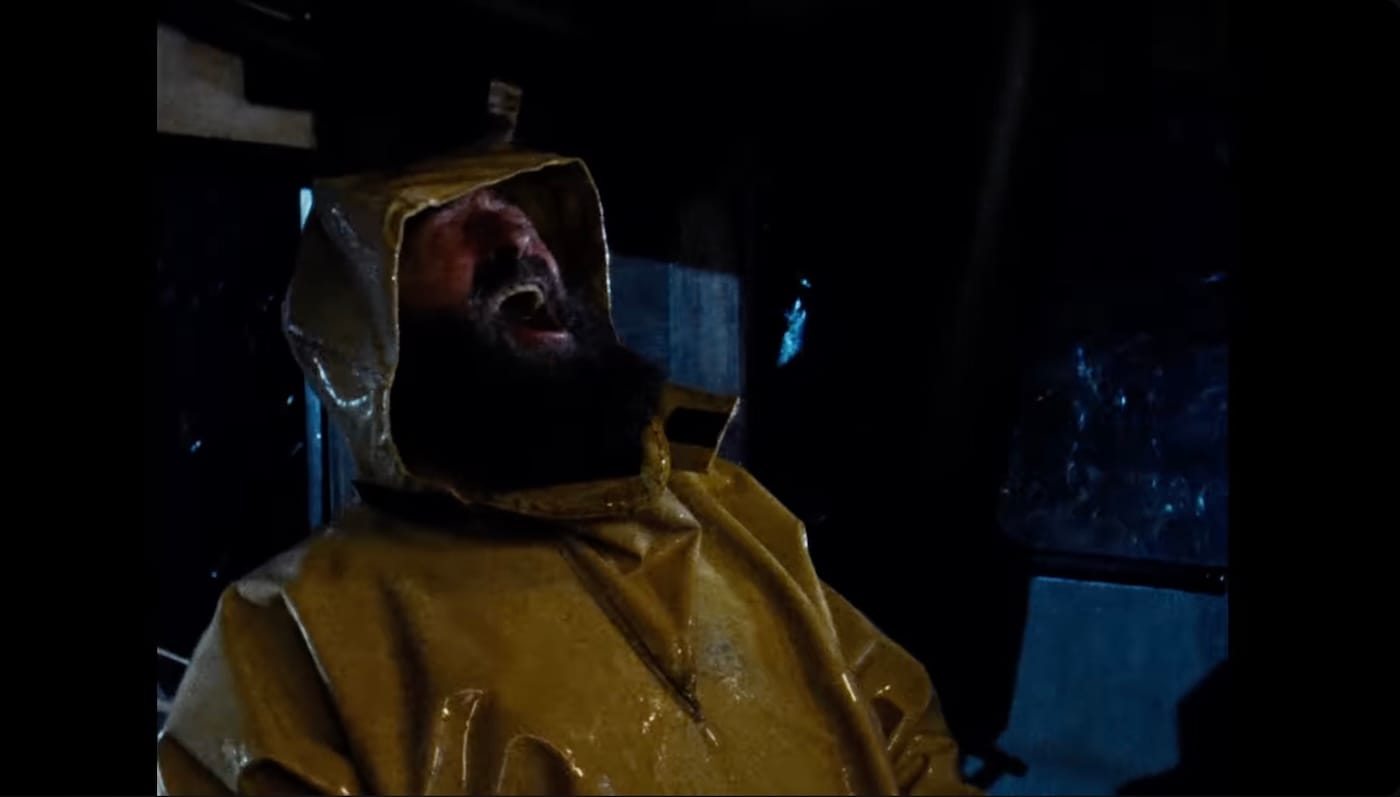
It’s safe to say that these two new sailors have no idea what they’re in for. Nick is a family man trying to keep the ship of his dilapidated house afloat in hard weather for the sake of his wife Emily (Mae Voogd) and young daughter, but he struggles to adjust to the abrasive nature of this work. His only other company aboard the boat is Liam, an itinerant drifter who shrugs off the hardships and the strange behavior of their captain, the enigmatic Murgey (Francis Magee), who seems half-mad with his enthusiasm for the challenges of the sea.
But their difficulties turn to dismay, and then desperation, when they haul their bins full of gutted fish back to the dock — “home to Mother,” as the snarling Murgey is fond of saying — and they find that their home is not what they remember. In fact, where space voyagers like the heroes of Christopher Nolan’s Interstellar discover that they’ll come home to a world that has fast-forwarded, Nick and Liam return to a time gone by, where they are quickly and inexplicably mistaken for the fishers who sailed on the Rose before its disappearance.
That makes this film sound like a straightforward time travel adventure, but Rose of Nevada, like 2024’s bizarre, abstract, and unsettling horror movie Enys Men, is anything but straightforward. It is so mesmerizing with its relentless images of tension, fragility, and disintegration — the heave!-and-ho! of its rickety boat and its chaotic seascapes — that it becomes hard for us (and for its central characters) to step back from such detailed immediacy and investigate the existential questions raised by twists and turns of storytelling. (In this film, a 30-second shot qualifies as a long take.)
Once again, Jenkin is driven by his analogue preoccupations much more than narrative logic. He loves the grain and grit of 16mm film, the volatile edges of over-exposed images, the slight misalignment of sound that comes with post-production recording, and the restrictions of a Bolex camera. I’m inclined to speculate that Jenkin is more interested in generating tensions by juxtaposing images of materials and textures from two different times than he is in resolving those tensions at all. He emphasizes the constant flux of temporal particulars, the fragility of the frameworks of our realities, and at the same time the factors of human nature that stay the same from era to era — how much we really are, generation to generation, in “the same boat.”
(And the presence of Enys Men’s Mary Woodbine, whose intense gaze seems to have access to dimensions beyond what the camera observes, intensifies the sense of an overlap between the two films. The darkness that haunted her in that previous film seems to lurk at the edges here, even if it never really lunges for us this time.)
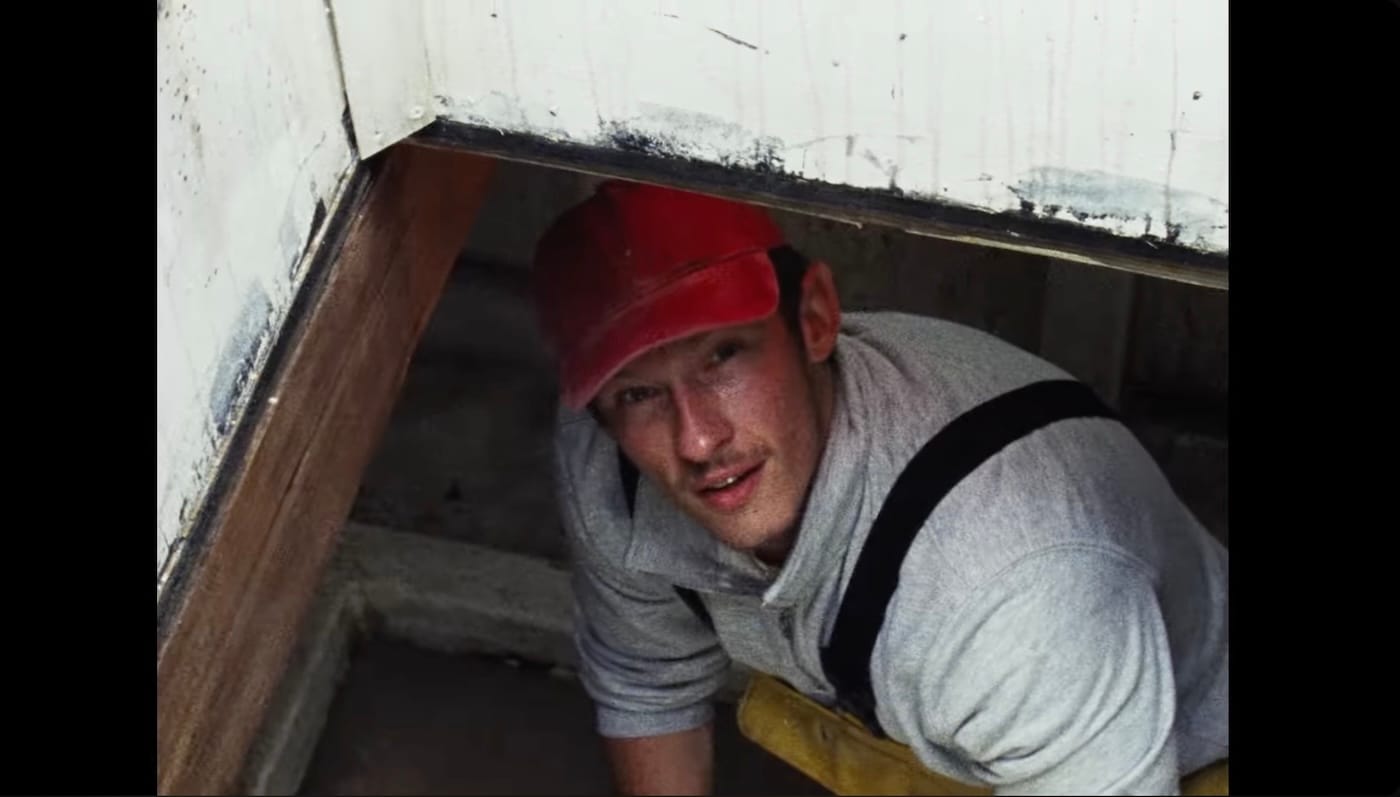
Jenkin films his actors with as much interest in their angles, textures, and rough edges as he does the various materials and mechanisms of the boat. George MacKay, a veteran of temporal disruption since he played an era-hopping loverboy in The Beast, and an actor who proved in 1912 that he can persuasively play a shellshocked survivor, is always a striking screen presence with his blazing, haunted eyes and his jutting jaw. Callum Turner, who seems to be on a runway ready to take flight as a Hollywood headliner (and maybe even as James Bond?), is more interesting in this mode because of how Jenkin favors his imperfections more than his sex-symbol potential.
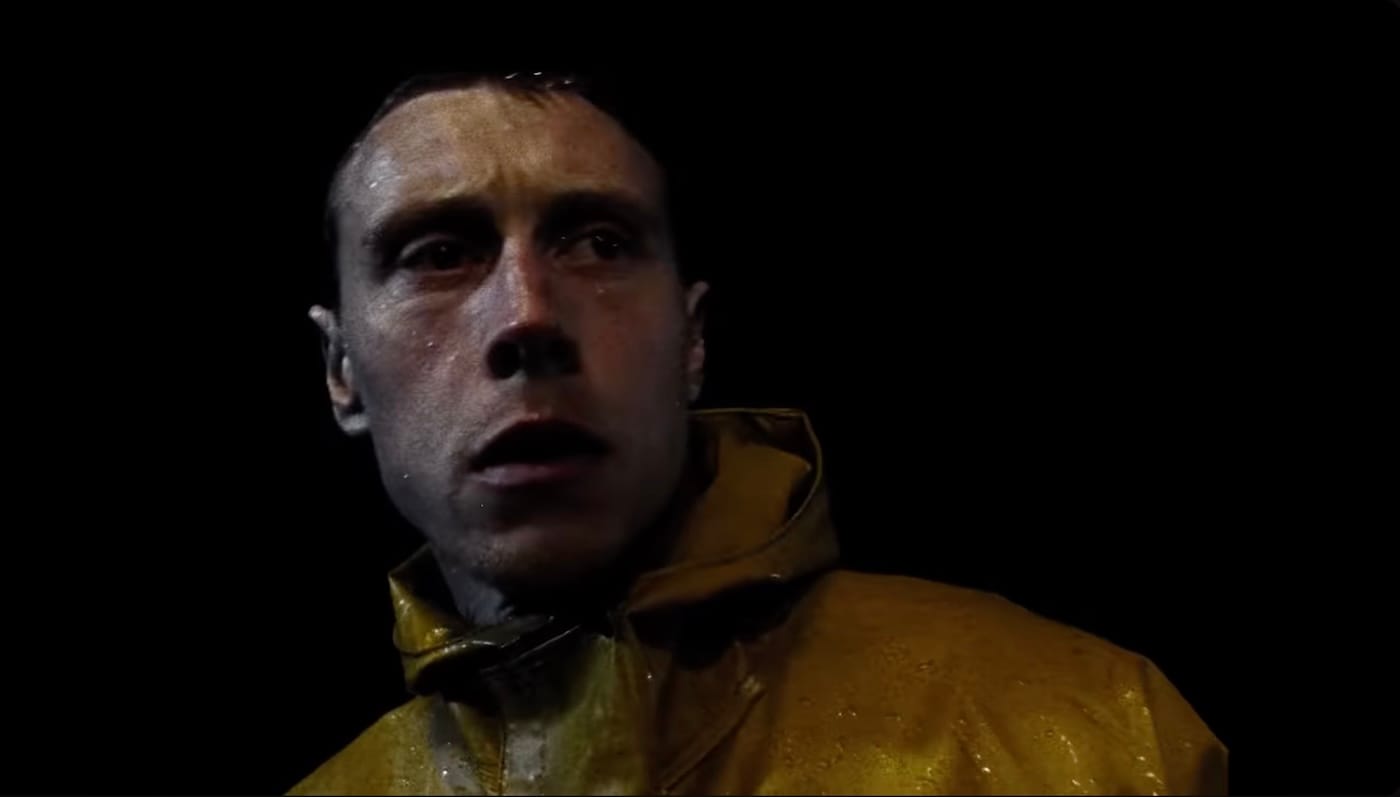
In one of the most surprising and interesting onscreen pairings I’ve seen in a while, Turner’s Liam goes from flirting with Jess (Yana Penrose), a young woman whose watchful mother is hovering at the edge of the frame, to, in his new historical habitation, flirting with that mother herself at a younger age — Tina, played by the magnetic Rosalind Eleazar. (Whenever I see Eleazar in anything that isn’t the spy show Slow Horses, it’s really difficult not to just think about how great Slow Horses is.) Tina’s warmth and affection give the film a much-needed point of tenderness, suggesting that horror is not the only possibility in Jenkin’s harsh world.
Nick, by contrast, is not so eager to engage with his new context; his heart is set on getting back to Emily. It’s in Nick’s panic that the film gets its dramatic hooks into us. But don’t get too invested in that, as that’s not what most interests Jenkin. If you saw Enys Men, you’ll know that satisfying an audience’s questions is not high on his list of priorities.
In fact, I can’t think of another time-travel narrative that has had less interest in how its puzzle might be solved. It’s utterly incurious about the mechanics of its protagonists’ recontextualization, just as it doesn’t seem to know whether these travelers bear any responsibility for their displacement. (Is this a curse? An accident?)
We’re meant to pay far more attention to the mechanics of the work. Jenkin employs constant cutting from close-ups of faces to close-ups of objects and exteriors, insisting that a coil of rope and its strain on a pulley is just as important and unignorable as any character in the drama. I'm drawn to Jenkin’s obsession with colors, textures, and materials that speak of the impermanence of all things, and how this blurs the line between past and present. His insistence on, and aspect-ratio emphasis on, the specific details of this rusty old boat — cranks, chains, ropes, nets — makes me feel like I’m right there, which makes the vulnerability and the struggle that much more palpable. We feel the unforgiving coldness and hardness of the metal; the slip and the slime of the fish as we gut them from mouth to tail; we feel the sting of the cables as they slide through our gloved hands; we feel the blast of waves crashing across the bow in a storm. It’s almost as if the rigorous focus on surfaces and actions is meant to emphasize the opacity of material existence; this is a film that aggressively resists our interest in meaning-making. It’s easy, thus, to empathize with these men when they look up from the tasks in front of them and seem absolutely mystified by their circumstances.
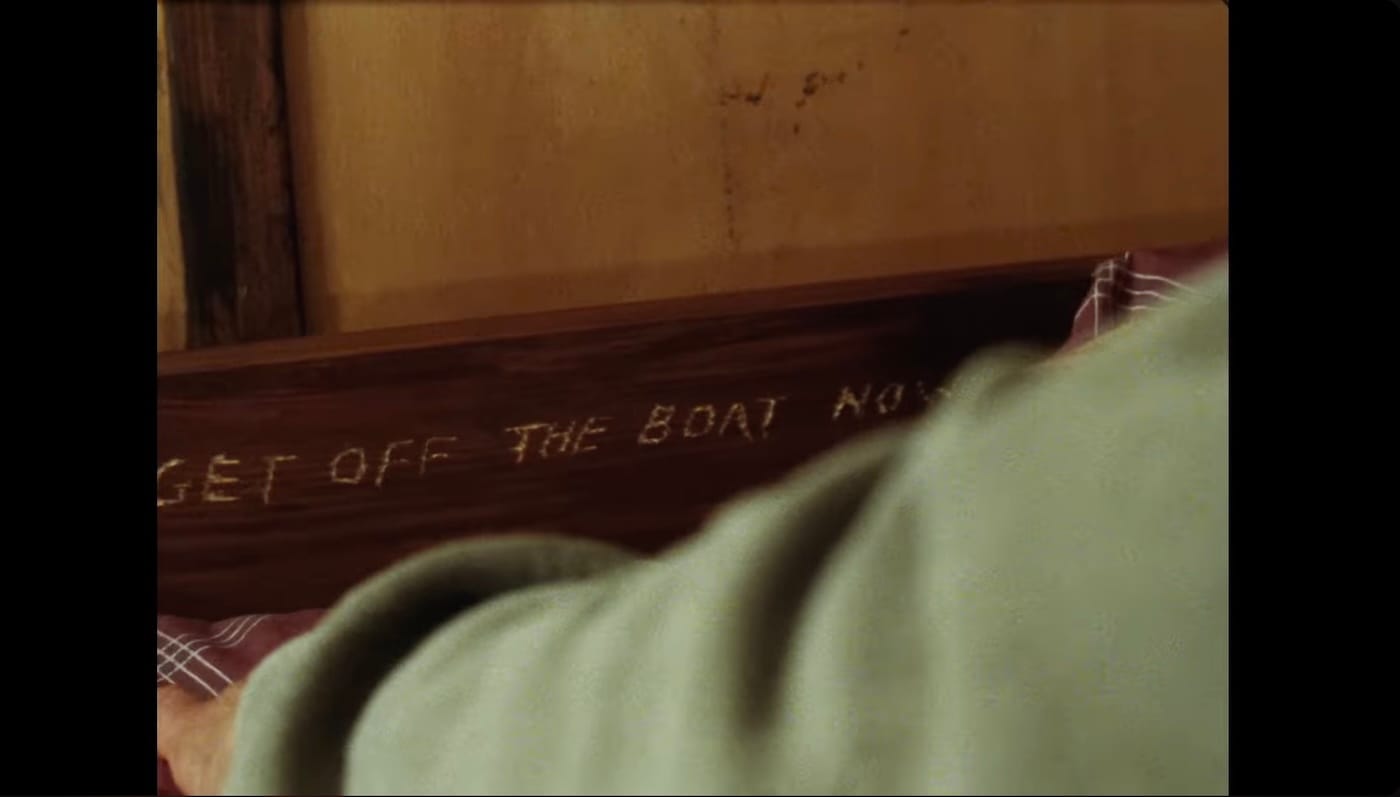
And I’m as uncertain about what they might learn from all this as I am about what we’re supposed to learn. What to make of this story’s strange conclusion?
This shouldn’t surprise me. I was similarly perplexed by the conclusion of Enys Men.
I’ll avoid specific spoilers here — but these upcoming comments could be read as vaguely spoiler-ish.

You have been warned! SPOILER-ISH COMMENTS AHEAD!
The conundrums of time travel stories rarely surprise me anymore. And their function in franchises from Harry Potter to the MCU have served to weaken my suspension of disbelief there, introducing too much magic into situations that are already full of it, making any kind of disorder something that seems easily repaired. But it doesn’t have to be that way. A few of these genre exercises have impressed me — particularly Primer. While I wouldn’t slap a “Time Travel” genre label on Denis Villeneuve’s Arrival, Celine Sciamma’s Petit Maman, or Megan Park’s endearing comedy My Old Ass, all three of them have moved me by troubling the waters of time in rewarding ways.
This story keeps me guessing until its last act, when it brings our troubled adventurers to climactic decisions that unsettle me. What lessons are these characters learning? Were they foolish to take this job? Am I meant to be bothered by where we end up? To some extent, I can see Rose of Nevada as a way of imagining our way into empathy for generations past, or for affirming how much our work today is tangled up in the work that others were doing yesterday. But it’s hard to avoid a sense that Nick’s last words represent a tragic confusion of priorities.
I’m not sure. Lingering questions, as well as the challenges of sustaining attention through the jarring cuts and the detailed close-ups of disintegrating surfaces, make this film stick with me like scrapes and scars from a rough journey on a rusty boat. (I'd love to know what you make of this story.)
This isn’t likely to last with me as a film that adds up to much more than the sum of its abrasive parts. But it will itch at me like the scar of a burn, a reminder of struggle and unsettling uncertainties. And I’m optimistic that it will eventually represent a curious step in the evolution of a singular filmmaker.
In spite of my dissatisfaction here, I can’t wait to see what Jenkin does next. I’m hopeful that his style is eventually applied to a narrative that leaves me thinking more about its subjects than its idiosyncratic director.